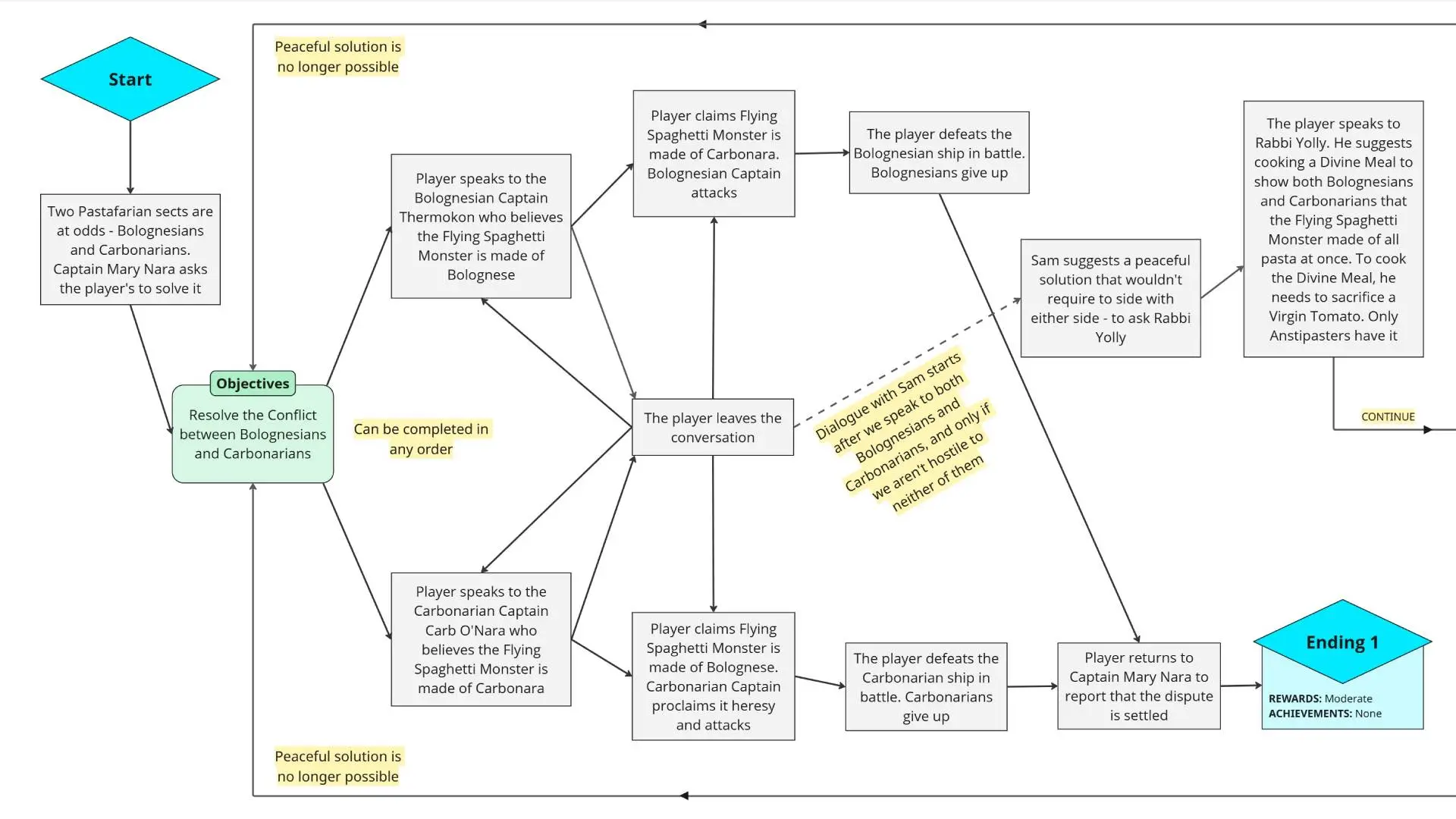
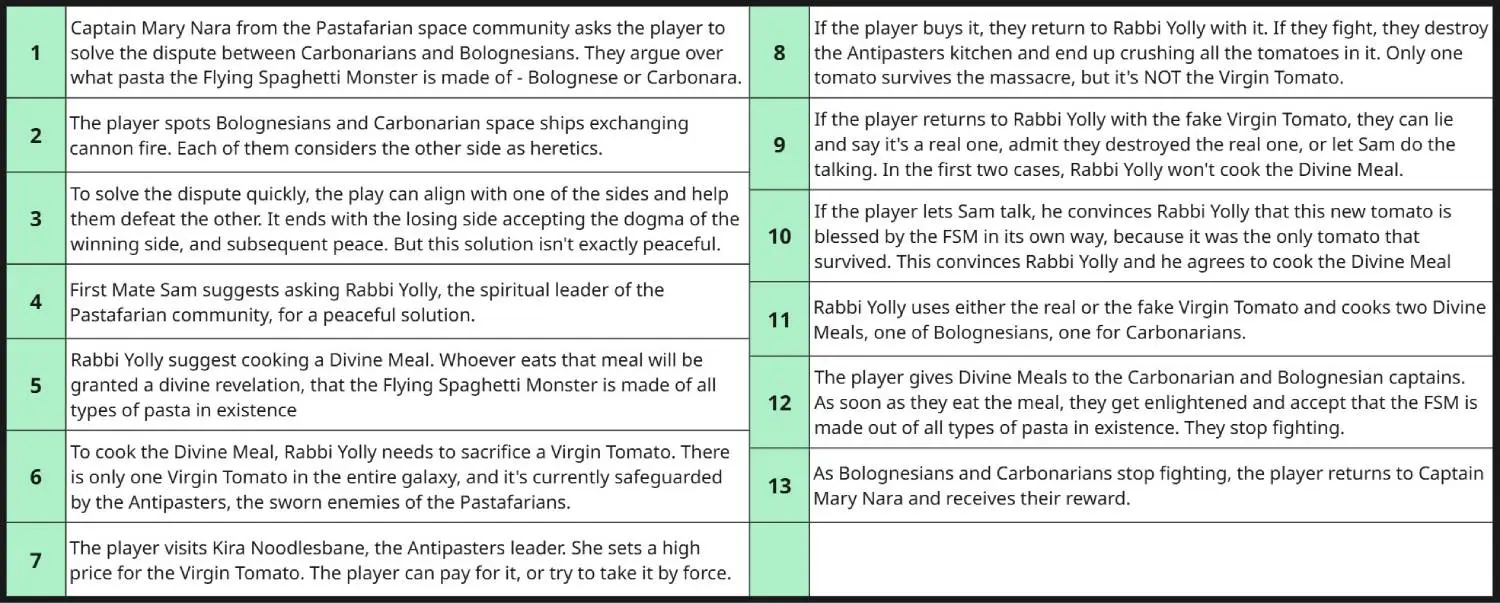
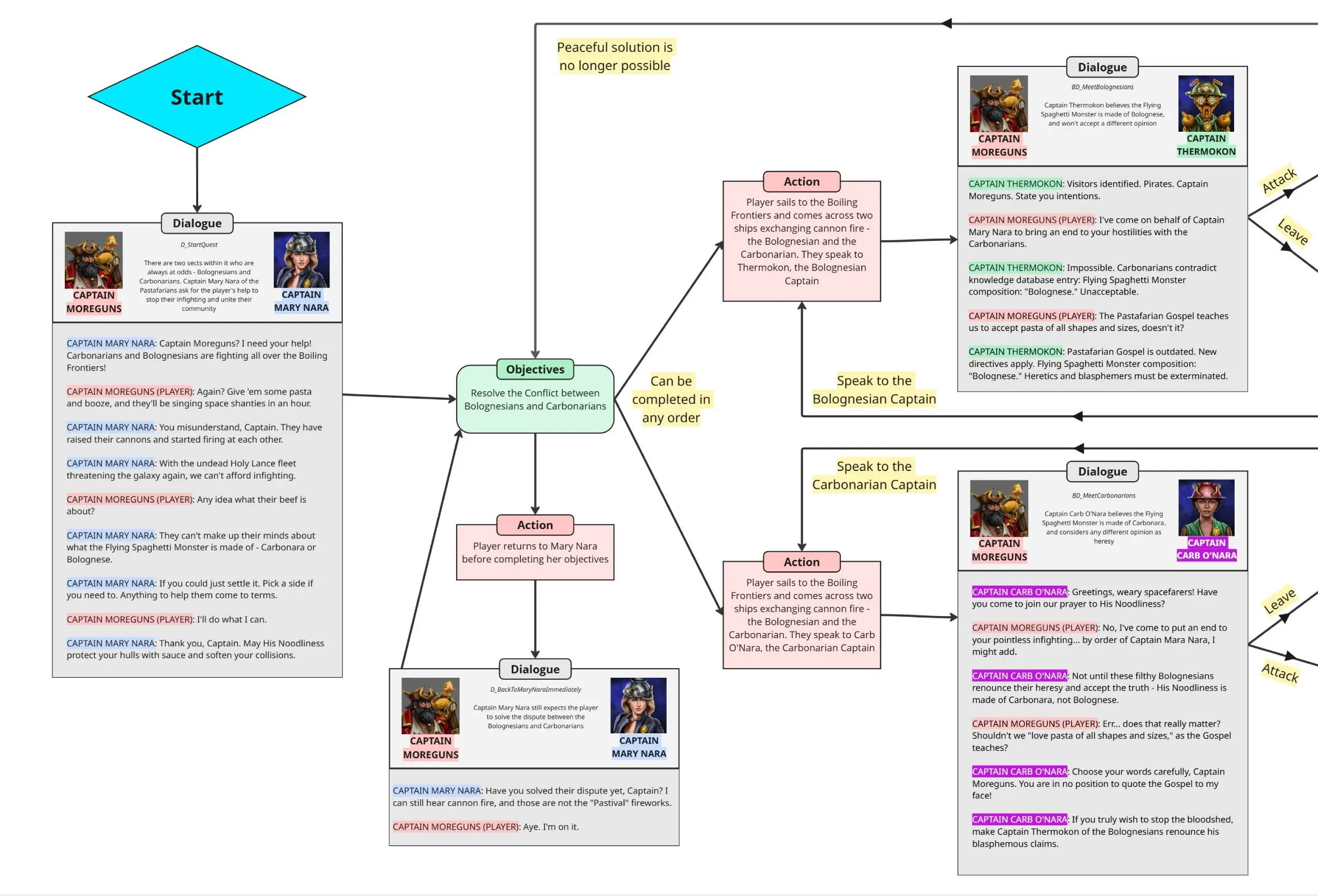
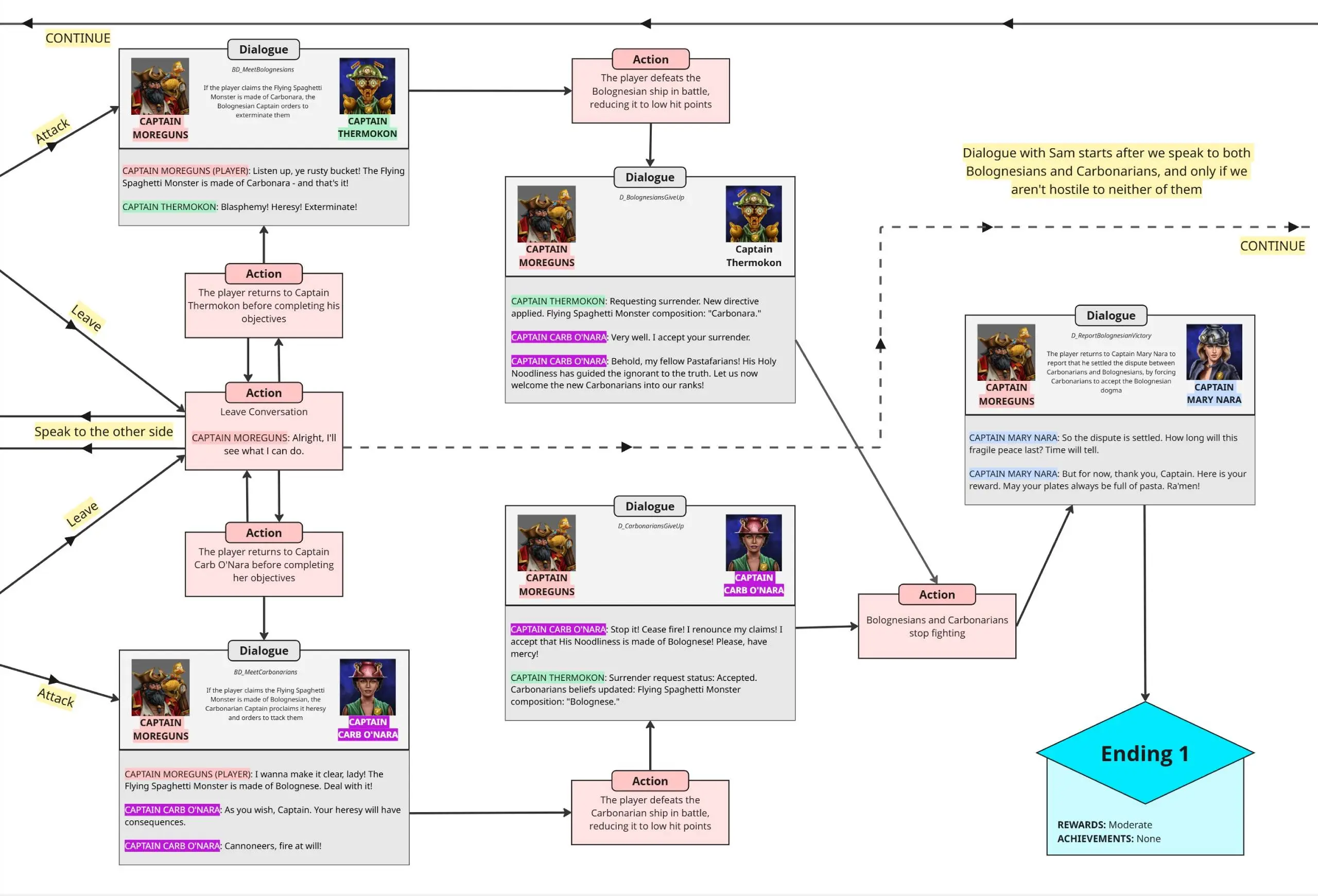
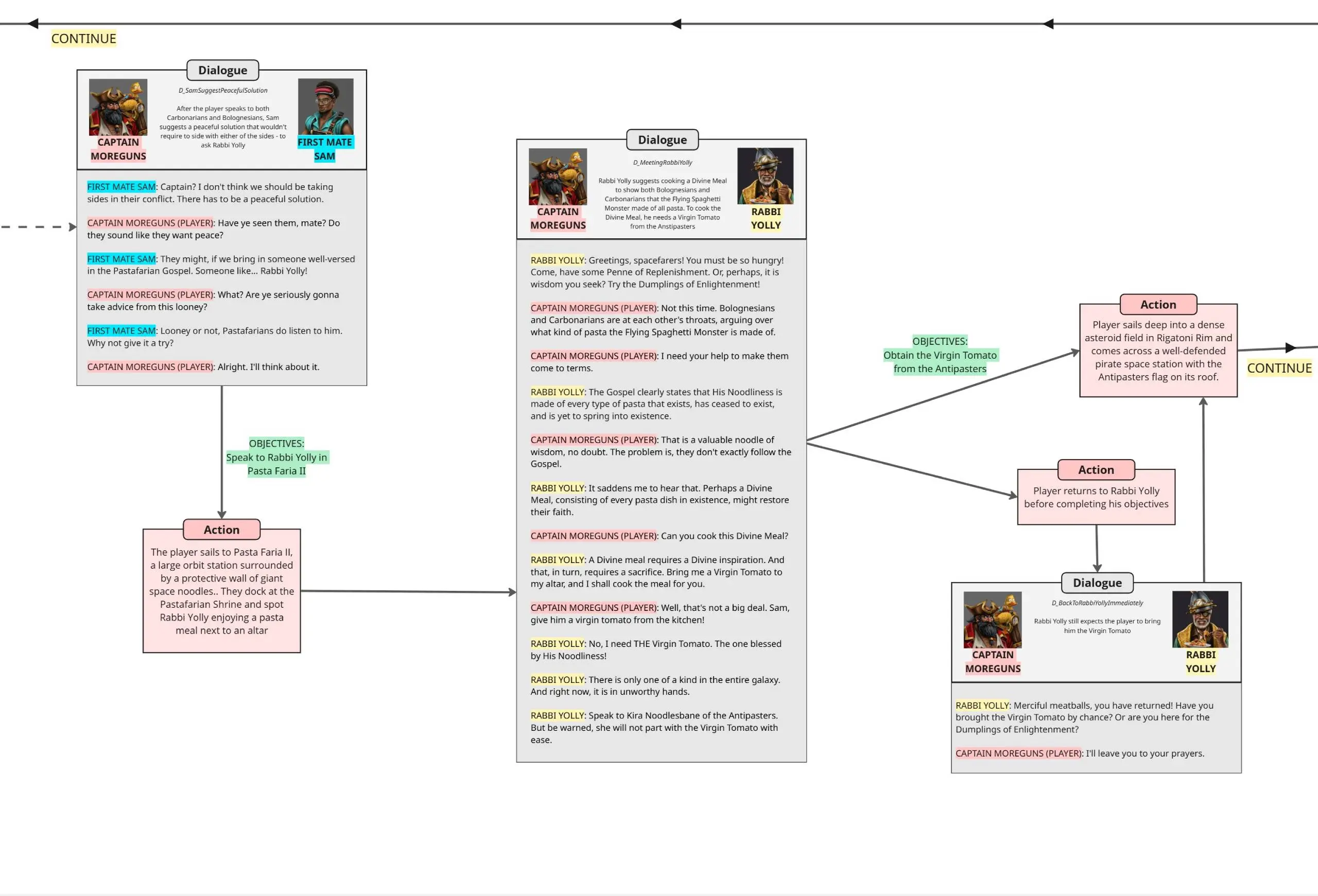
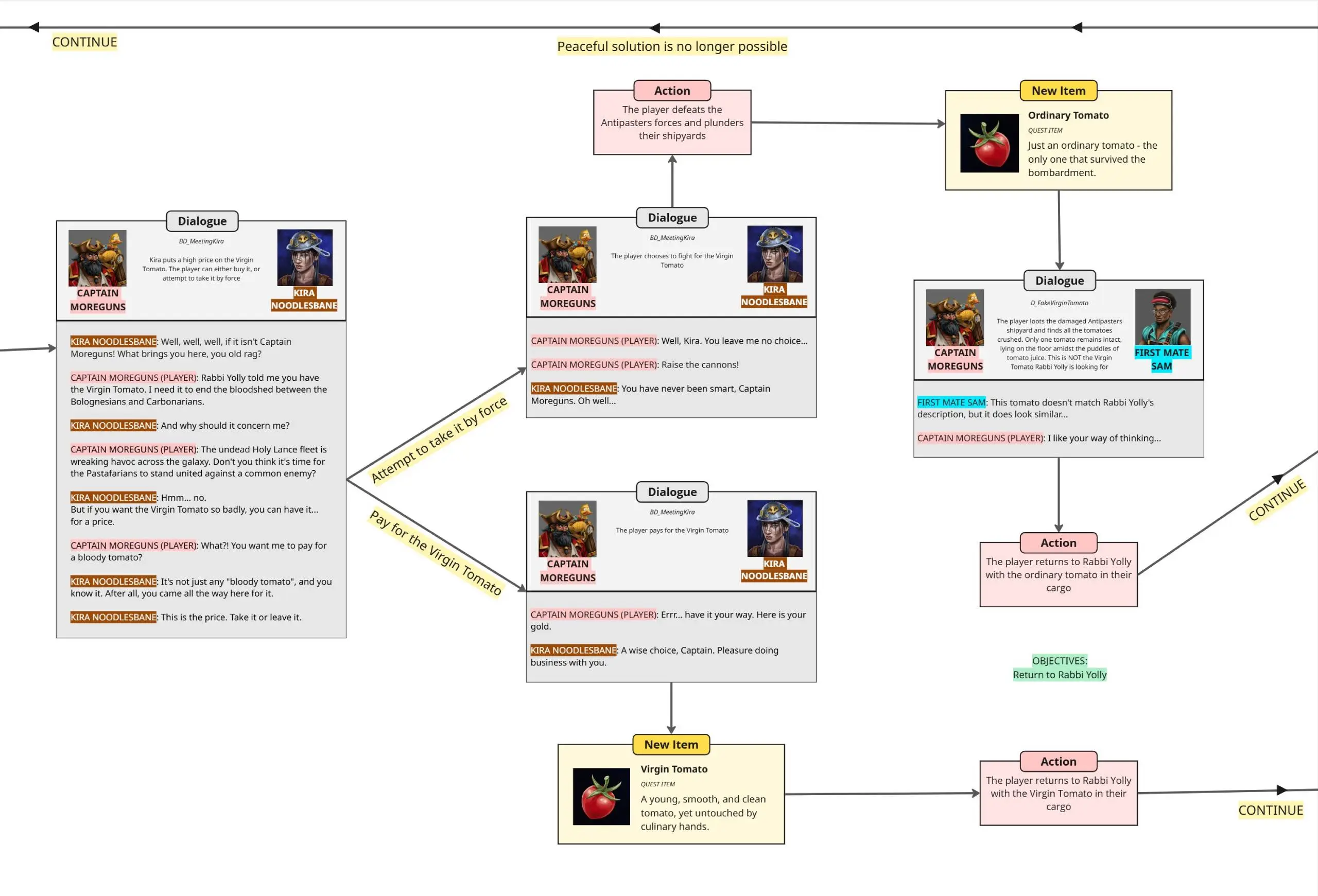
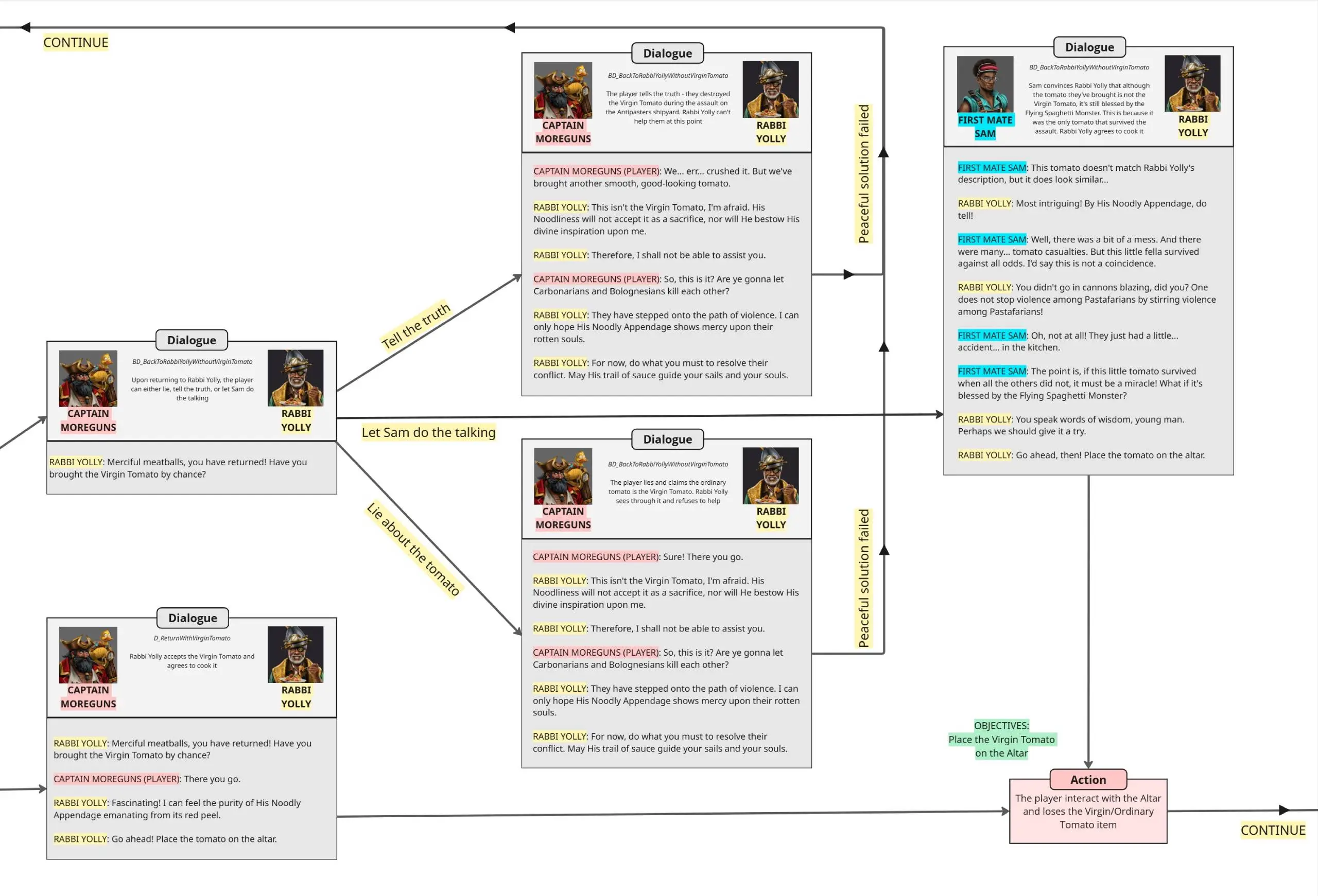
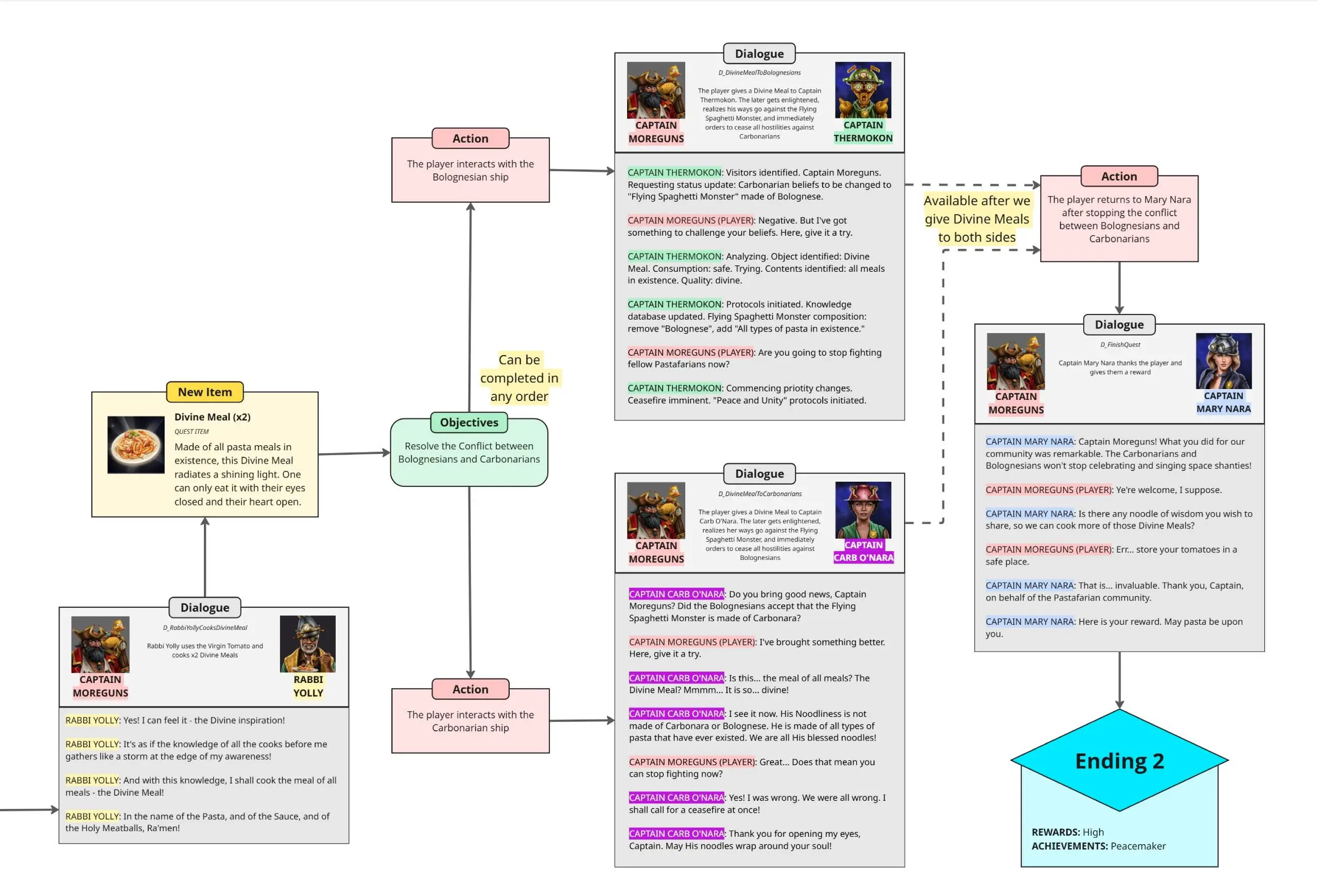
I went for a branching where the player may or may not use violence to complete the quest. Each choice has its consequences both in the story and gameplay. So I drafted an outline to lay out the quest’s high-level story.
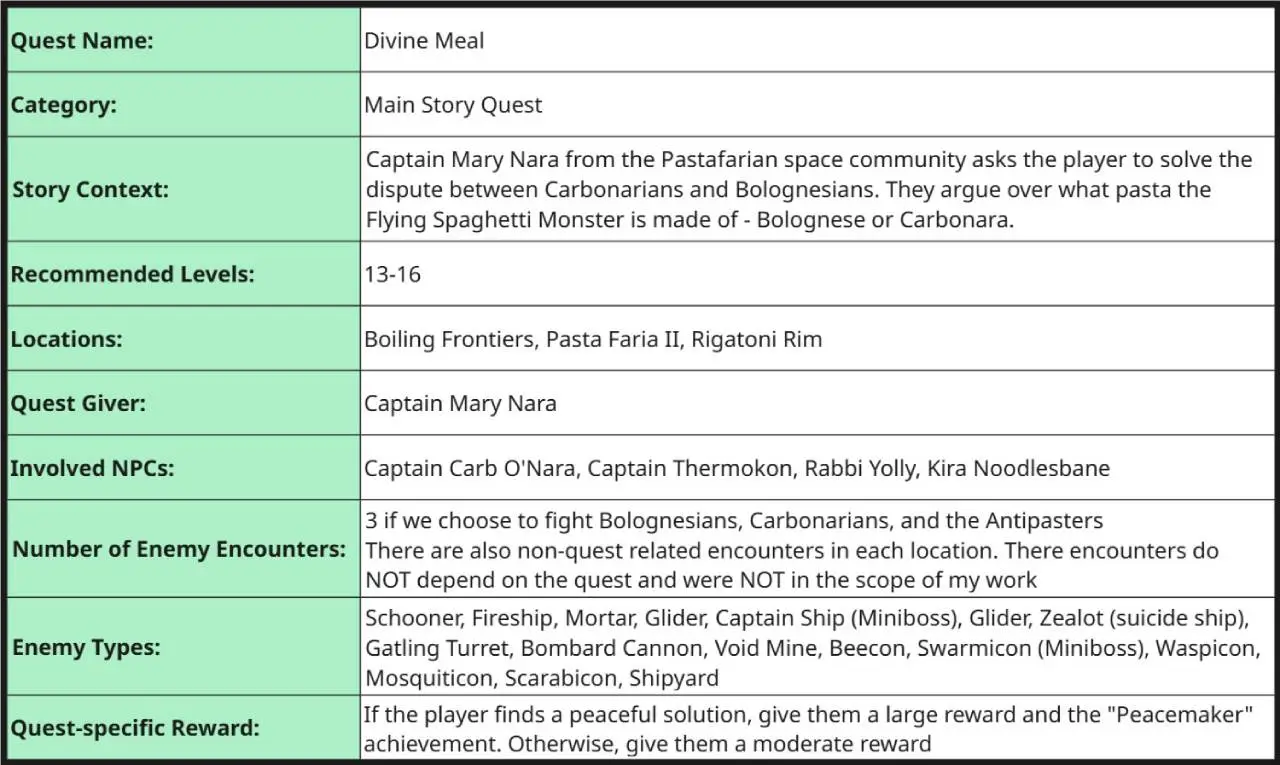
Step 2. Wrote up the Quest's Basic Info
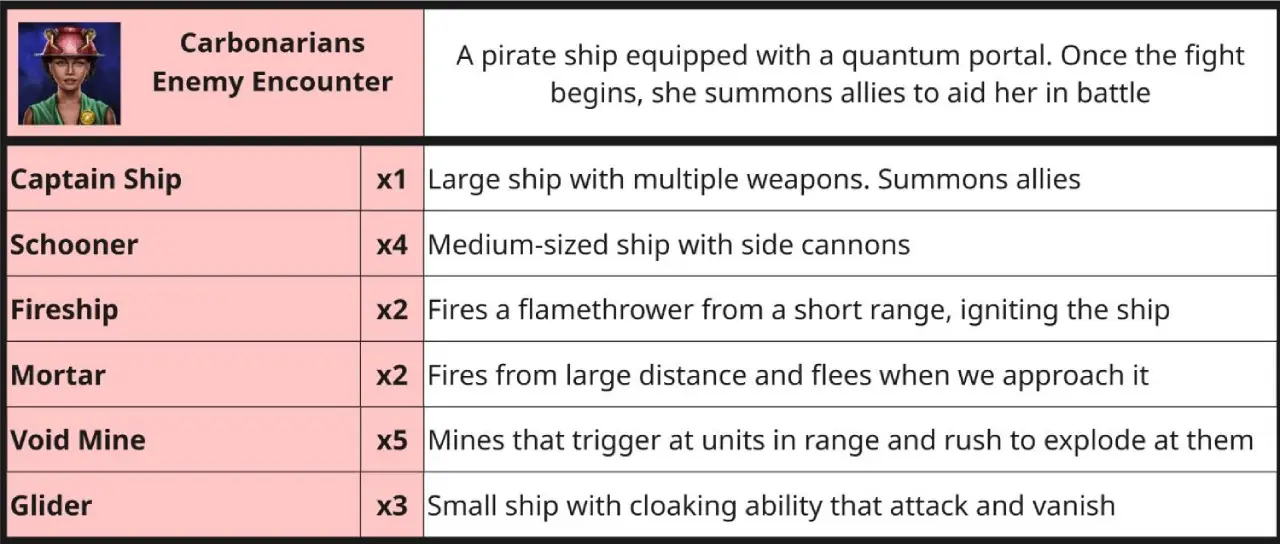
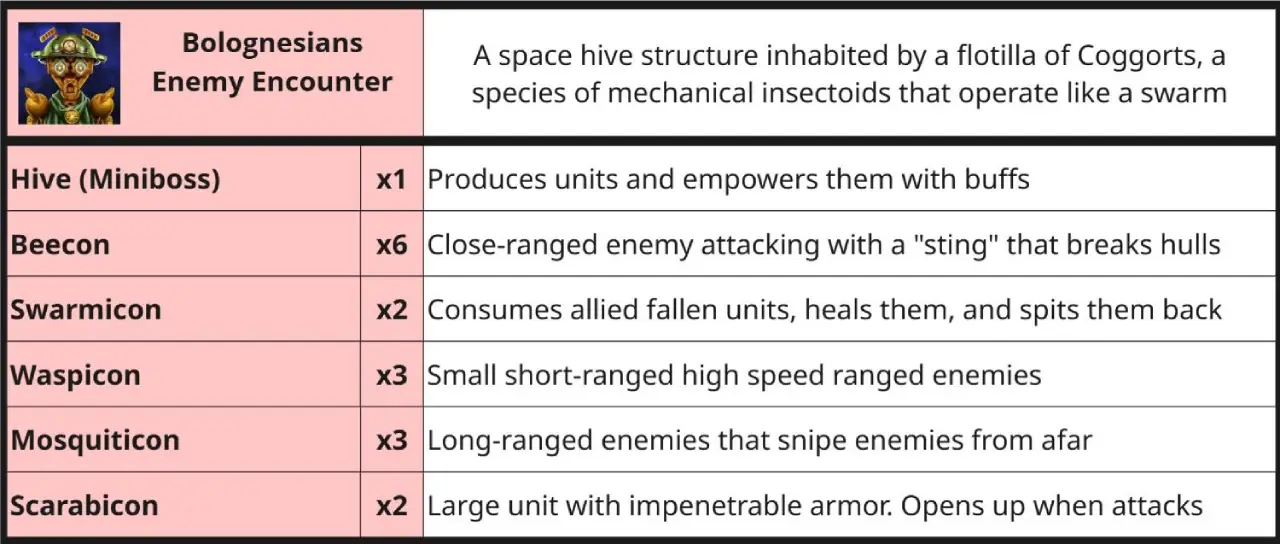
Before starting the work, I needed to determine the scope of the quest. So I wrote a spreadsheet that outlines the involved NPCs, locations, and enemies.
Step 3. Designed the Quest's Flow
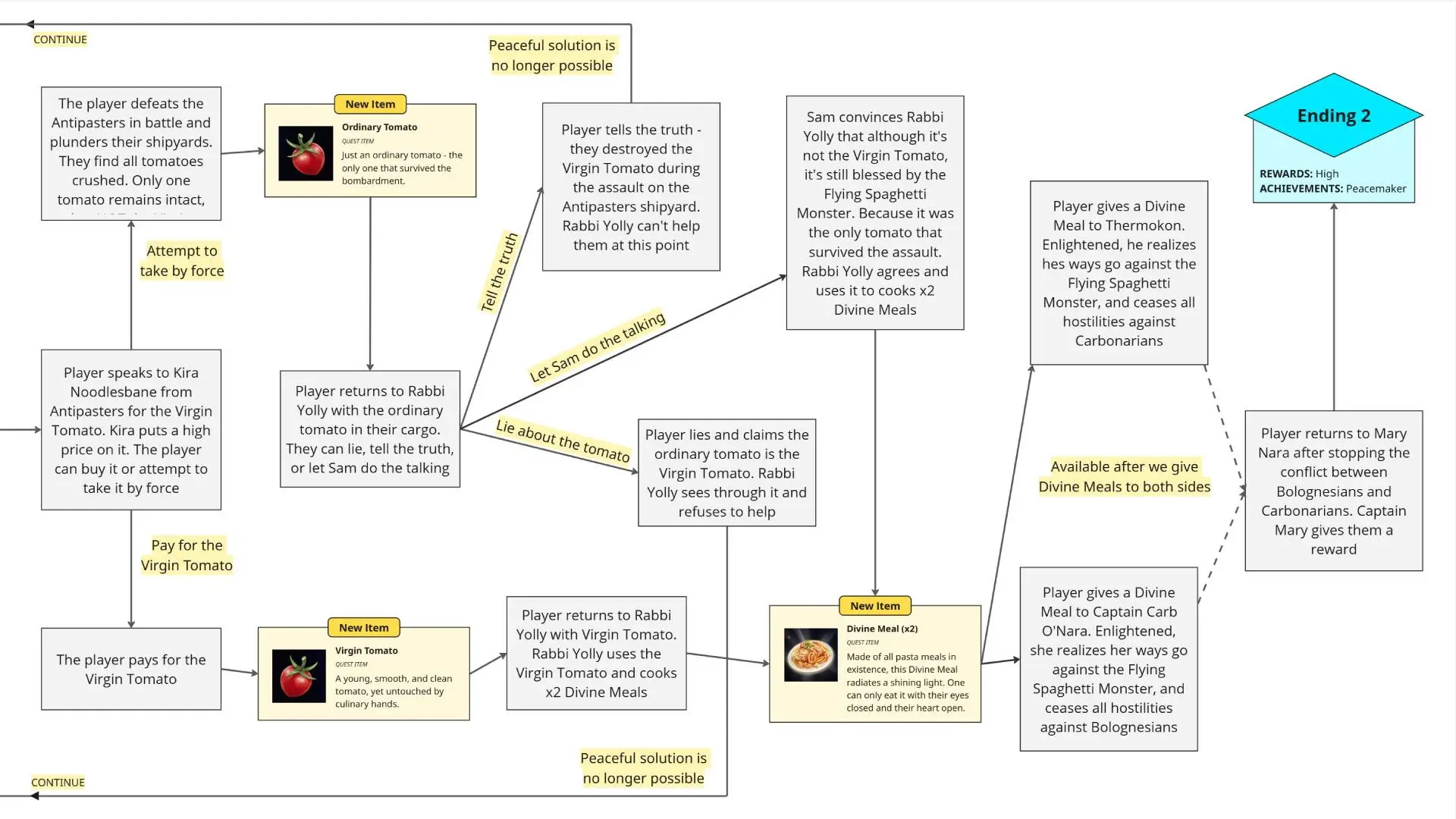
Next, I started the design process. My first step was to lay out the quest’s flow:
Gameplay – the players’ actions, usually corresponding with given objectives.
Reaction and Context – where the player is and how the game reacts to their actions.
Objectives – what players need to do next to reach the next step of the quest.
Step 4. Added Design Details and Dialogue
Next, I delivered the story via interactions with NPCs, depending on the quest’s needs.
Dialogue – I wrote both linear and branching dialogue for both types of NPC interactions.
Actions – to describe what the players do, under what conditions, and what they face at any location.
Player’s Choices – when players have a choice, what their options are, and what it leads to.
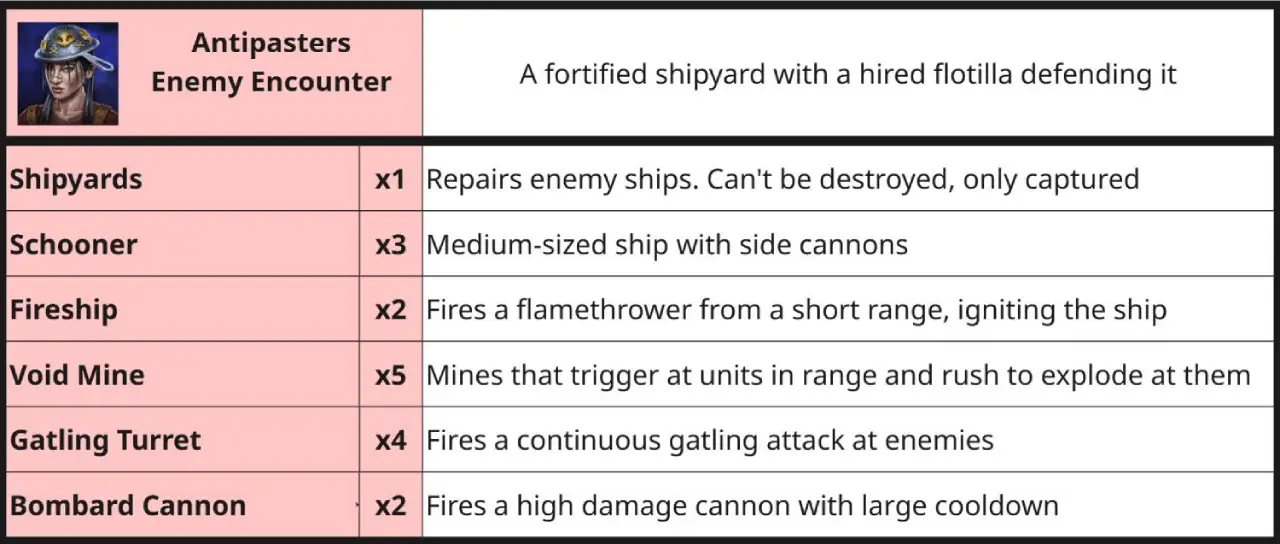
Step 5. Defined and Added Enemy Encounters
All quest-related encounters are optional. With the right choices, the player can complete the quest without engaging in combat. I made sure each encounter is meaningful and includes a miniboss, and a few mid-ranged, close-ranged, and long-ranged ships. Some have defense turrets and/or traps.
Step 6. Set up Locations, Triggers, and Points of Interest
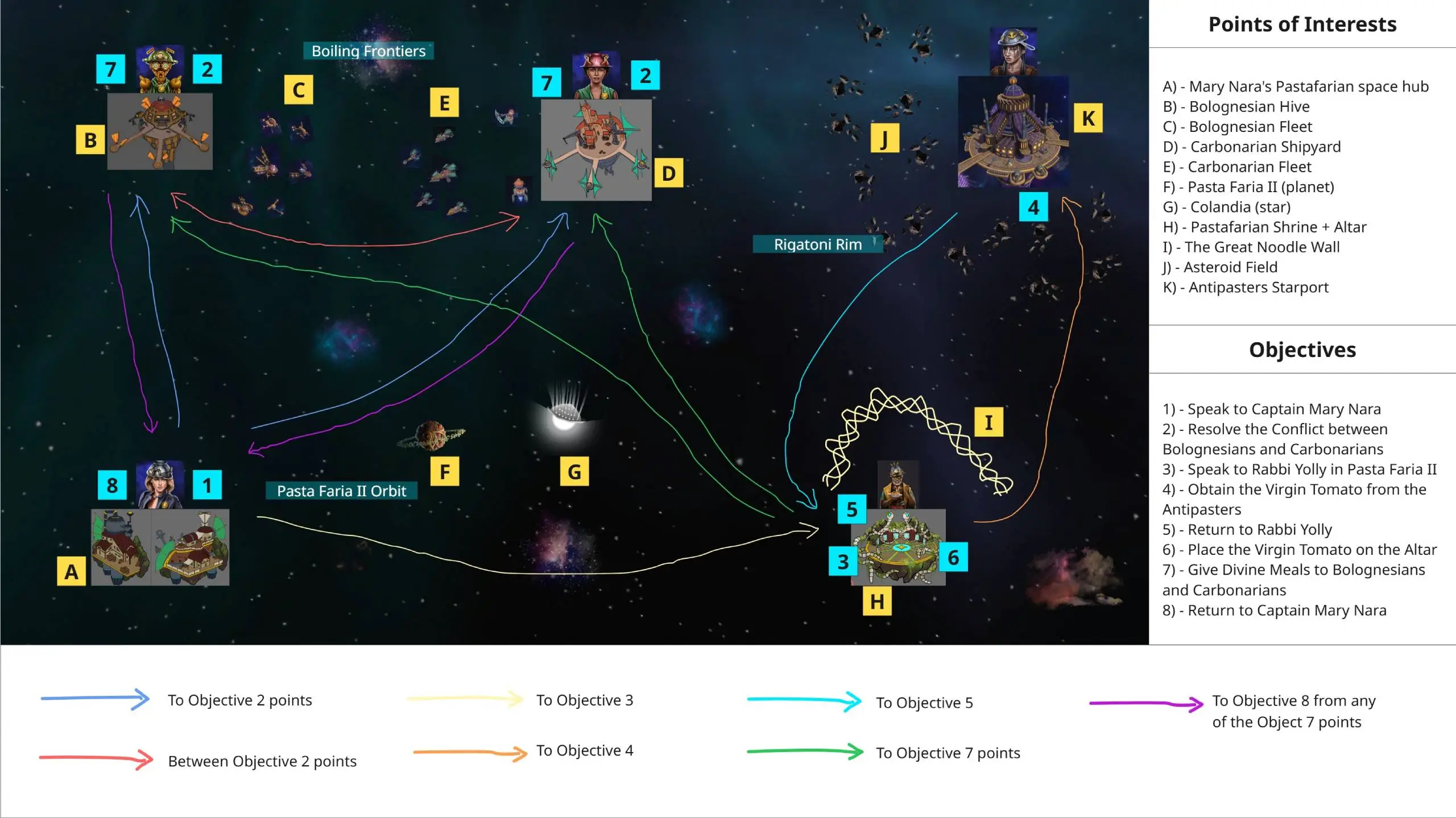
Once the flow was ready, I moved on to designing sketches for the map layout in Miro.
Laid out NPCs, key elements, and objectives to design the map around them.
Placed important points of interest to indicate the environmental themes of every sub-location.
Visualized the player’s path between objectives to plan their movement and validate the layout.
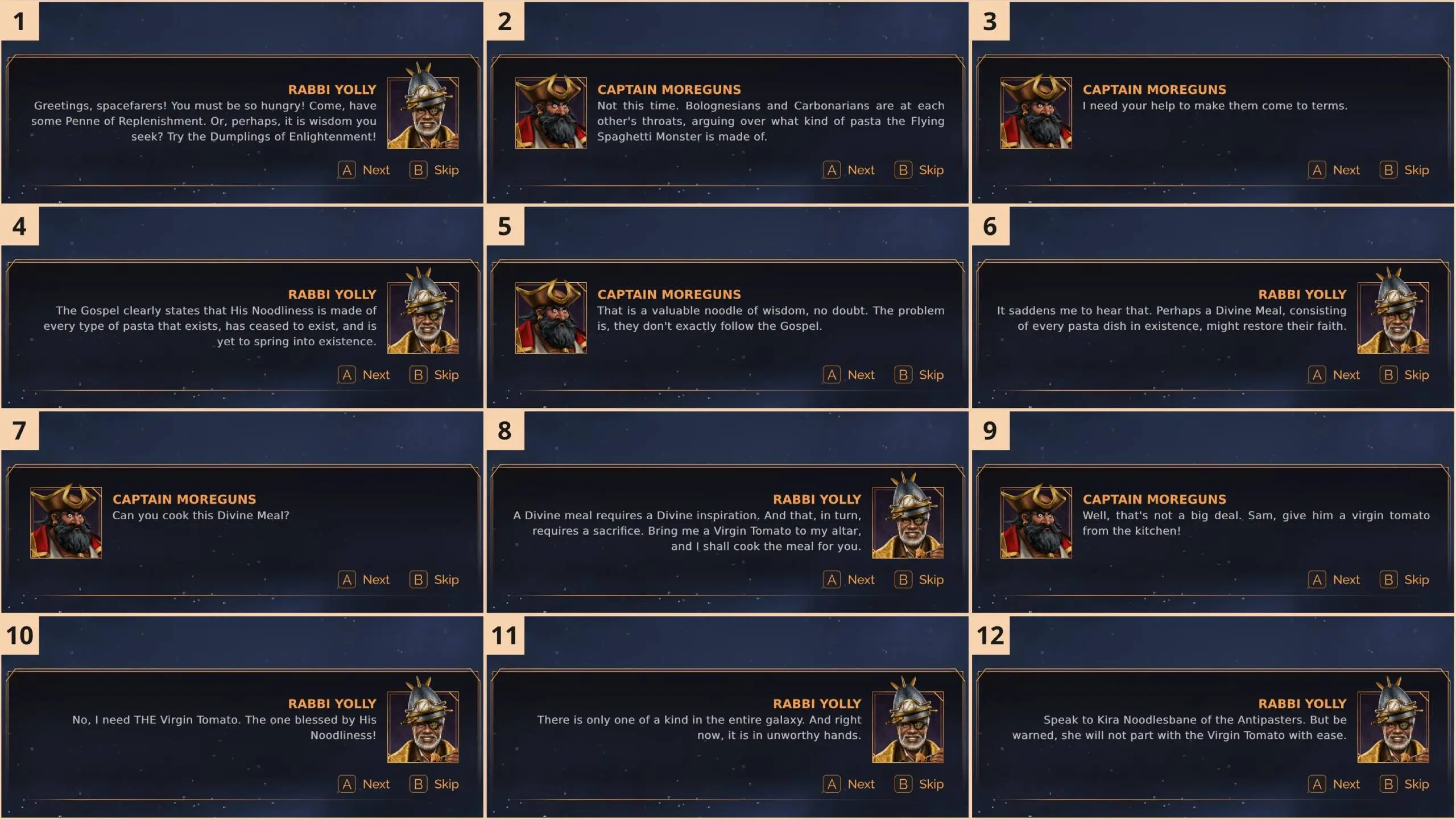
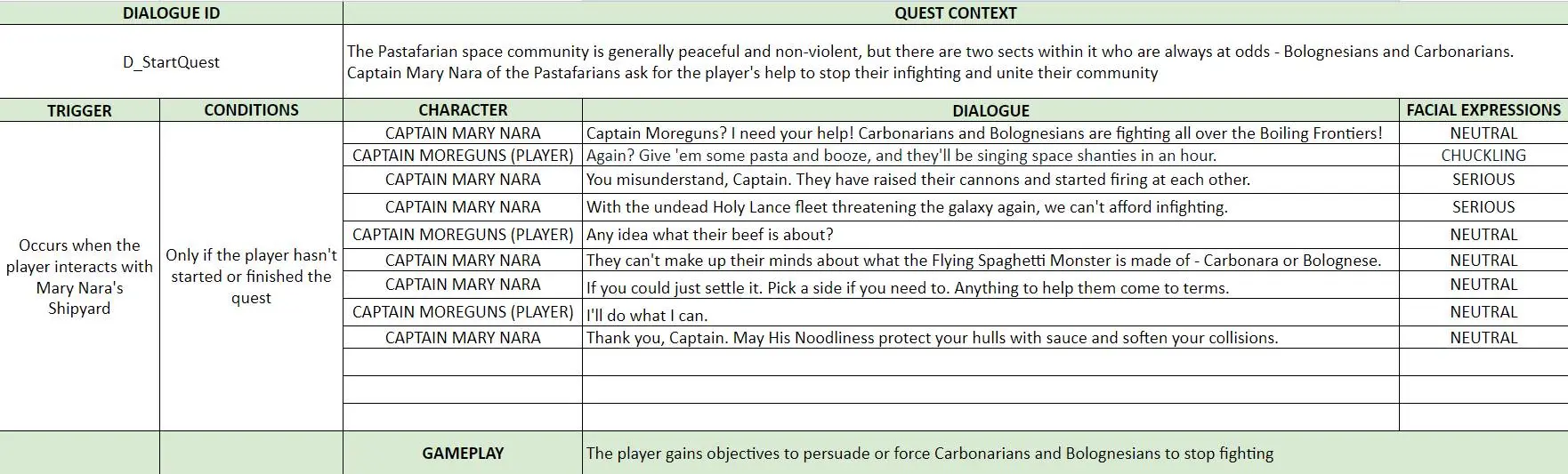
Linear and Branching Dialogue
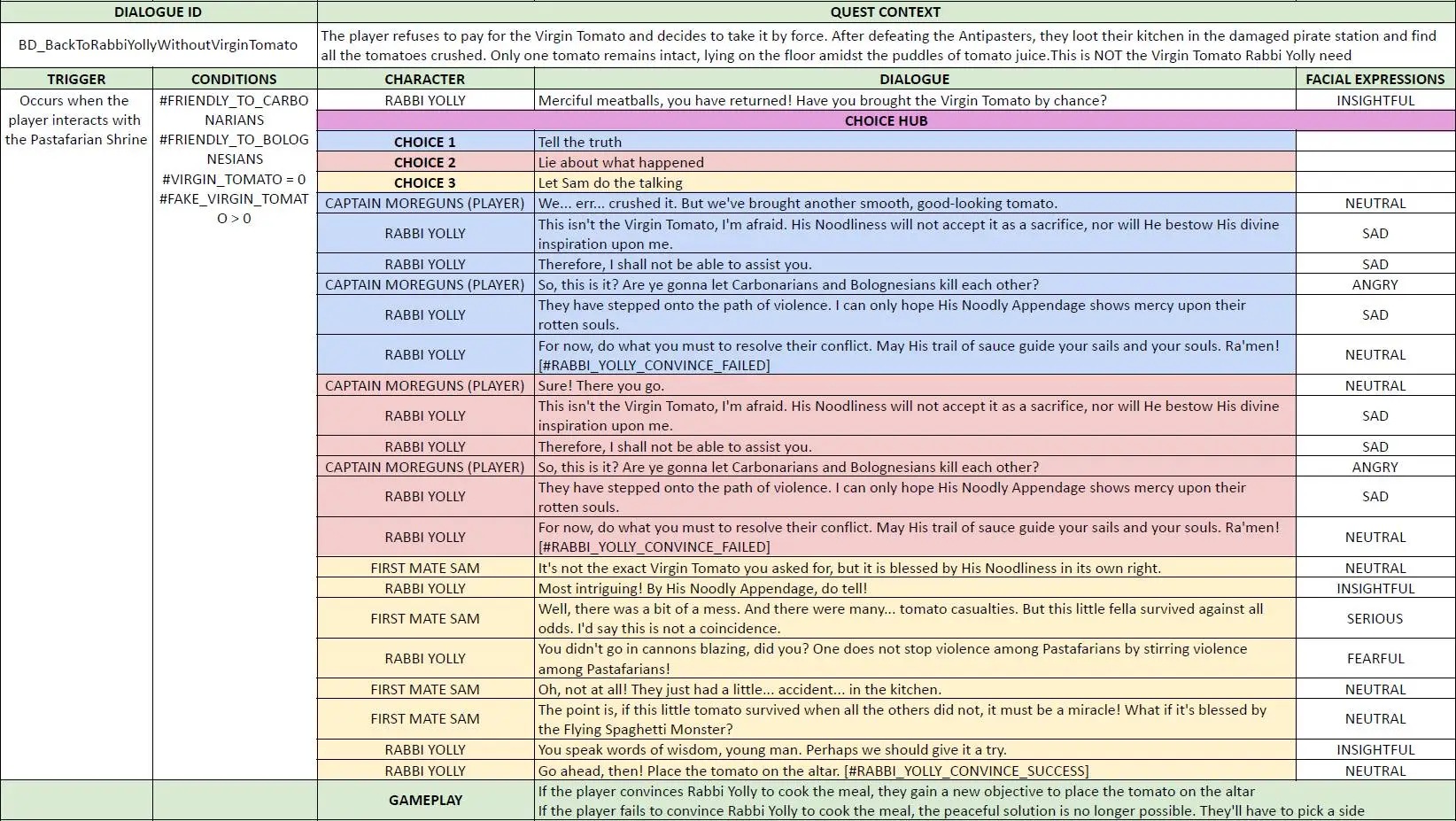
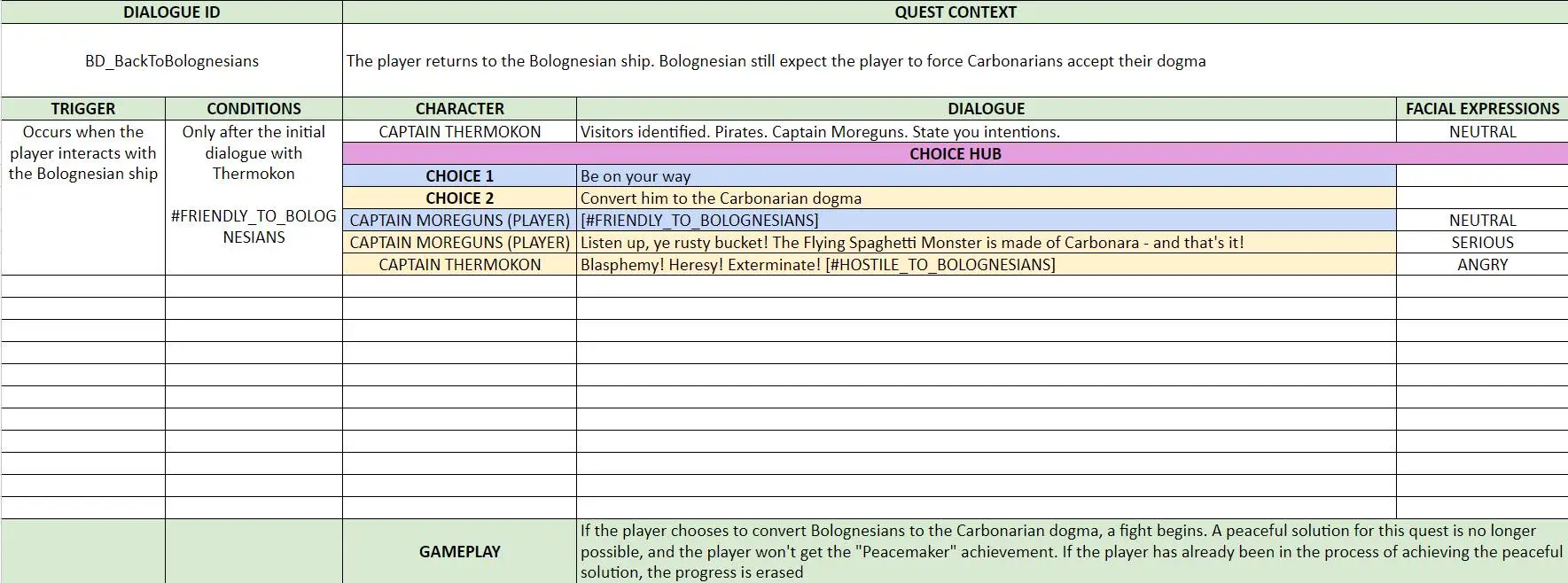
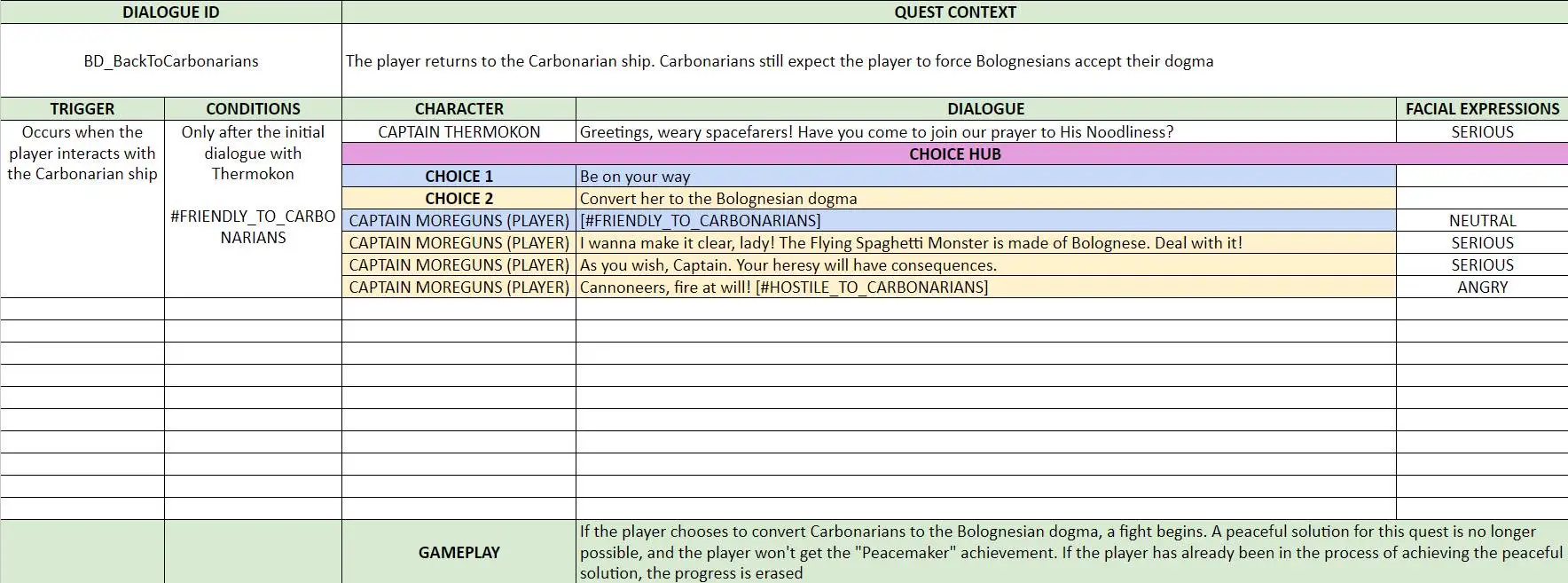
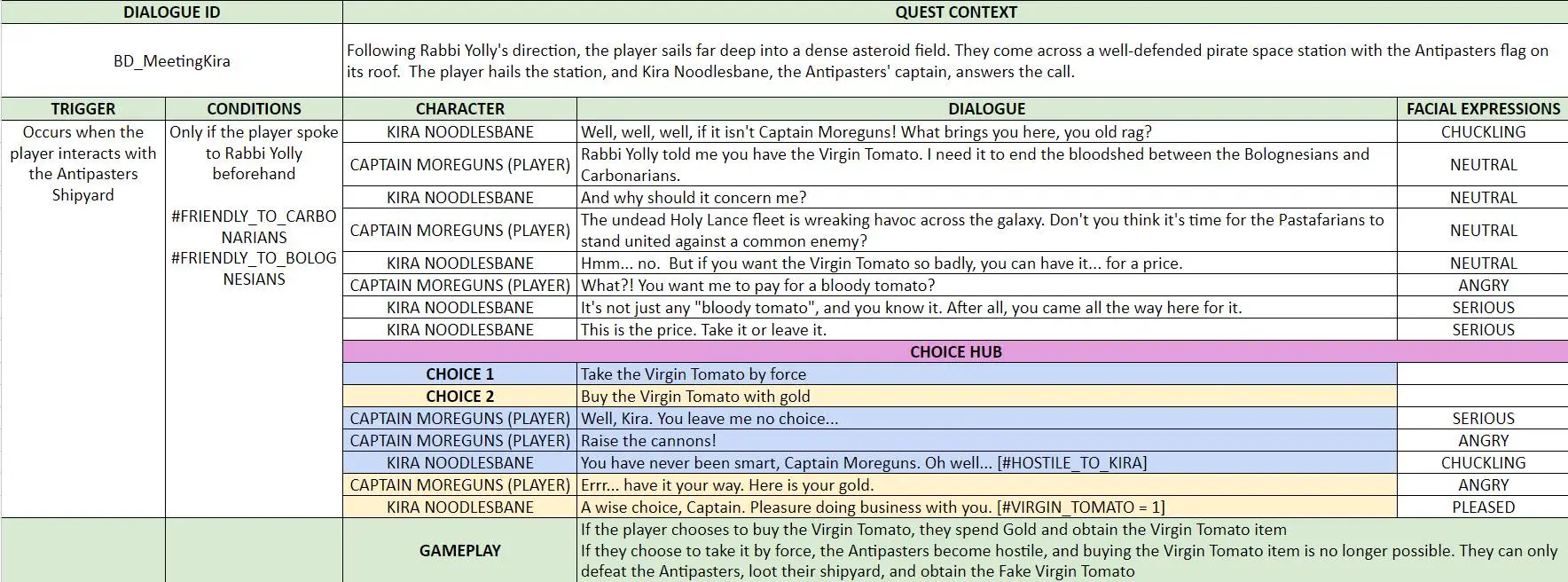
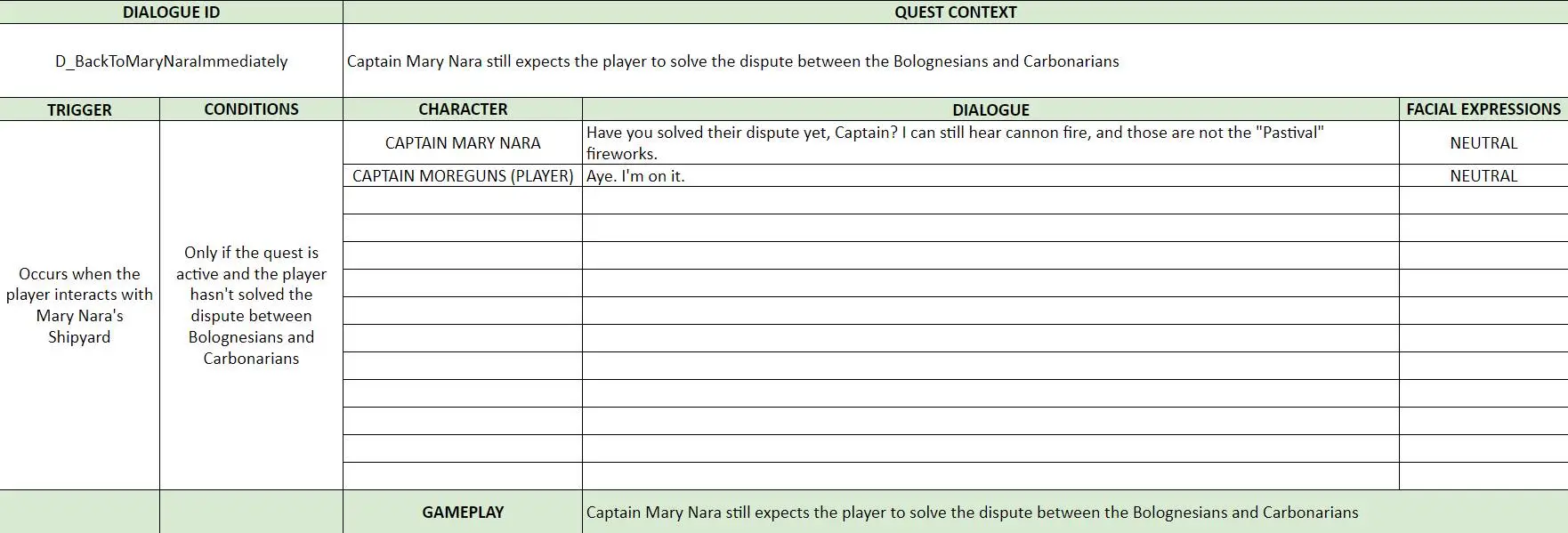
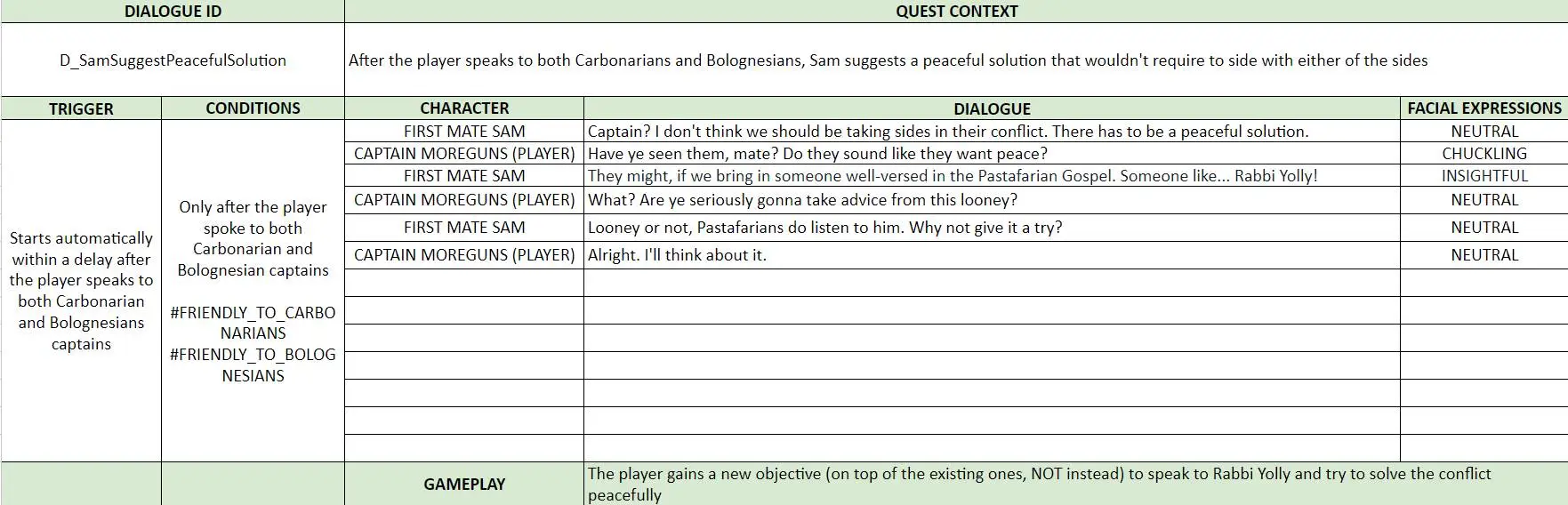
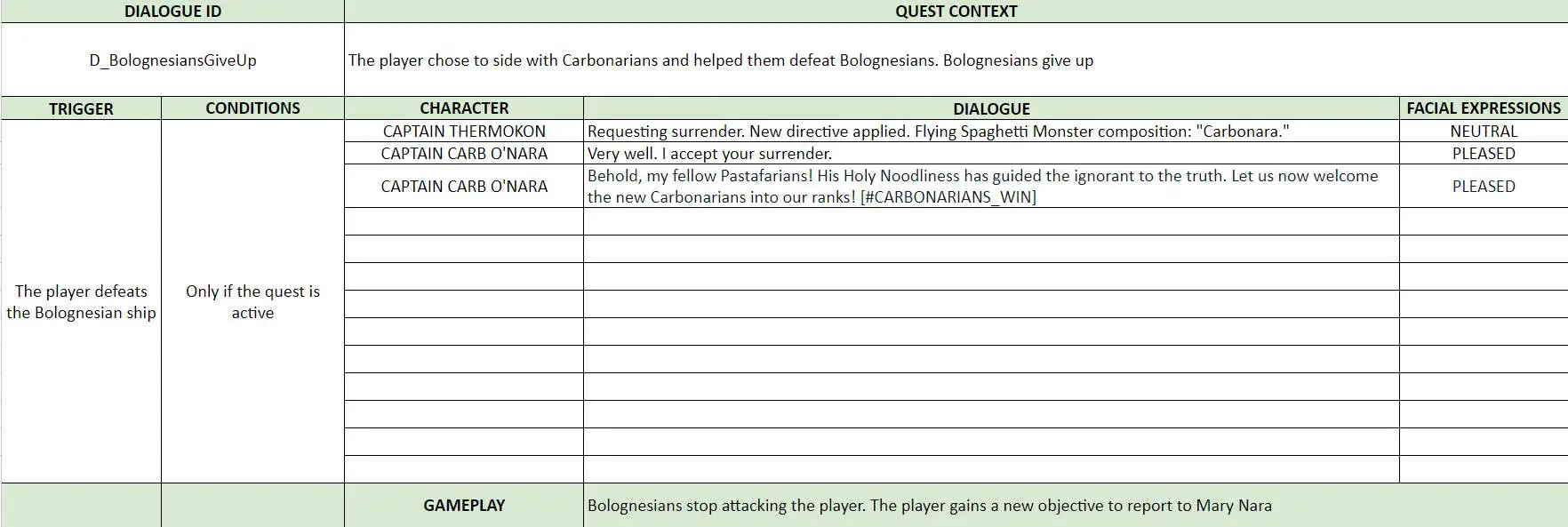
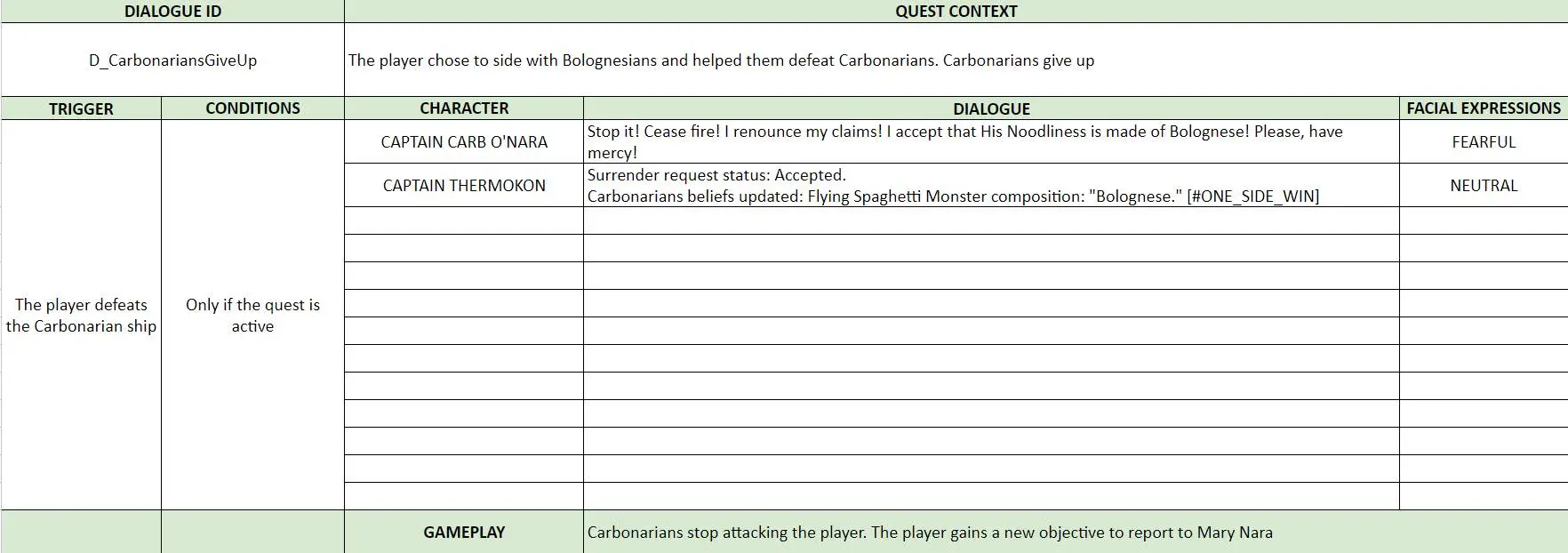
Branching Dialogue
Tested with a playable prototype
Quest Choice Hub
Quest Choice Hub
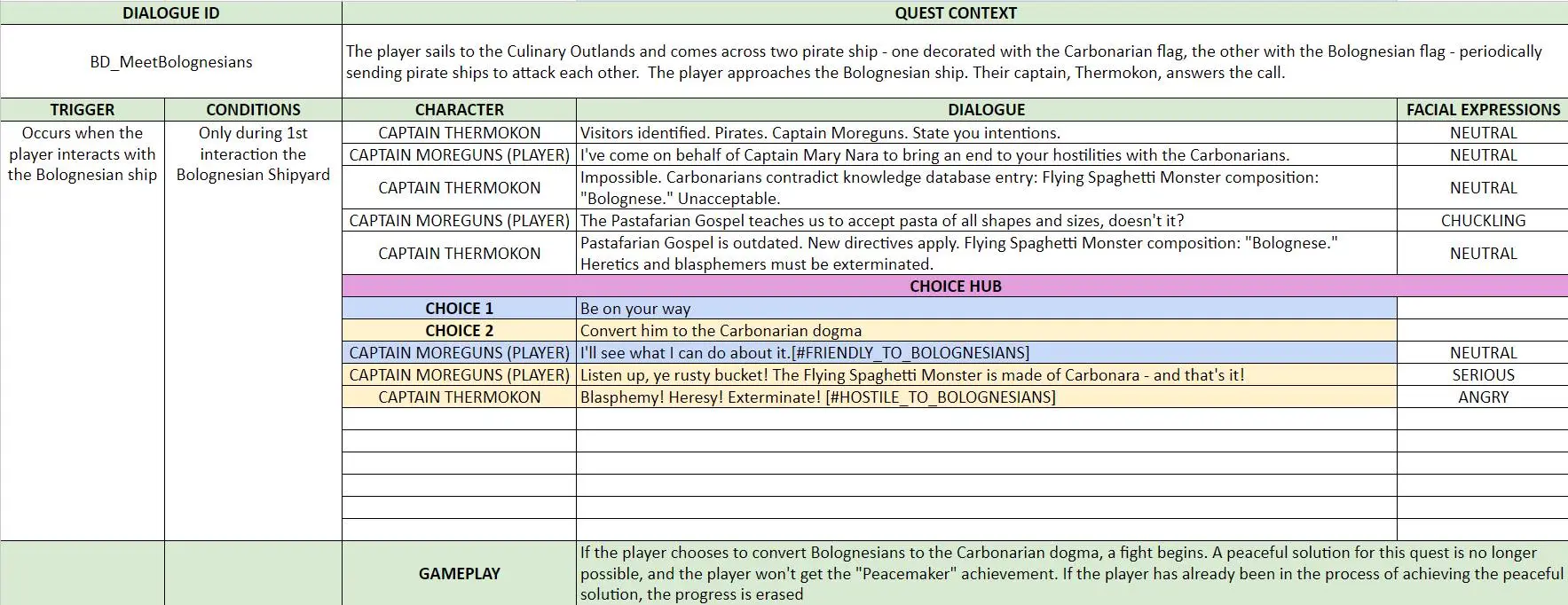
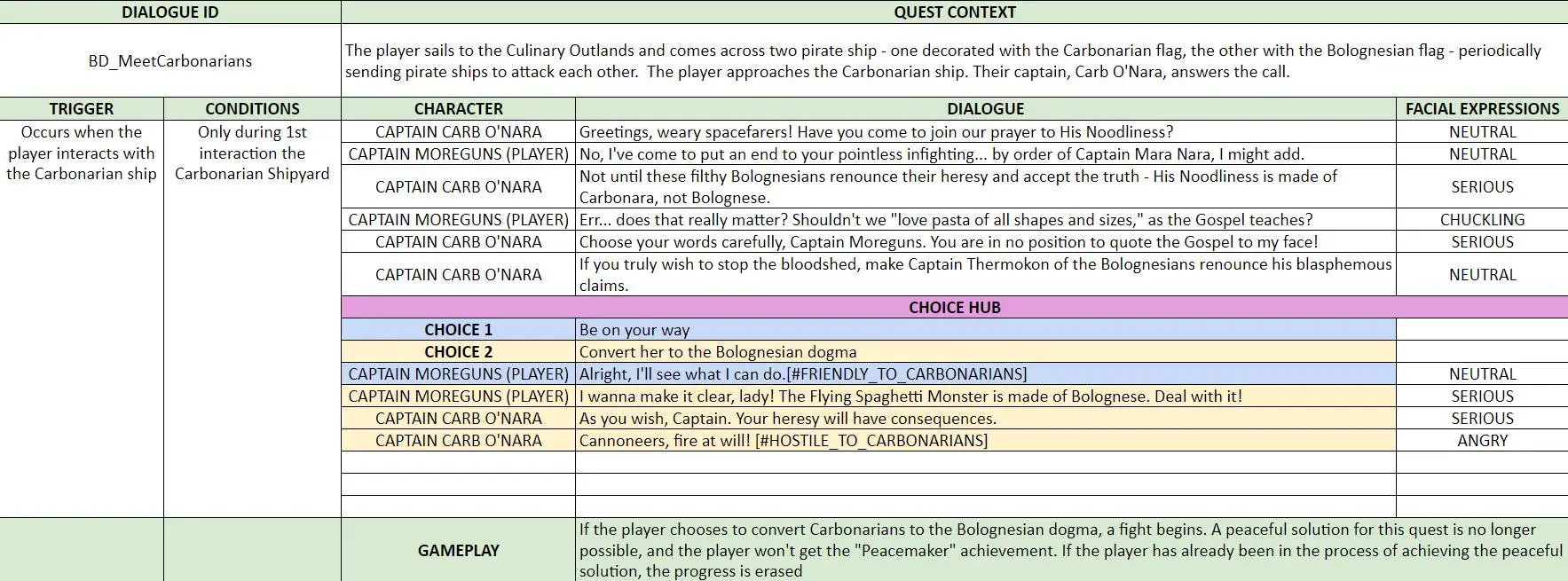
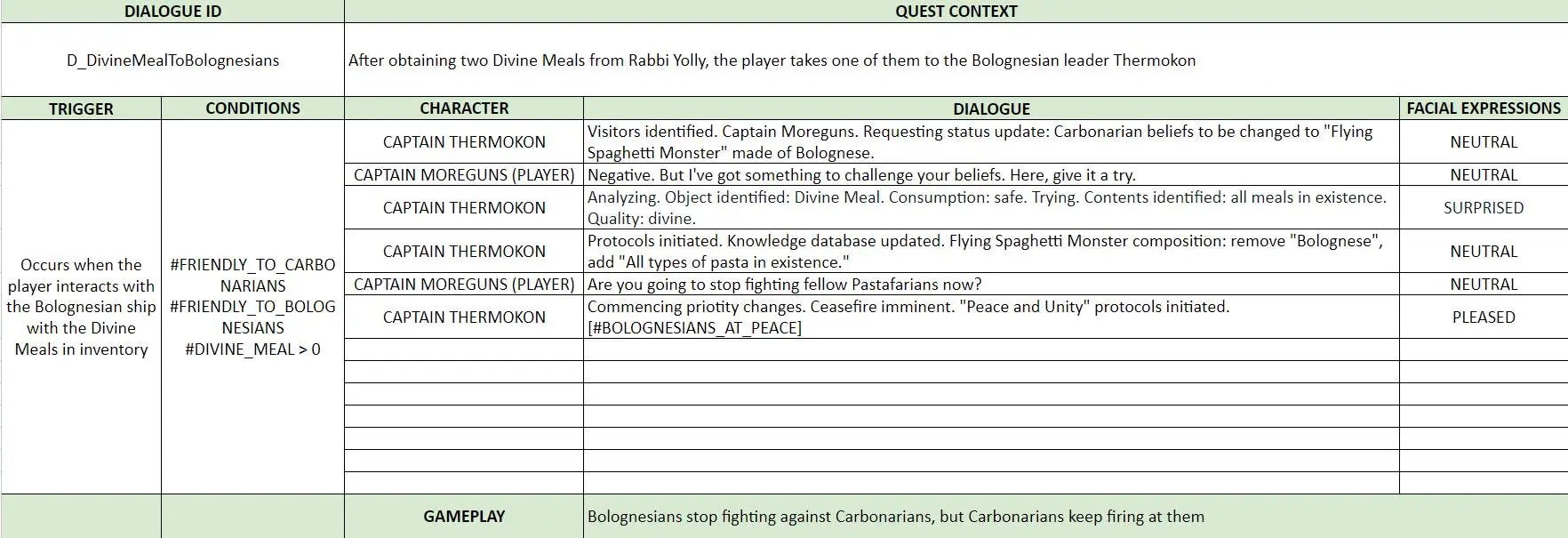
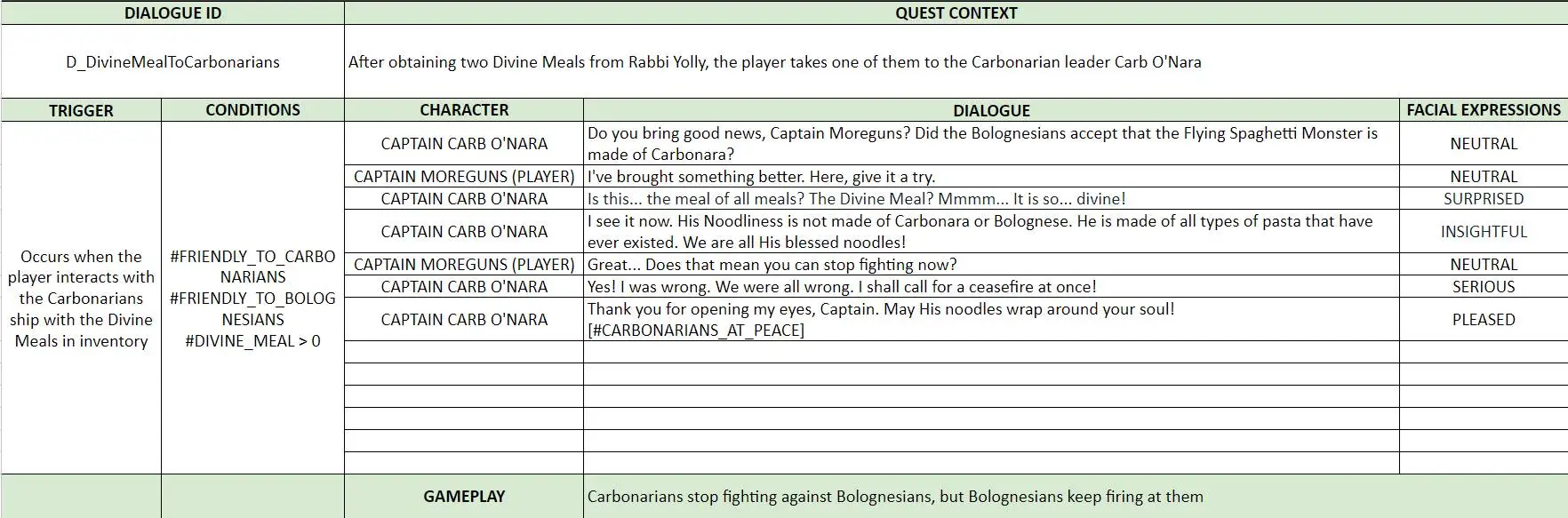
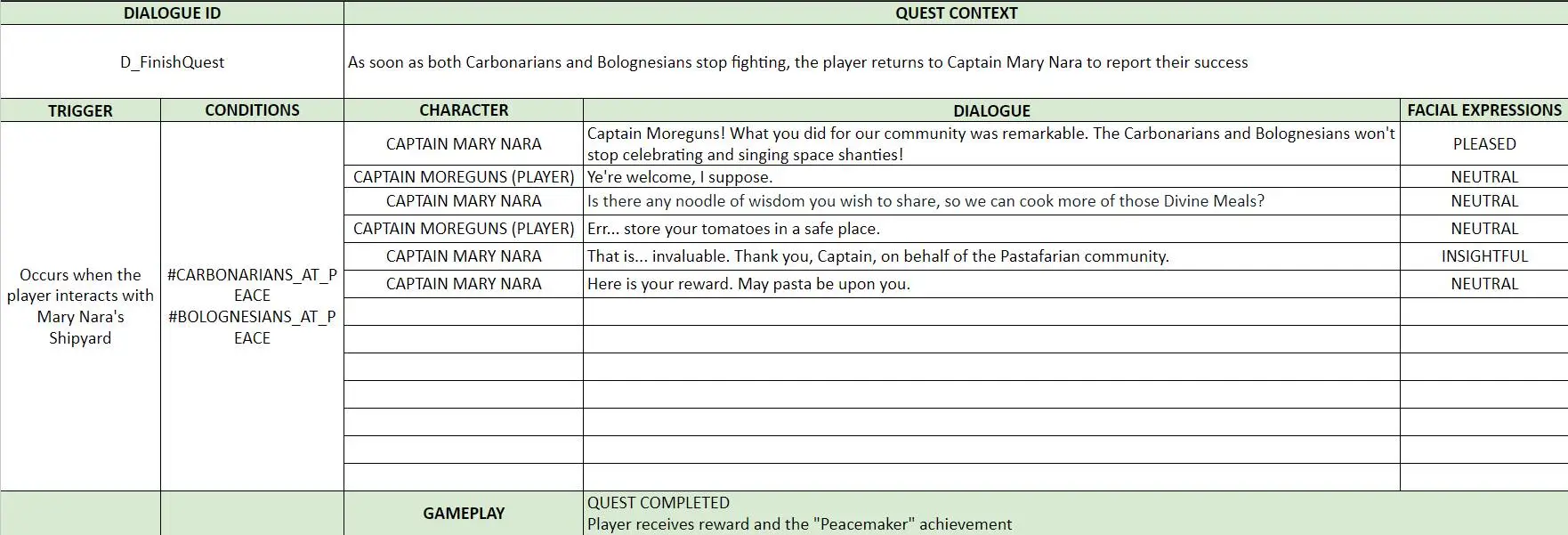
Designed a branching dialogue system that gives players multiple choices to influence the outcome of a scene. The choices affect the NPCs, the player’s reputation, and the quest’s story flow.
Context: The player must stop the conflict between two Pastafarian sub-factions, Bolognesians and Carbonarians. They fight over what pasta the Flying Spaghetti Monster is made of: Bolognese or Carbonara.
Branching dialogue design considerations:
Choice Hubs – to provide a player with a choice between polar opposite interactions.
Variable Checks – to tailor current gameplay depending on the player’s previous choices.
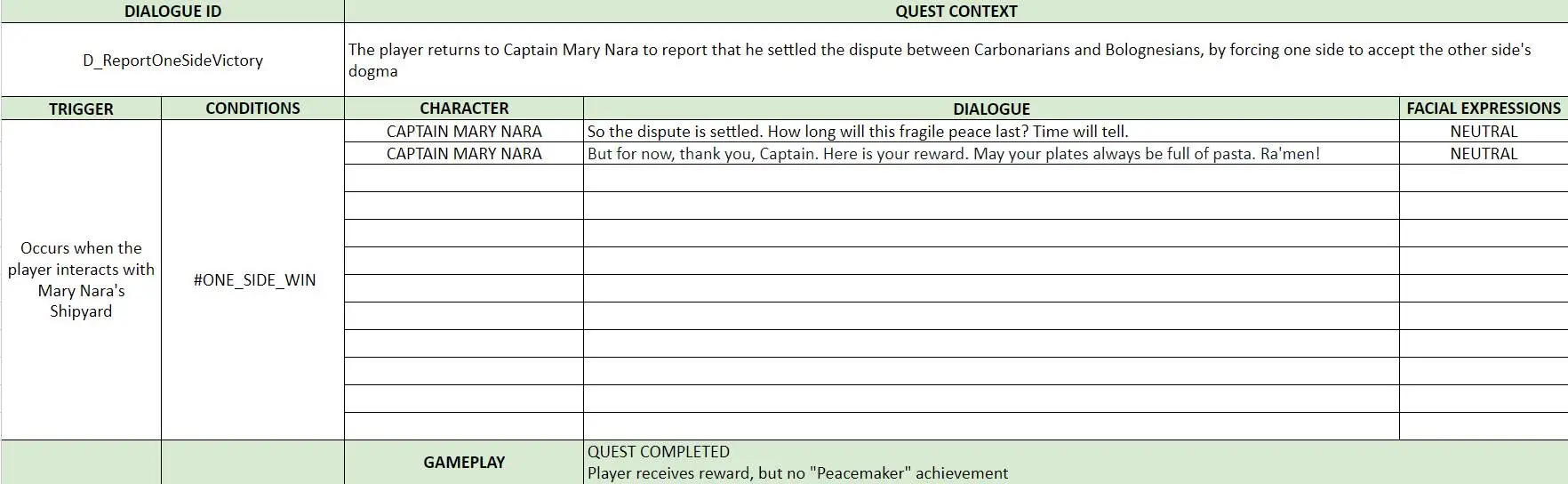
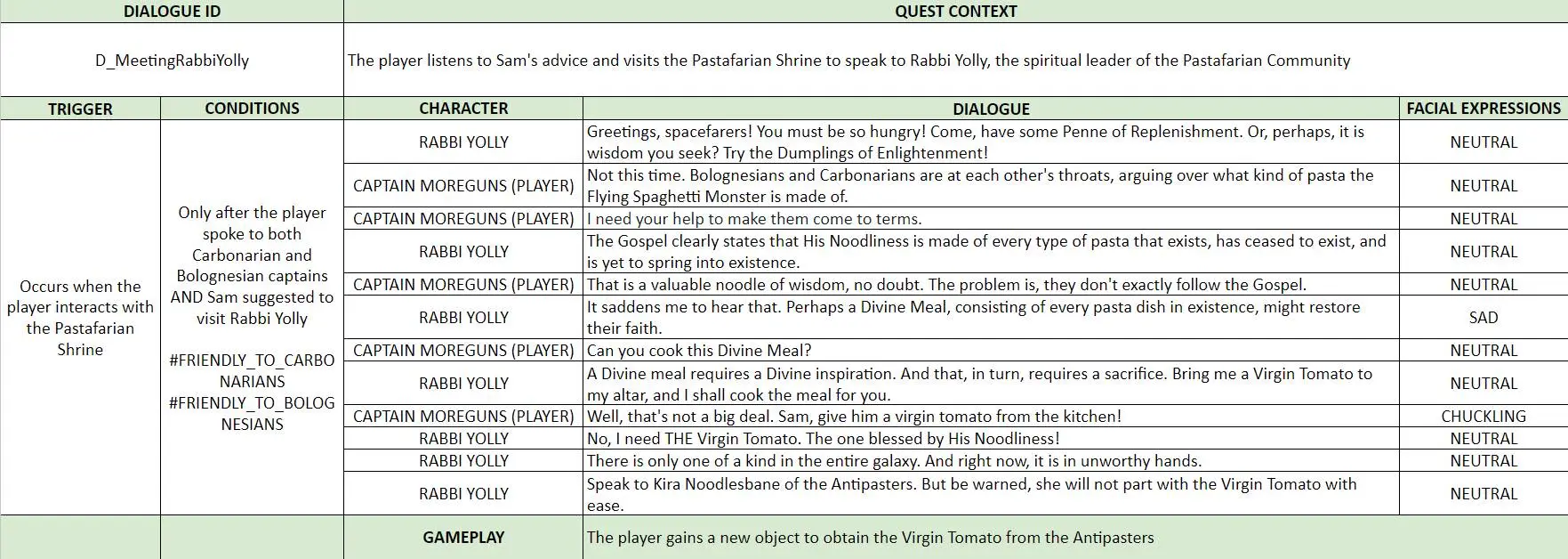
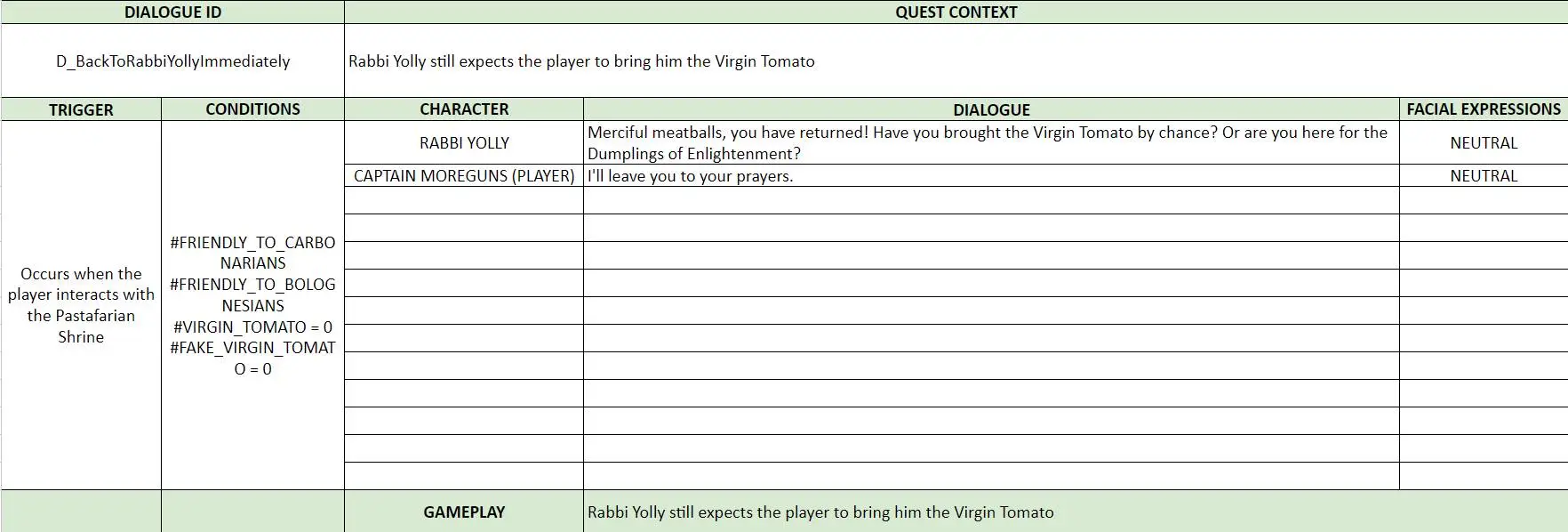
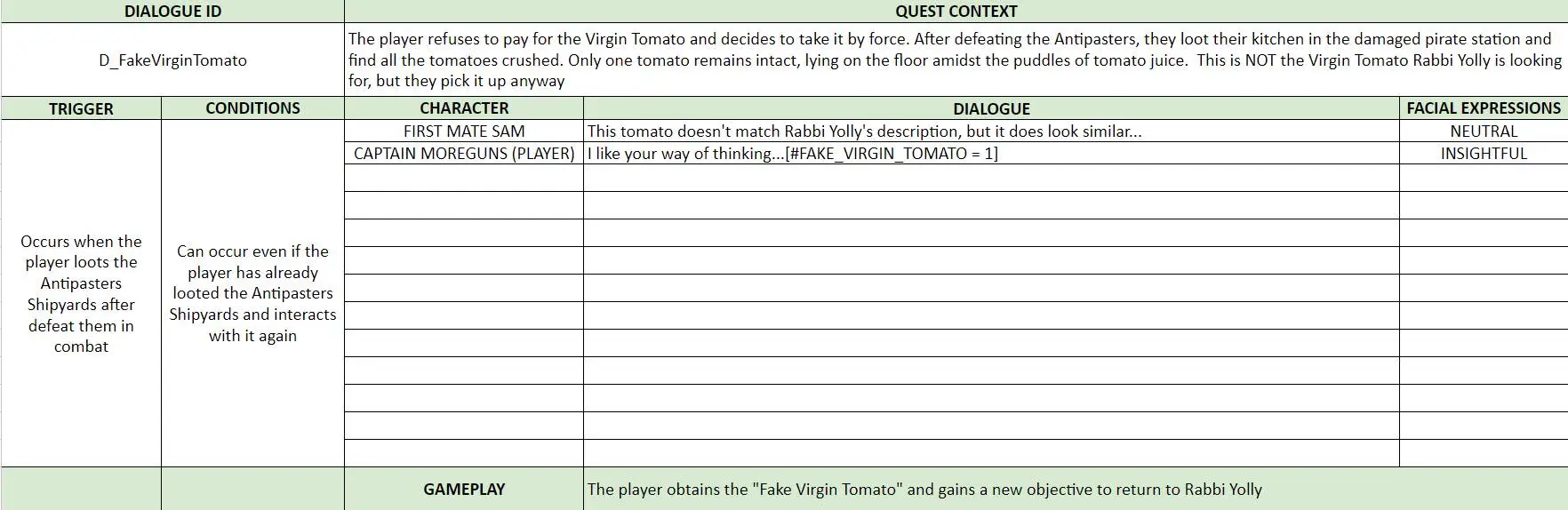
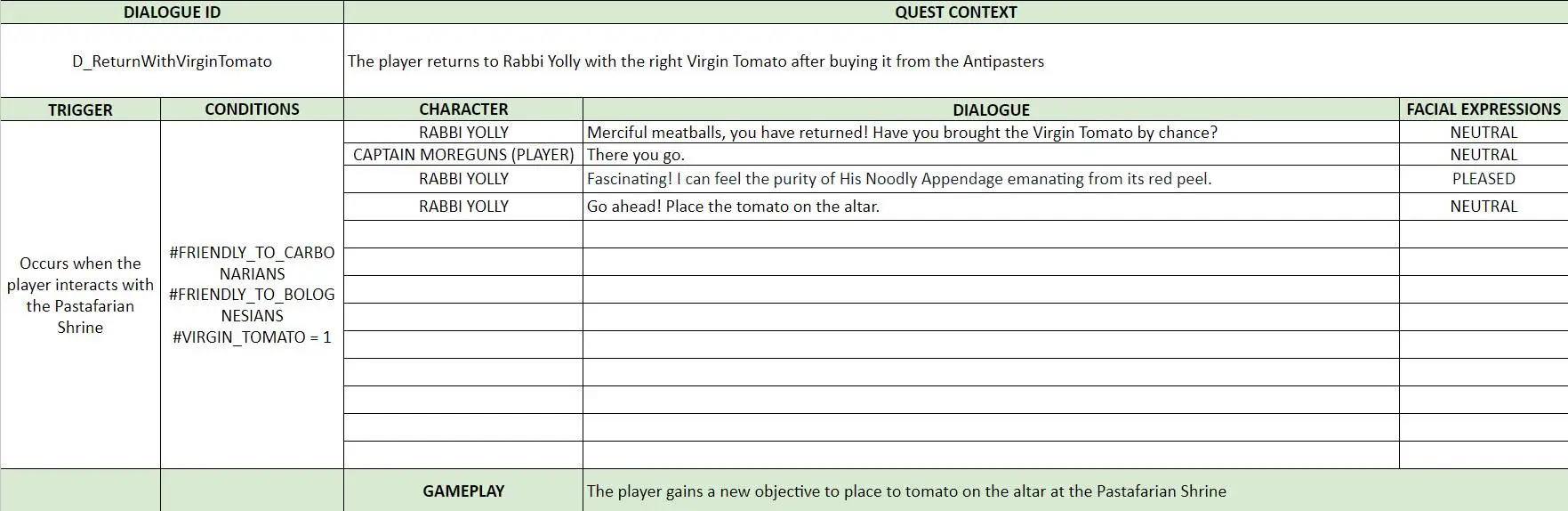
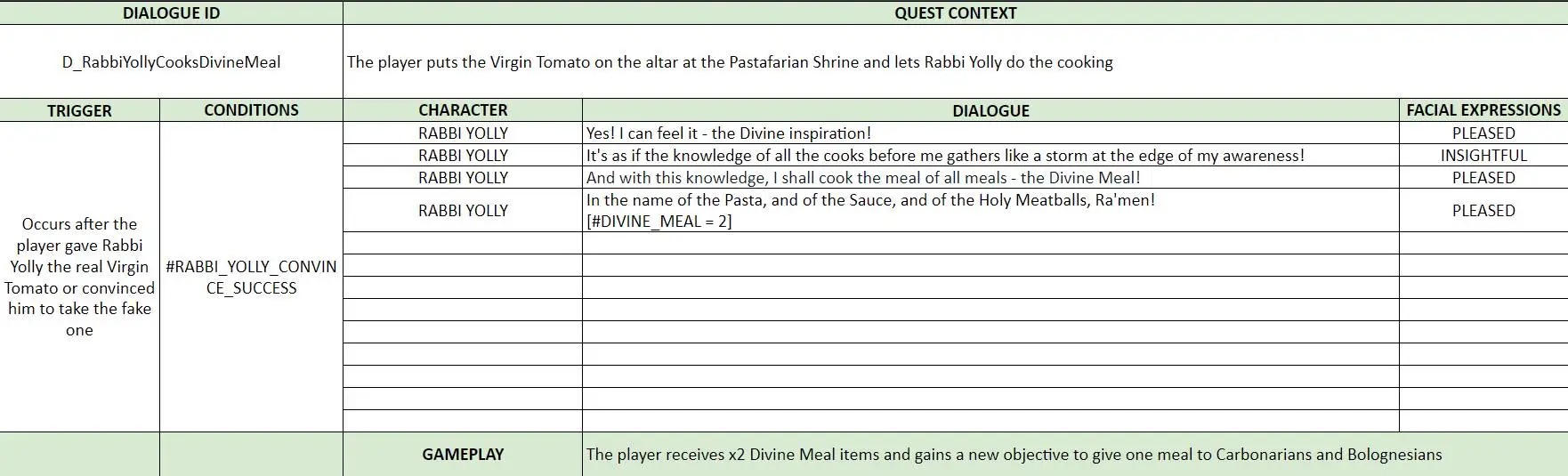
I wrote linear dialogue that covers interactions within the Divine Meal quest. Each dialogue gives information to the player and moves the story forward.
Considerations
Gameplay Goals – The dialogue serves its purpose and advances the game’s flow.
Character Goals – All participants want something. With every line they speak, they are trying to get it.
Lore Context – The dialogue stays true to the lore and the character’s place in the game’s world.
Characters’ Tone and Traits – to make sure the way the characters speak matches their personalities.
Character Design and Barks
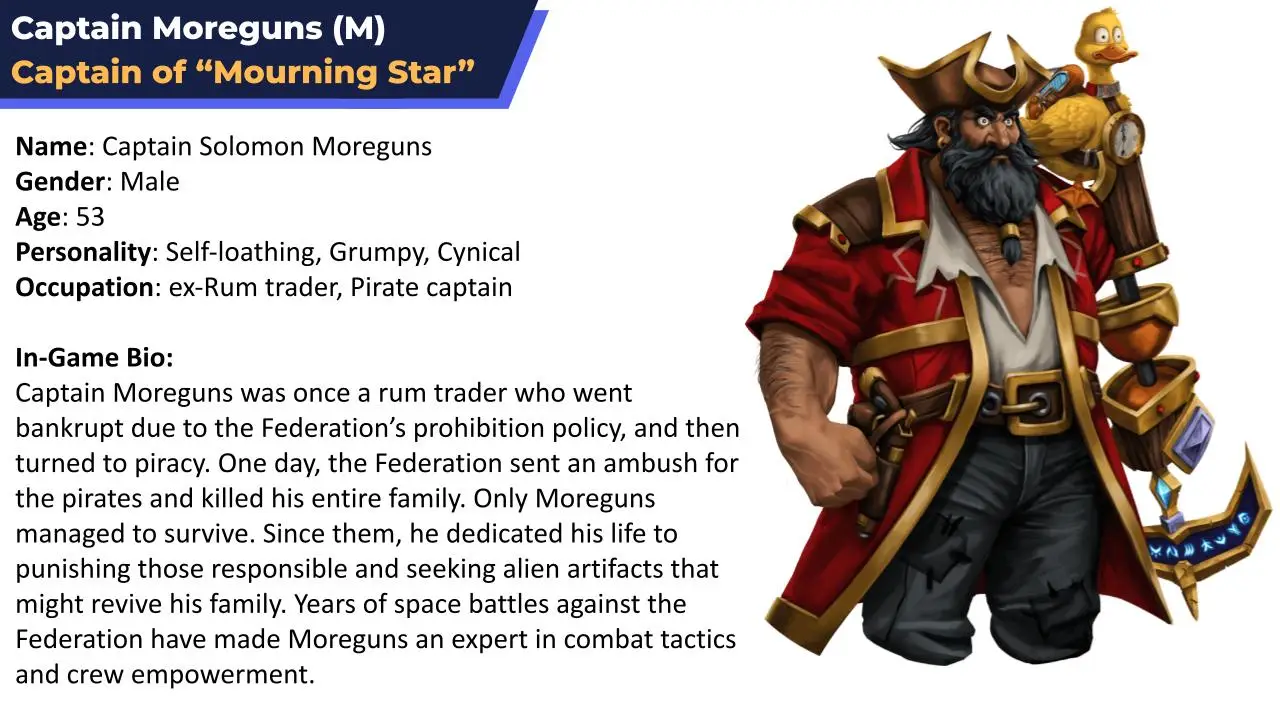
Player Character: Captain Moreguns
Design
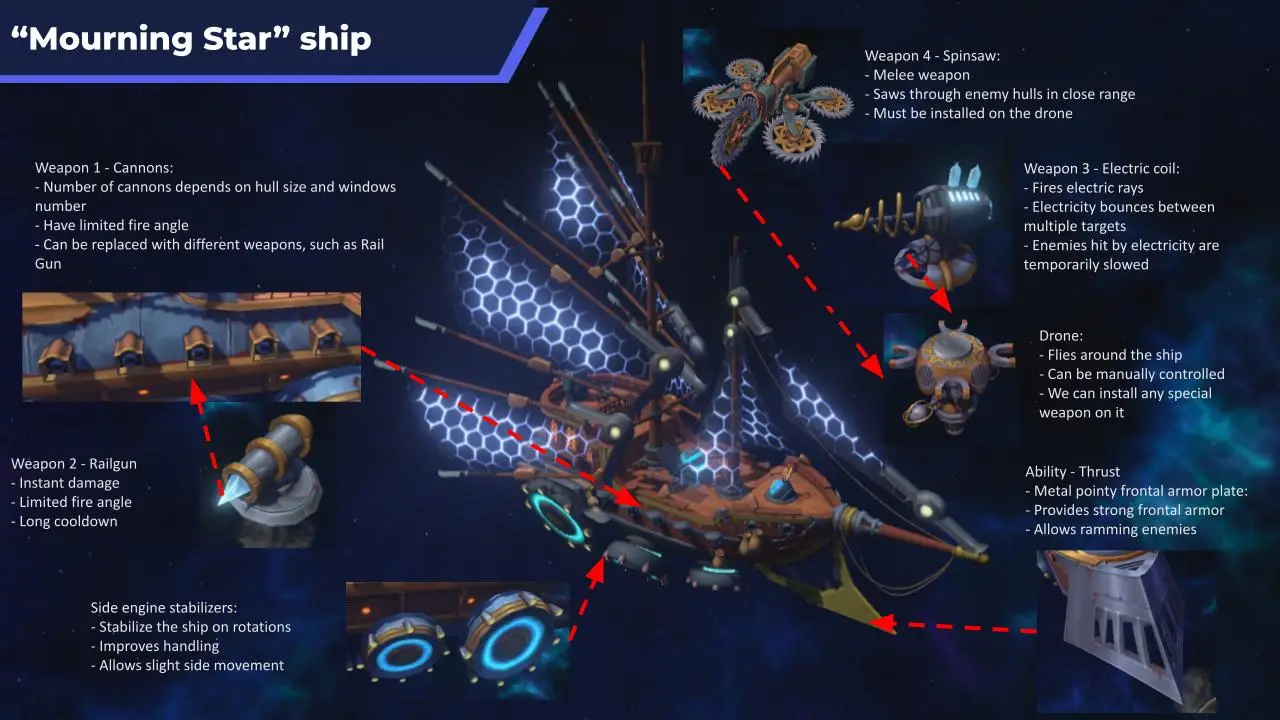
Character's Ship
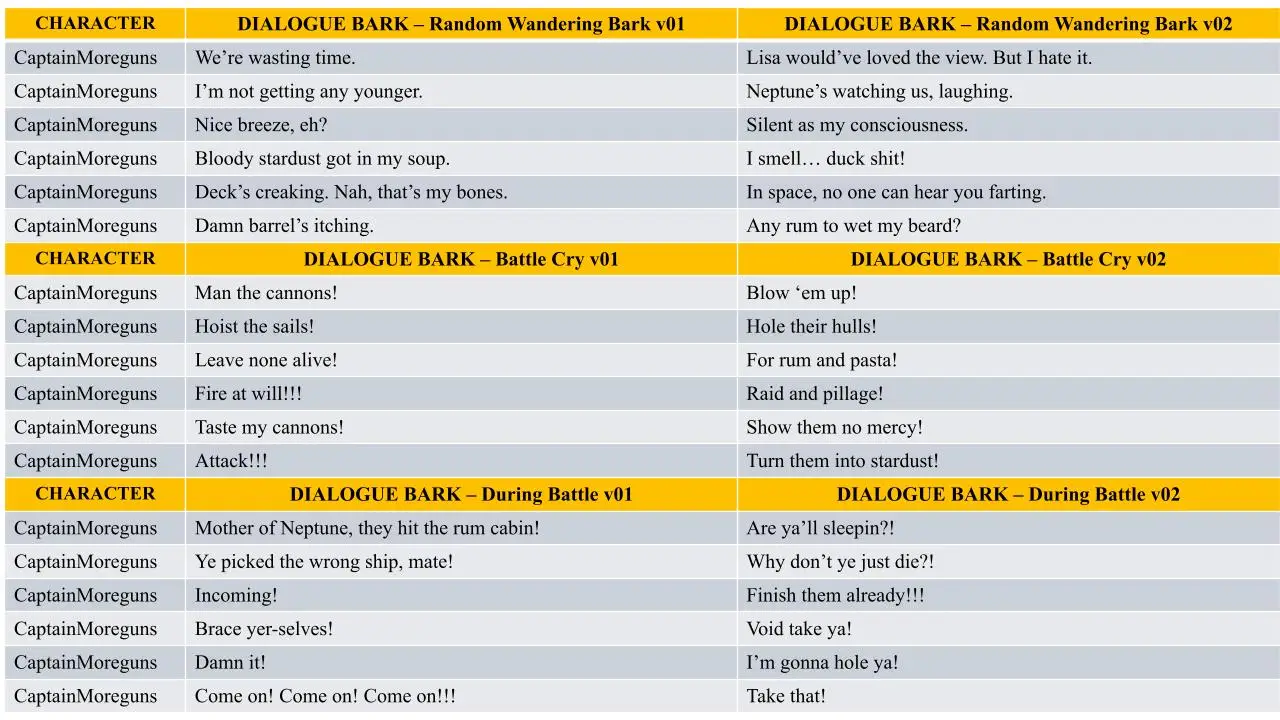
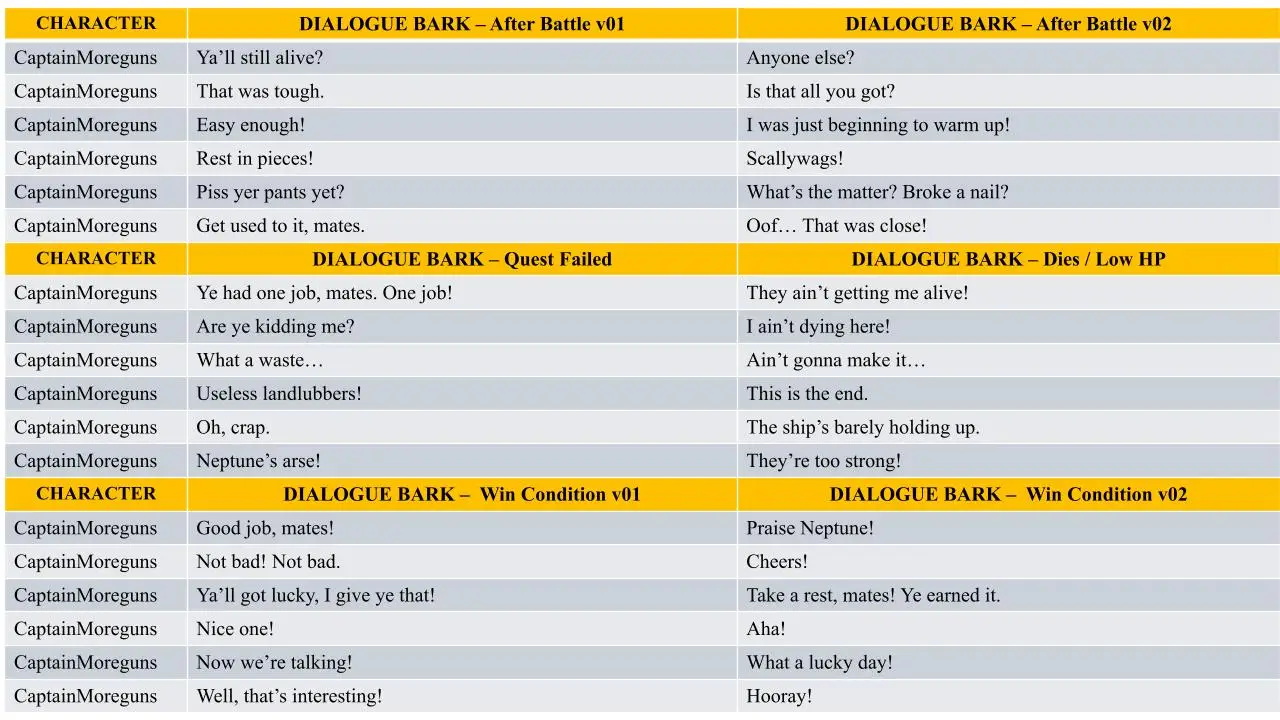
Barks
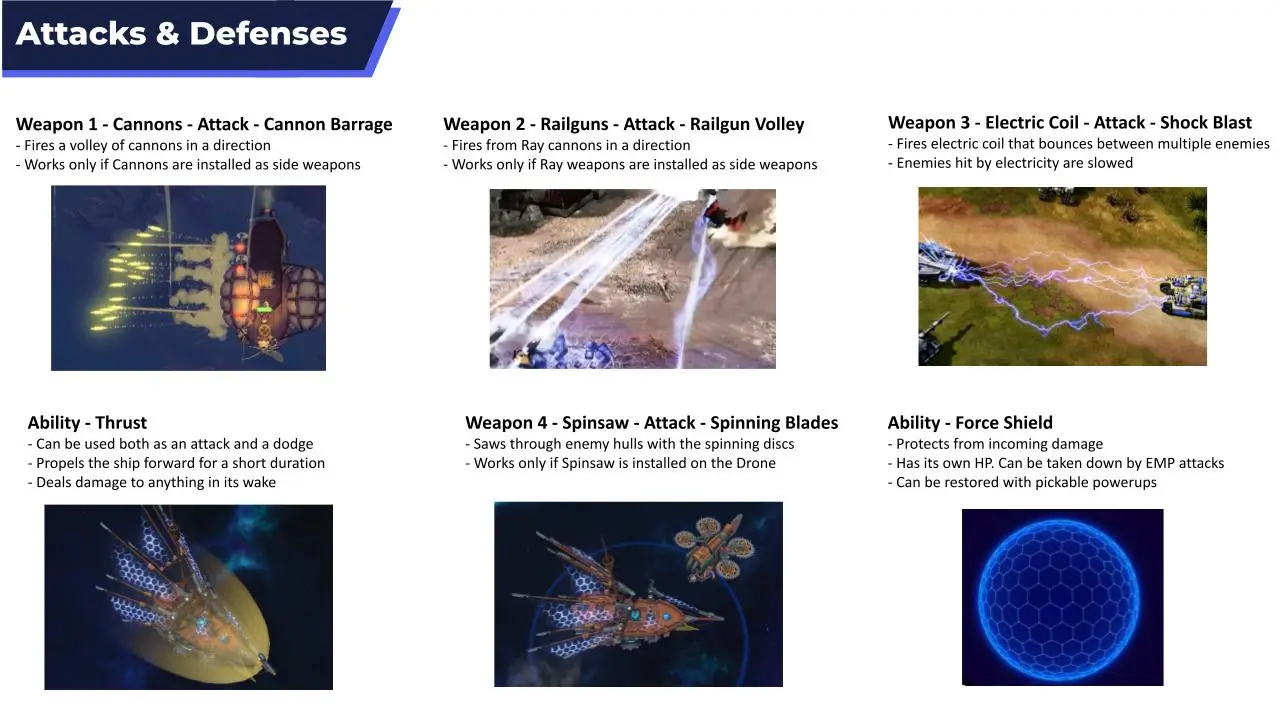
Attacks
Captain Solomon Moreguns is the main character, a grumpy old man who lost his family due to his own mistakes. And now he seeks ancient artifacts to bring them back to life.
I took inspiration from several popular characters: John Silver from Treasure Planet, Bloody Baron from Witcher 3, Joel from The Last of Us, and Butcher from The Boys.
I find Captain Moreguns an interesting character because he is an “Anti-Hero”. Initially, he is cynical, self-centered, and lacks heroic qualities. But as his journey progresses, he discovers the good in himself and becomes more altruistic.
Moreguns’s ship is basically the one we control in the game.
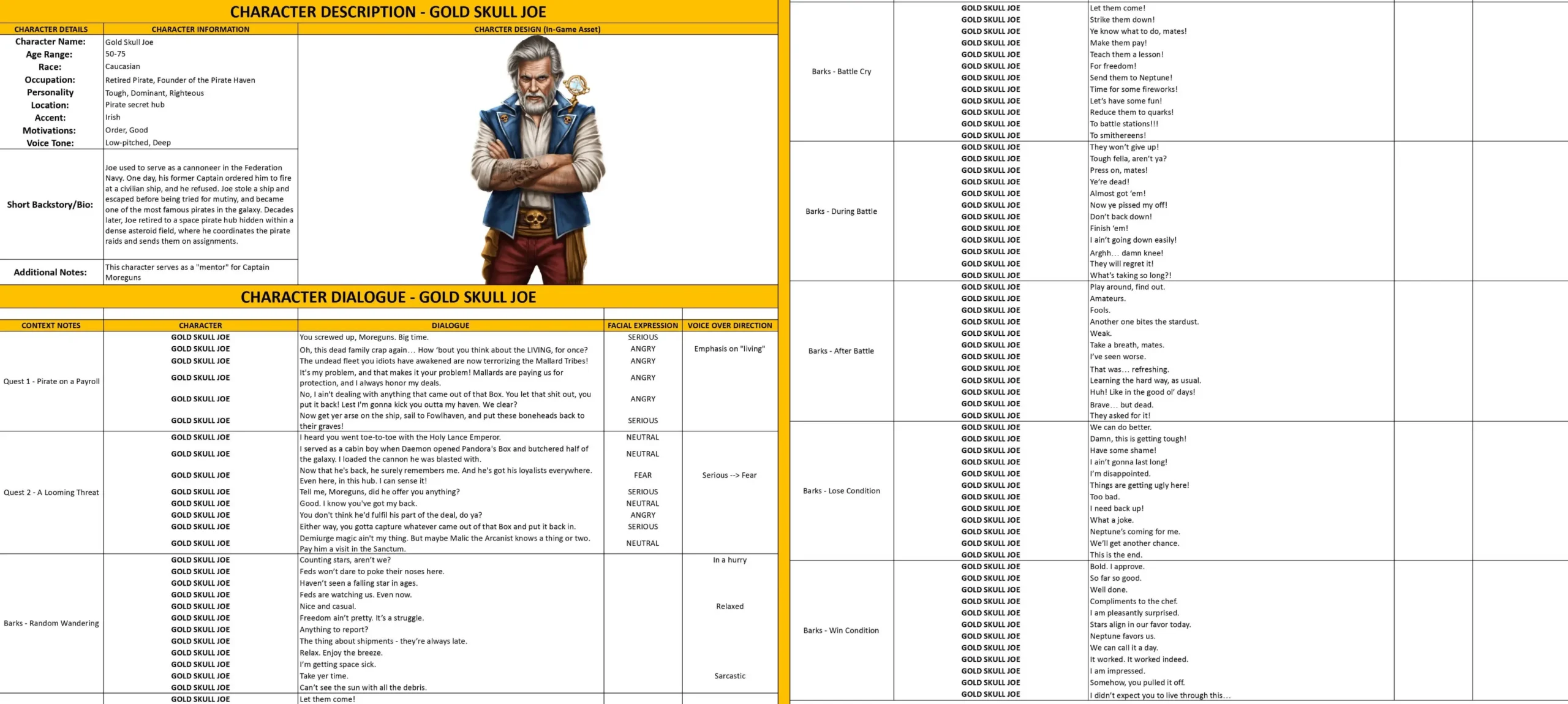
Ally NPC: Gold Skull Joe
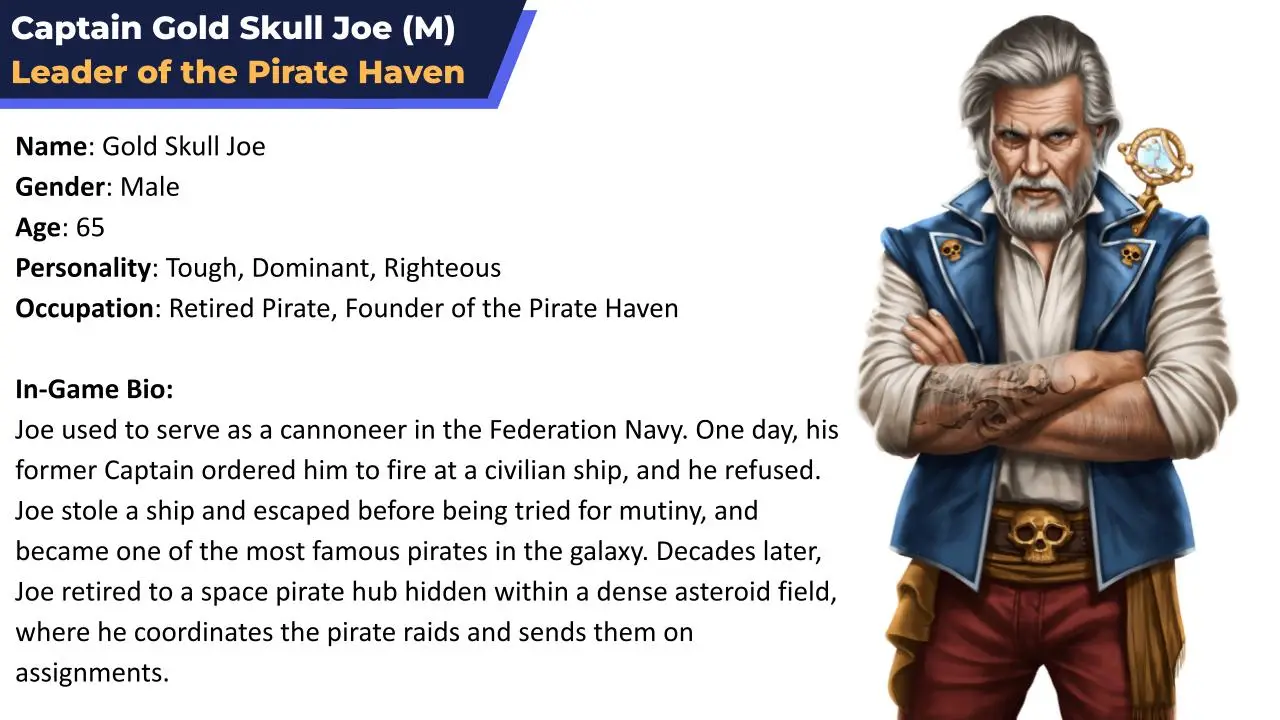
Design
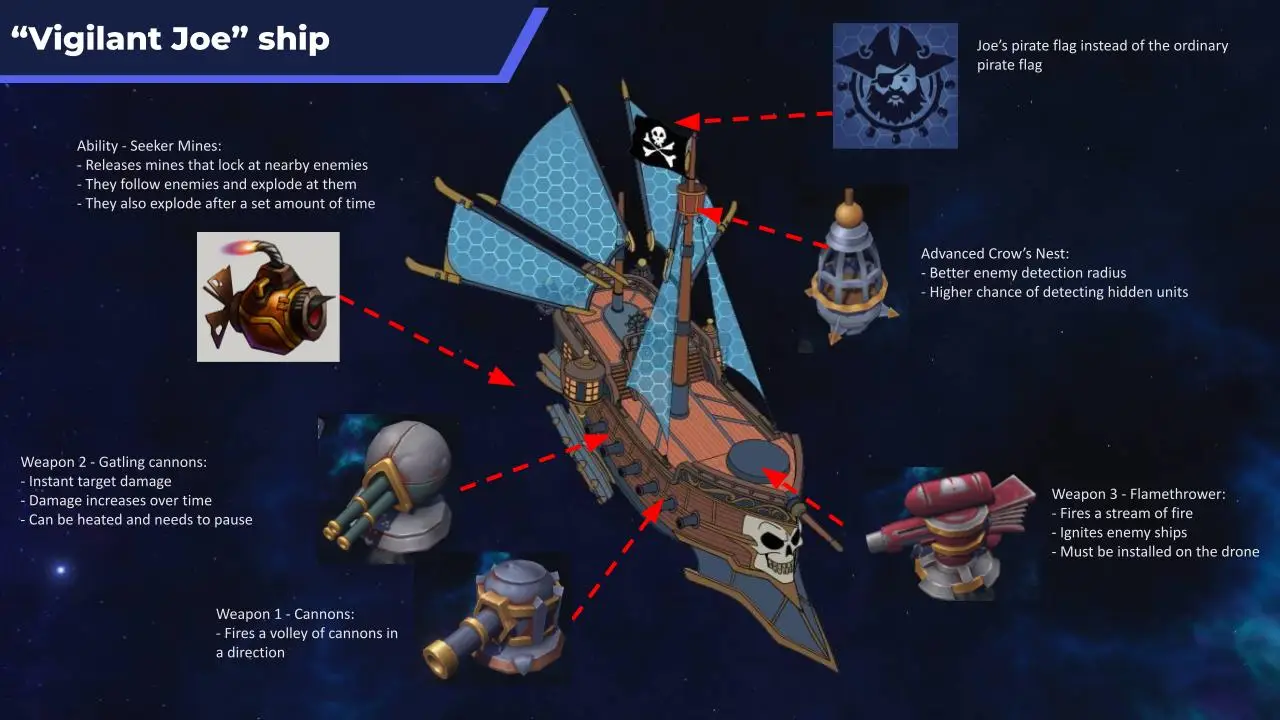
Character's Ship
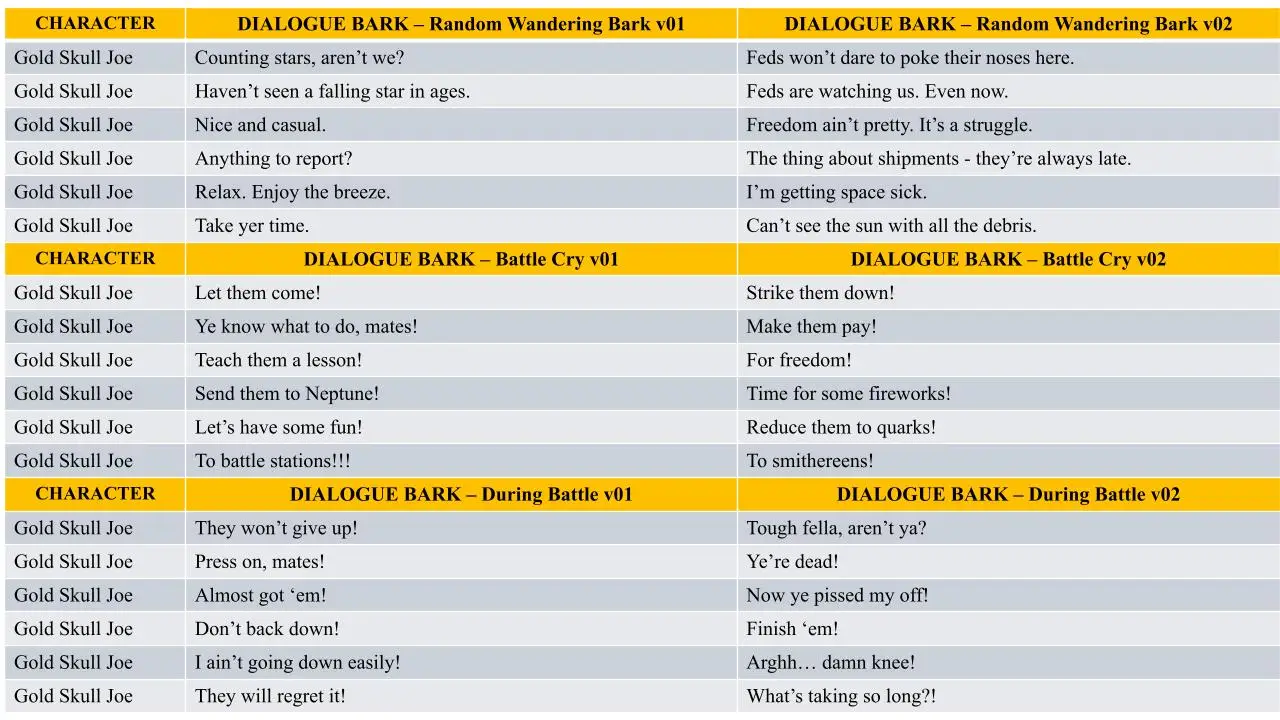
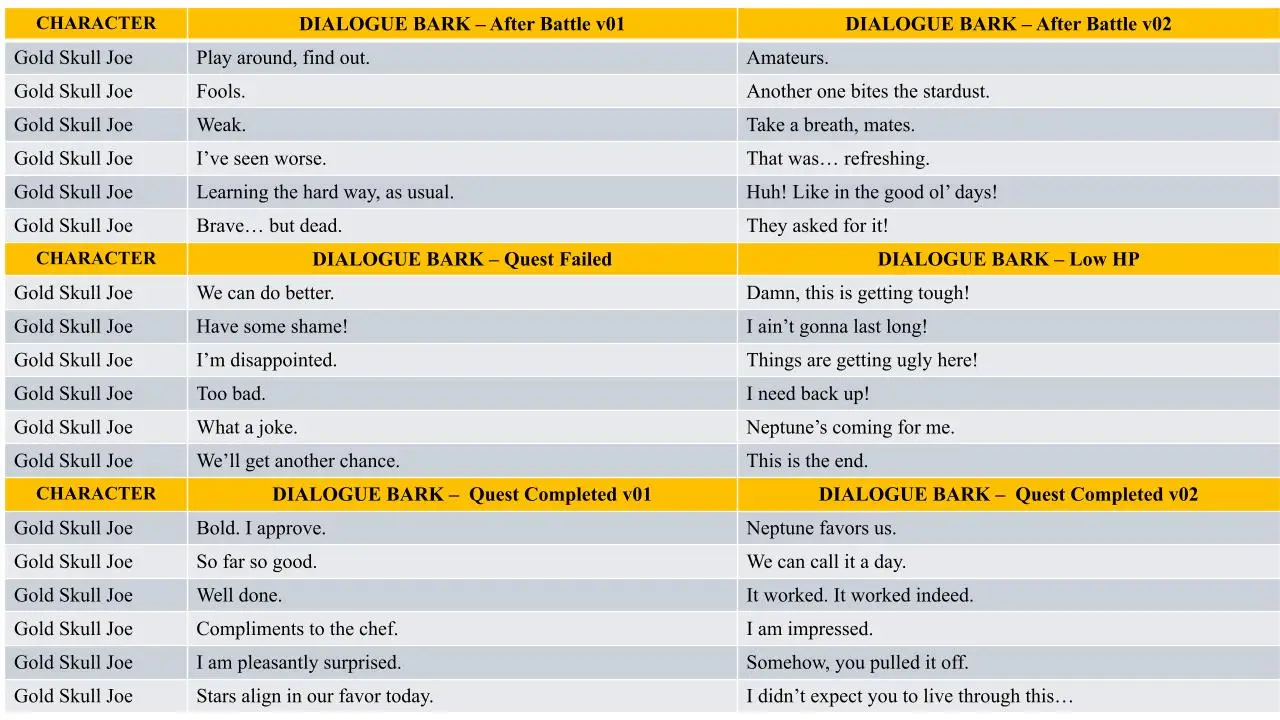
Barks
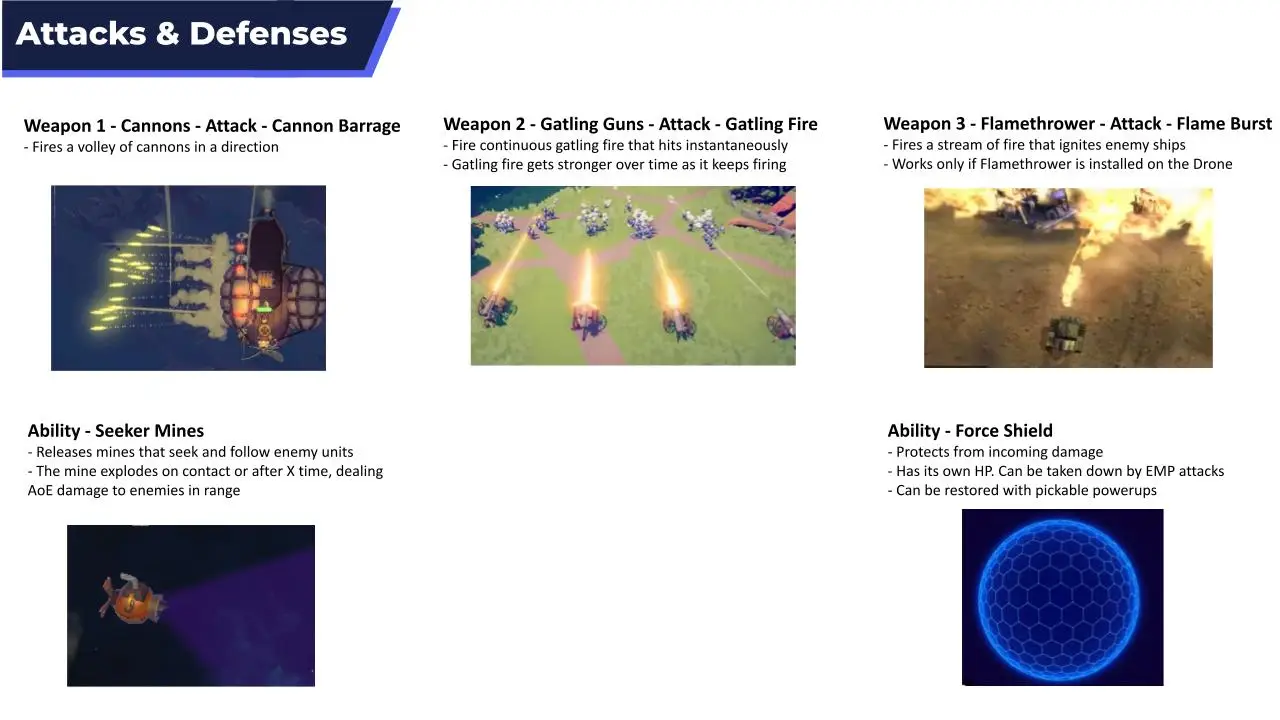
Attacks
The idea behind Joe’s character is a “mentor”. A tough guy to whom the main character looks up. He serves as the main quest giver and dies later in the game. This serves as a powerful plot device to show the main character that he is on his own now.
When designing this character, I drew inspiration from popular mentor characters like Obi-Wan from Star Wars, Abraham Whistler from Blade, and Vesemir from The Witcher 3.
I find Gold Skull Joe particularly interesting because I believe the game’s piracy setting has a place for a strong mentor with strong principles. Besides being a quest giver, he also has a combat ship, which serves as an ally unit against enemies.
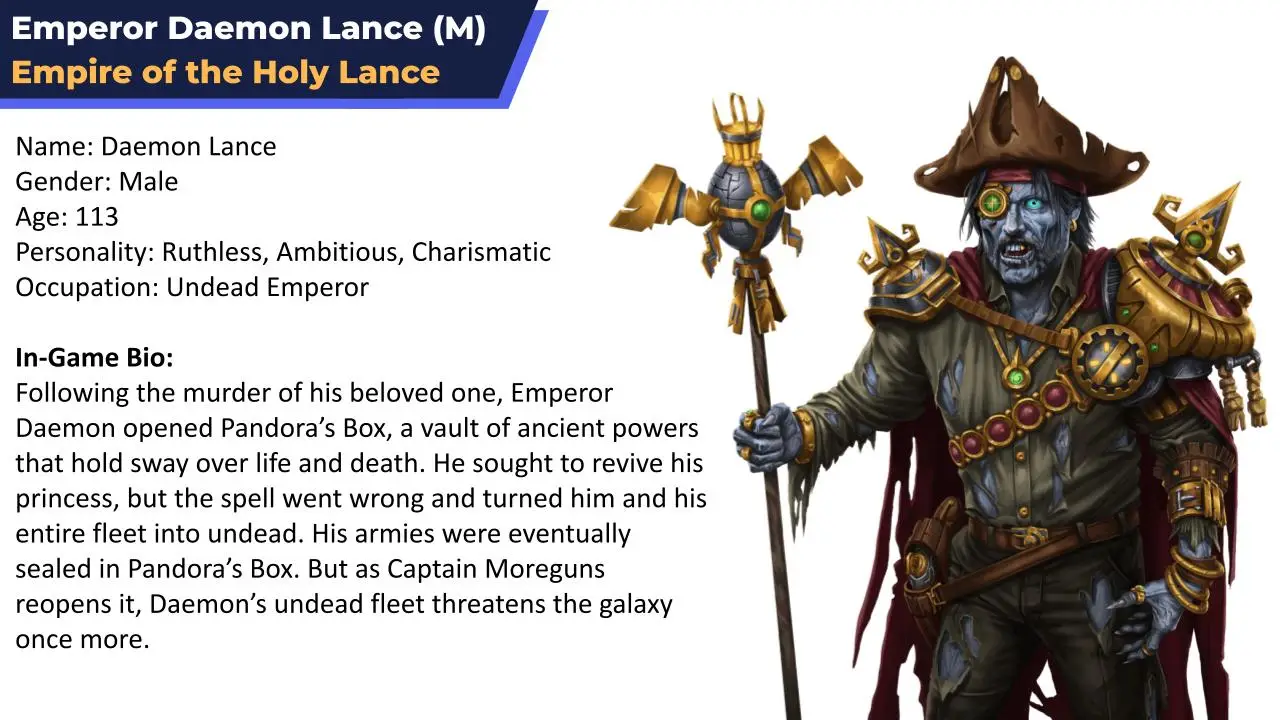
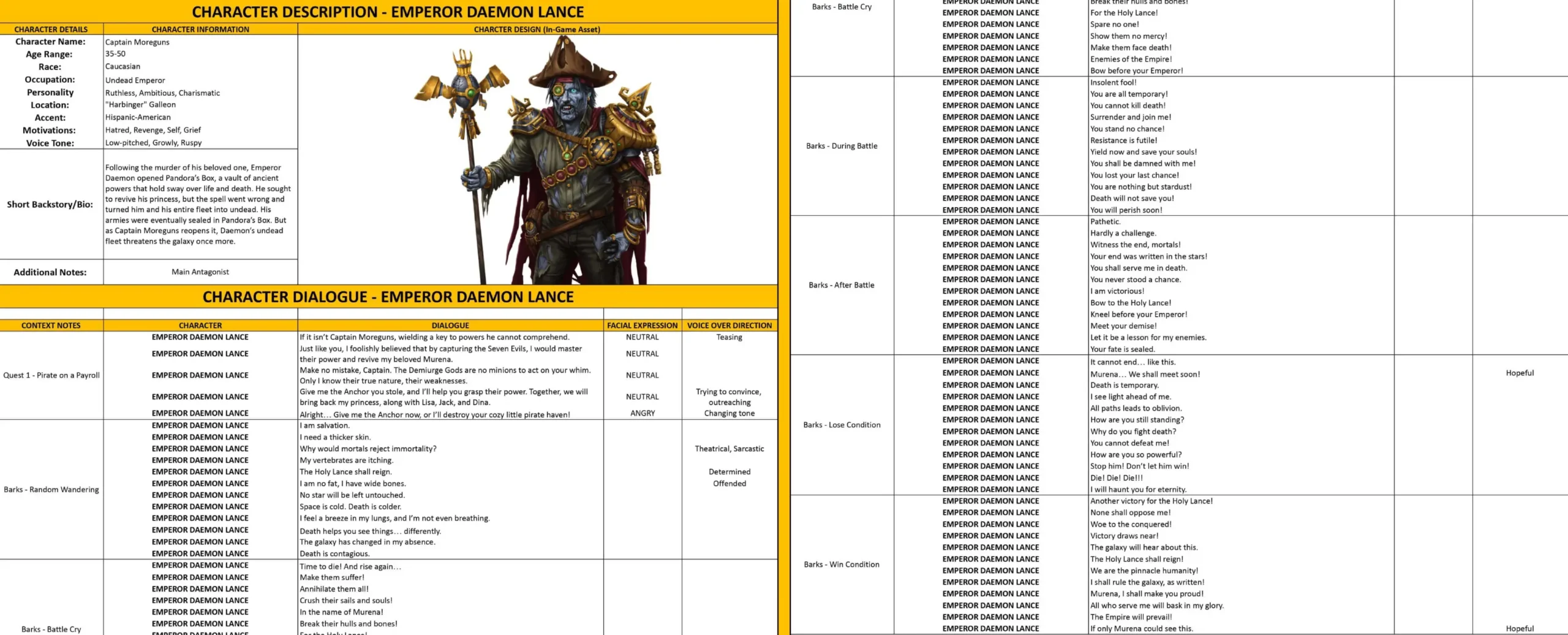
Enemy NPC: Emperor Daemon Lance
Design
Character's Ship
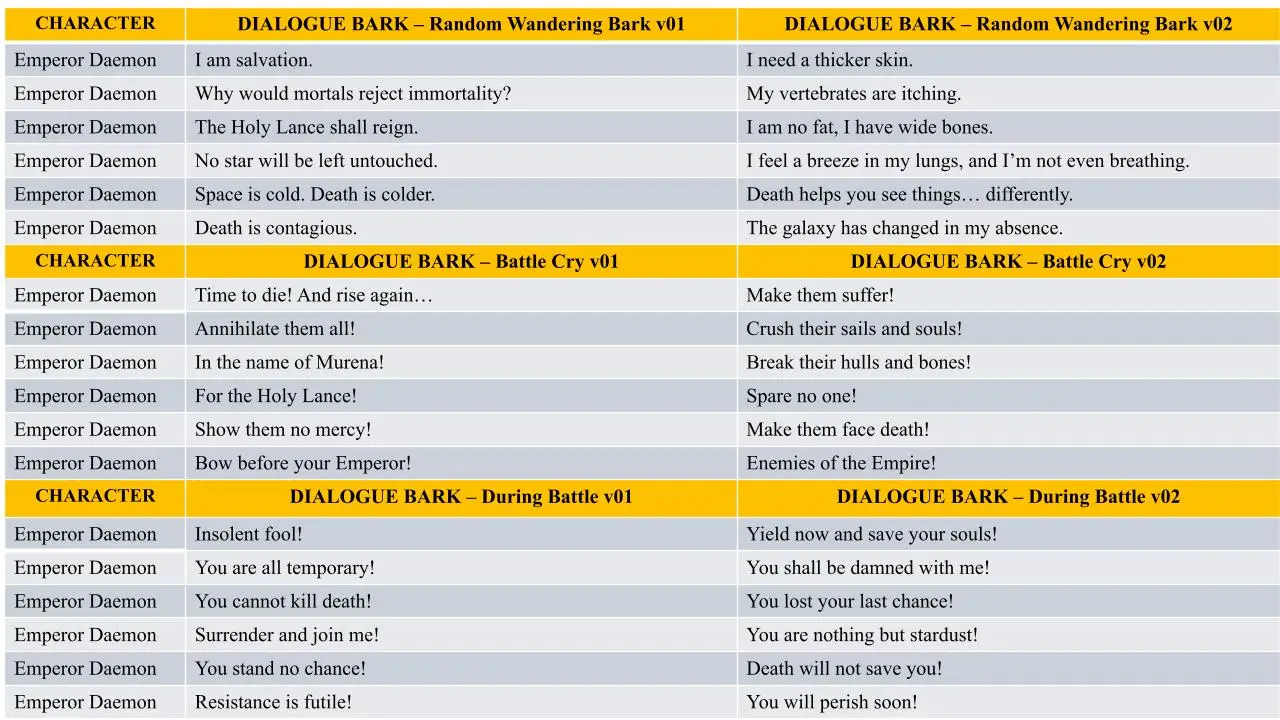
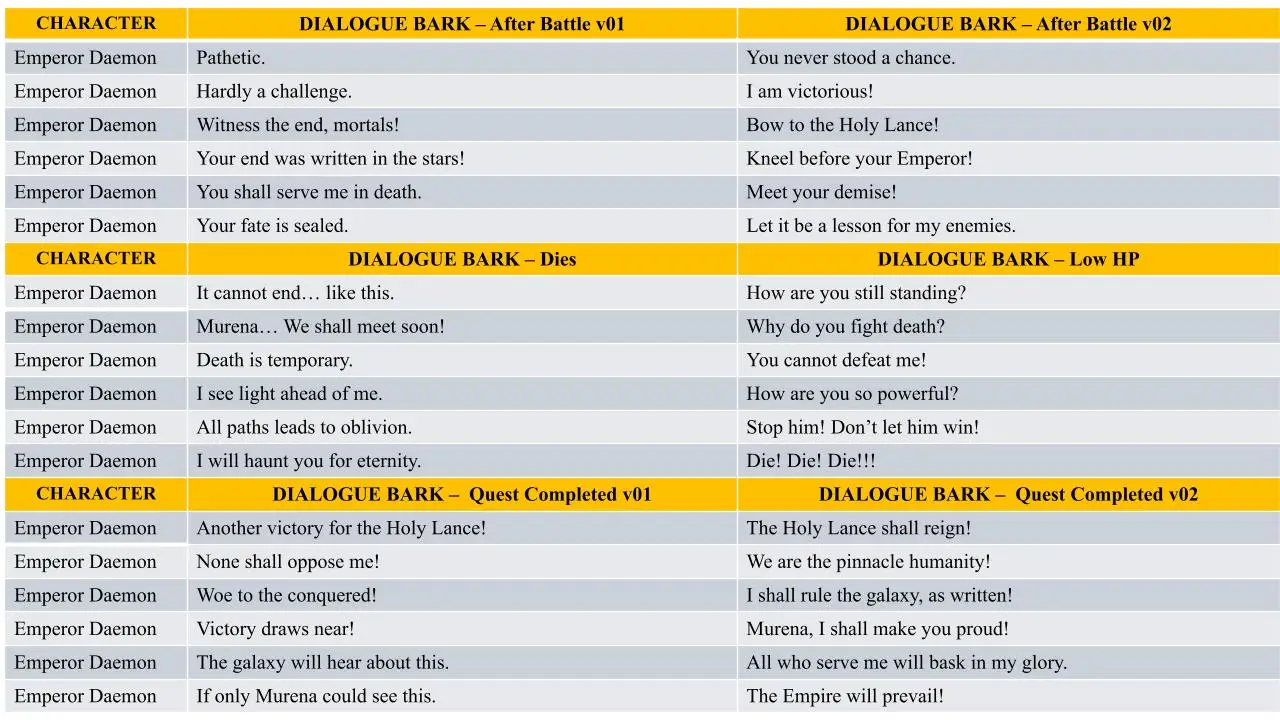
Barks
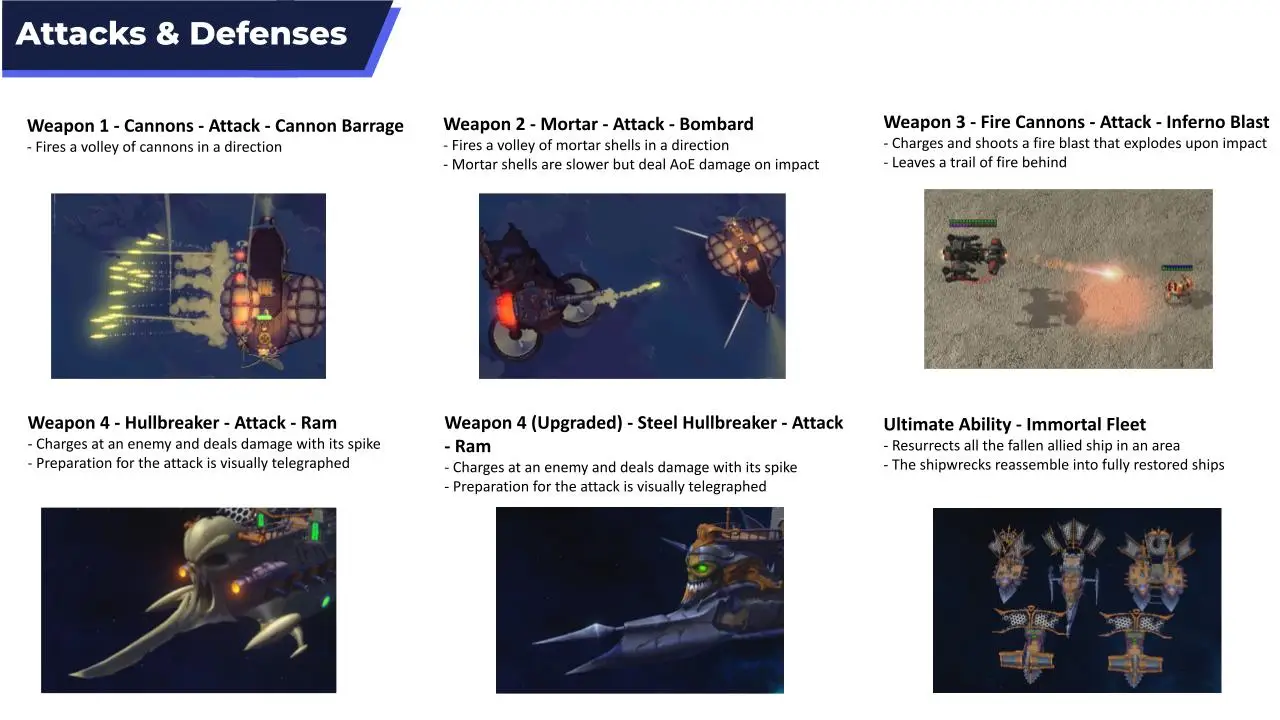
Attacks
Emperor Daemon Lance is the antagonist in the game. Like the main character, he also fails to cope with grief over the loss of his loved ones. He seeks the same ancient artifacts to bring them back to life. But his means of are more ruthless.
I drew inspiration from tragic villains like Davey Jones from Pirates of the Caribbean, Magneto from X-Men, and Imhotep from The Mummy.
What makes this character compelling is that he follows a similar journey to the main character. But he fails to overcome his flaws and chooses the path of evil.
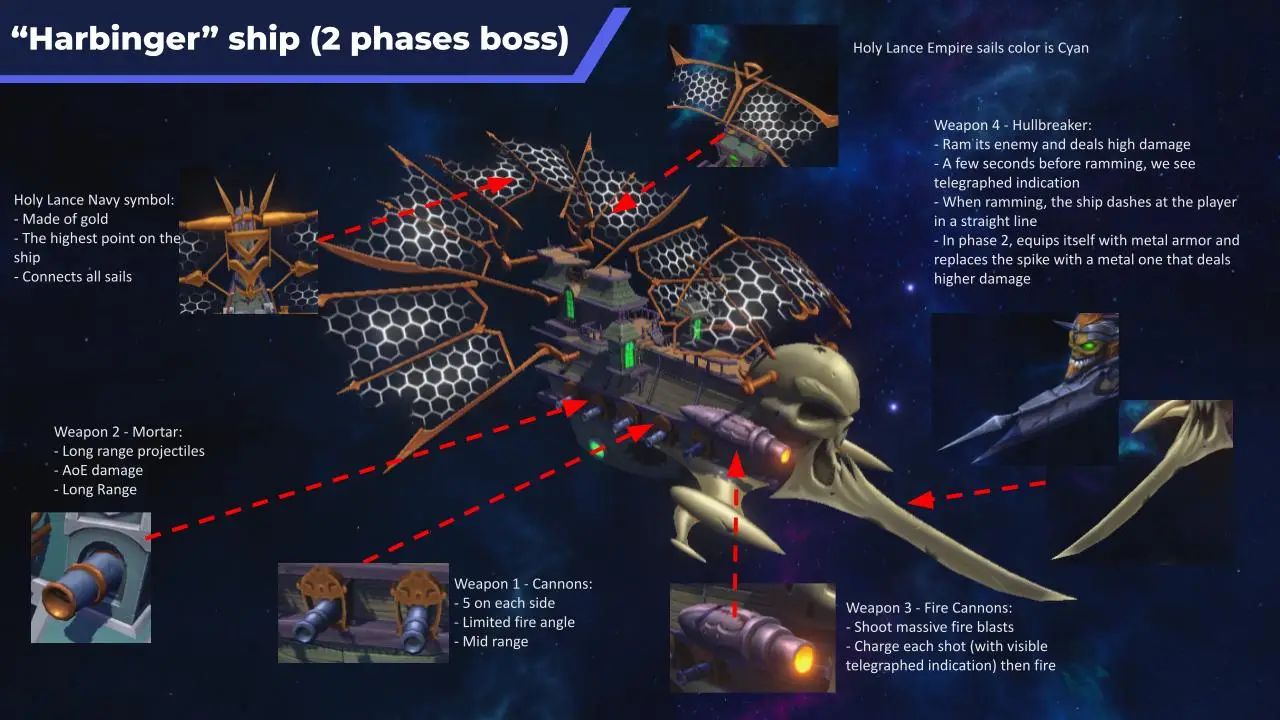
Emperor Daemon’s ship serves as the game’s final boss.
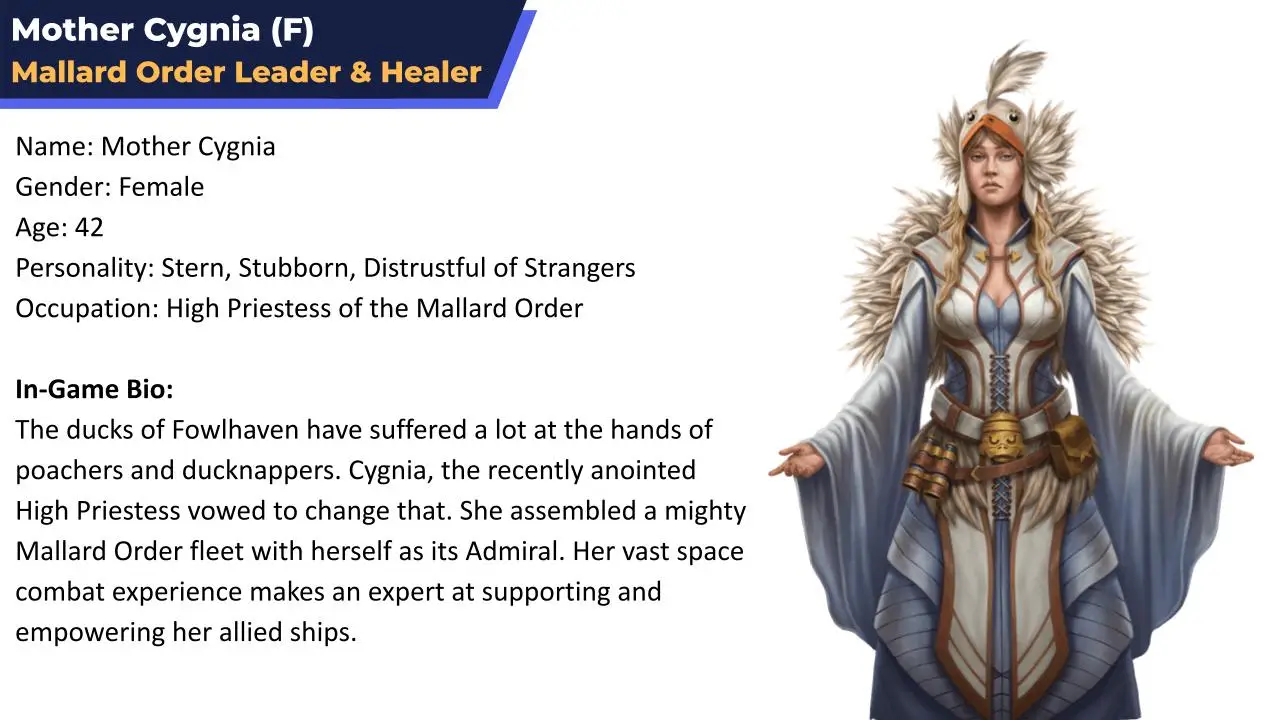
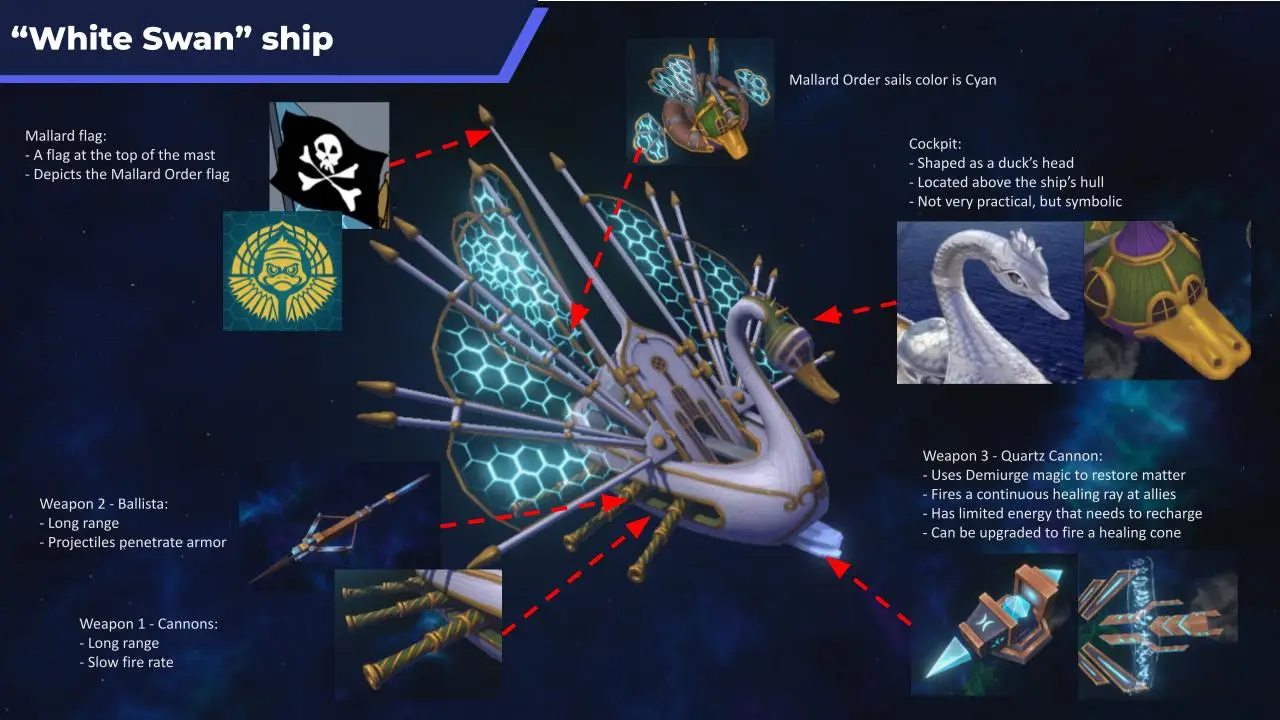
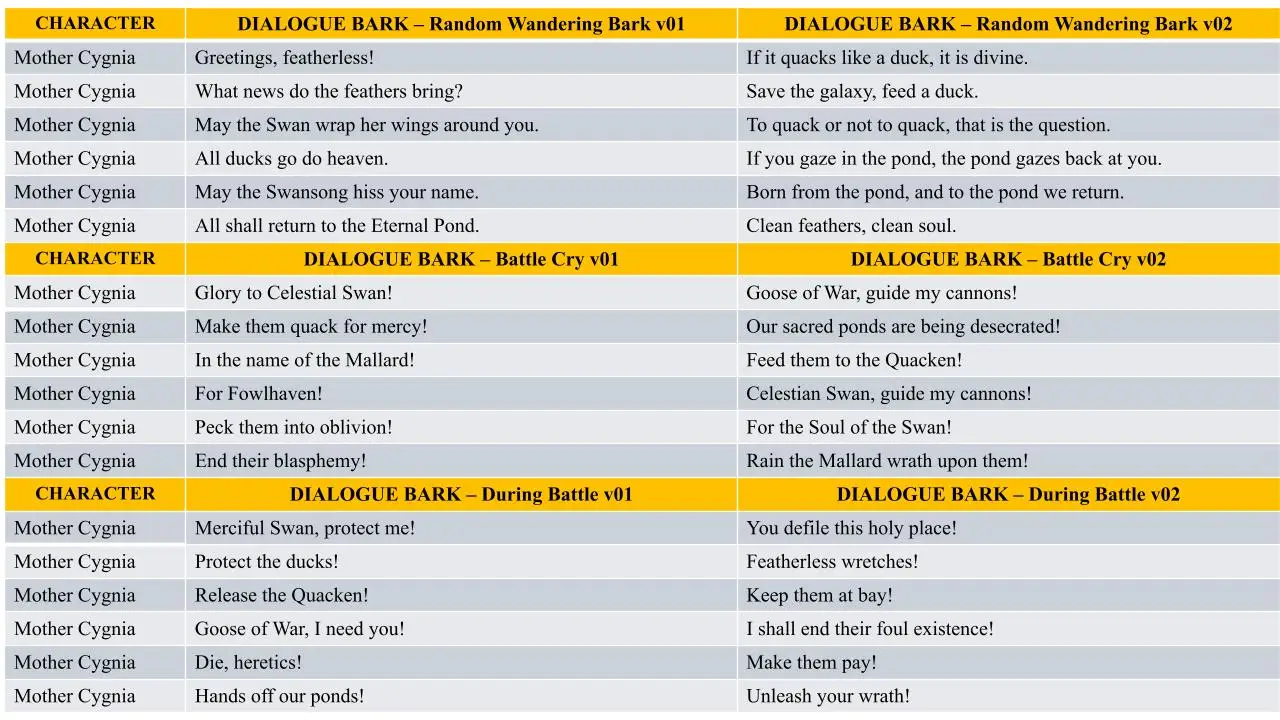
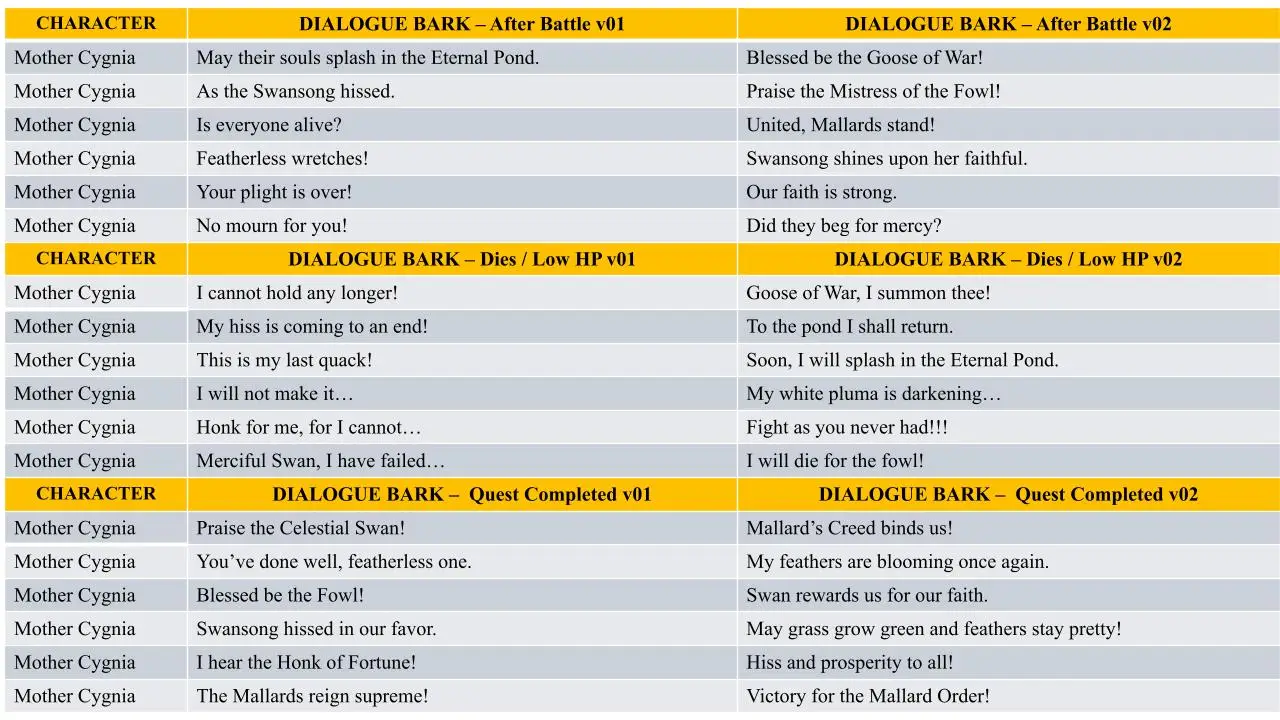
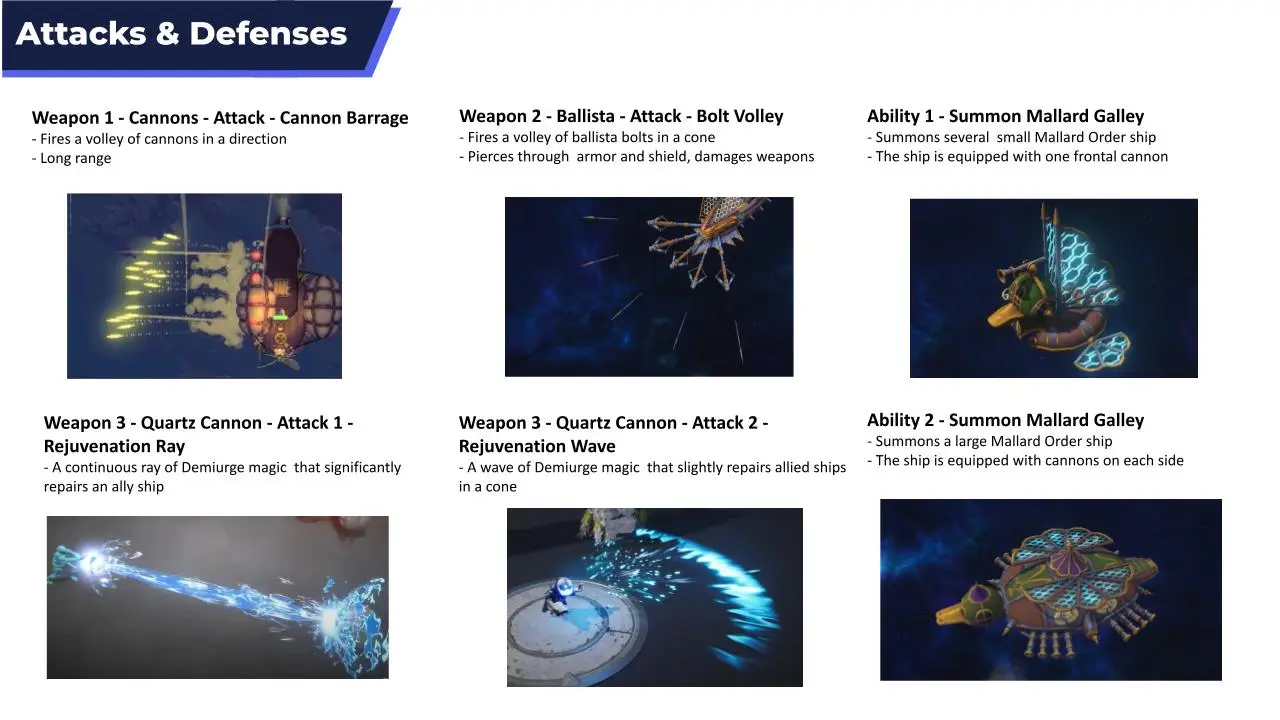
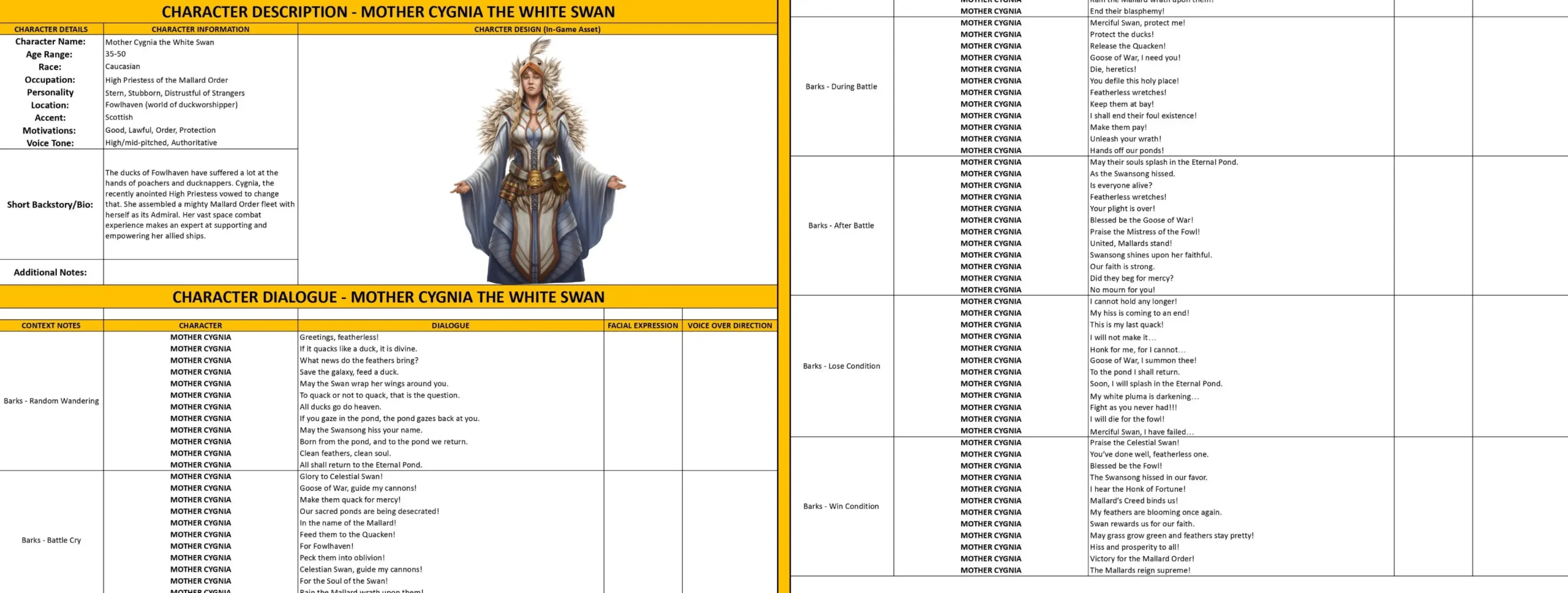
Ally NPC: Cygnia, High Priestess of the Mallard Order
Design
Character's Ship
Barks
Attacks
Cygnia leads the Mallard Order, a religious space society that worships ducks. Completing quests for her grants access to high-tier quests and ship gear.
Writing this character, I was inspired by Galadriel from The Lord of the Rings, Jaina Proudmoore from World of Warcraft, and Daenerys Targaryen from Game of Thrones.
What makes this character compelling is the contrast between her seriousness and the absurdity of her beliefs. This aligns with the sarcastic tone of the game’s fantasy.
Cygnia has a combat ship, and its abilities utilize the game’s humor in its duck-themed attacks and abilities.
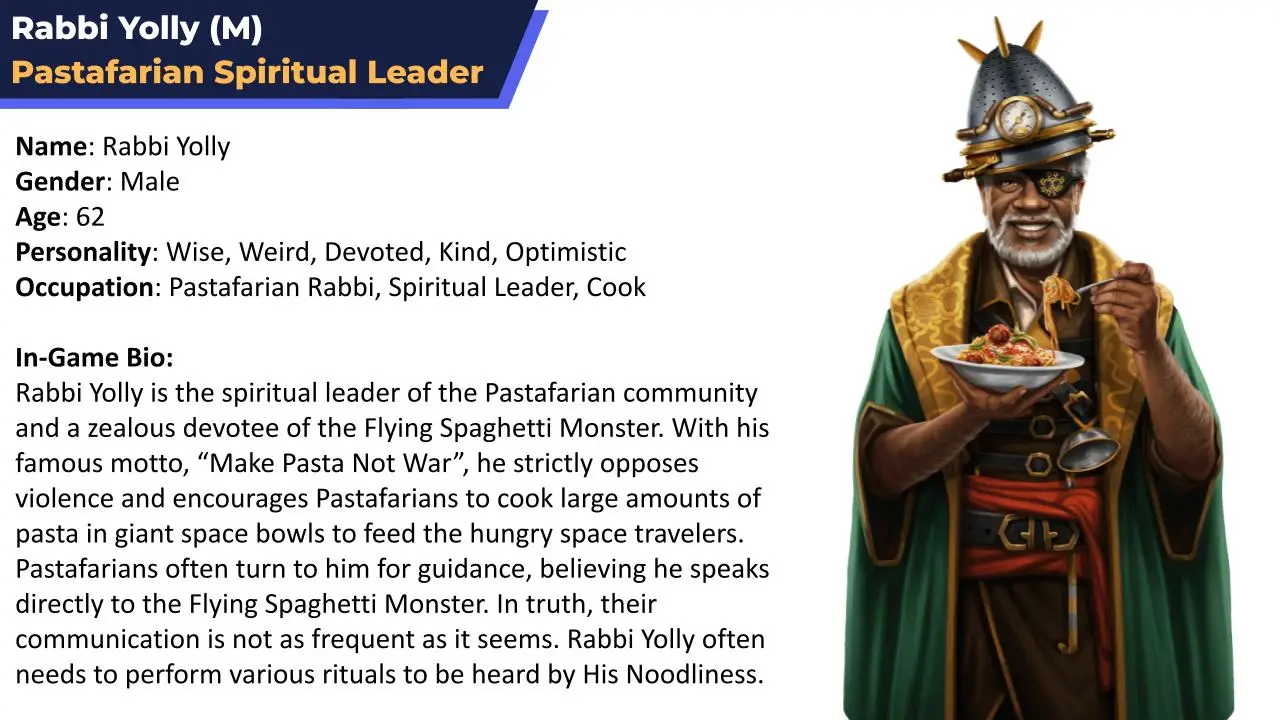
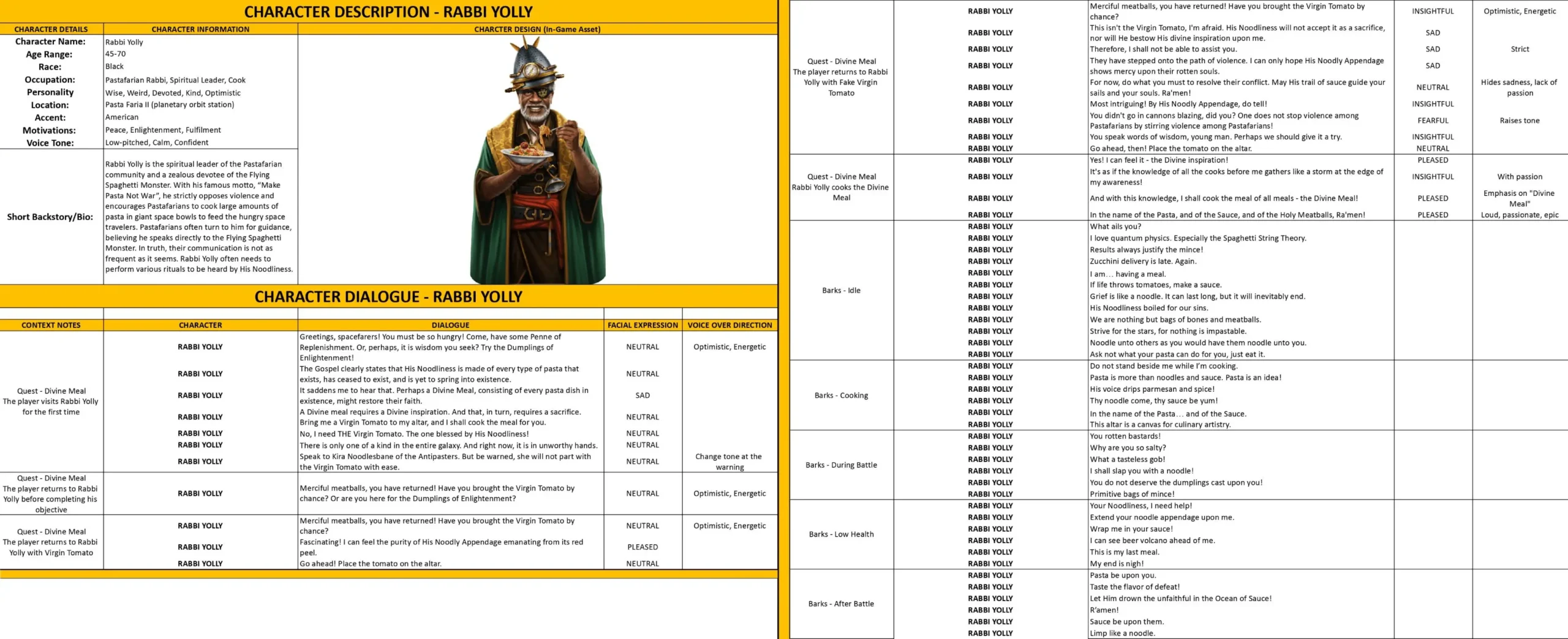
Ally NPC: Rabbi Yolly
Design
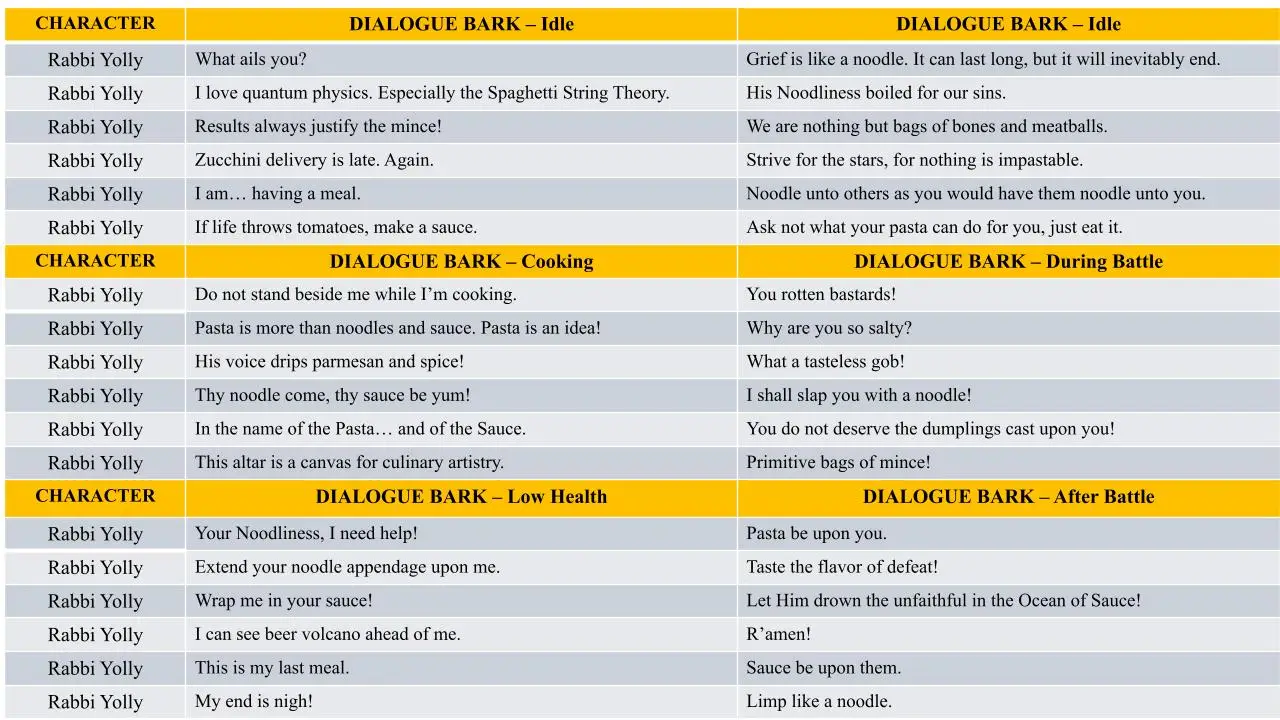
Barks
Rabbi Yolly starts as an ally who guides the player and later joins as a crew member with non-violent support abilities. When writing this character, I was inspired by the God character from “Bruce Almighty” and by Mr. Miyagi from “The Karate Kid” films. The idea was to create a wise but silly mentor who lives carefree and enjoys the simple things in life.
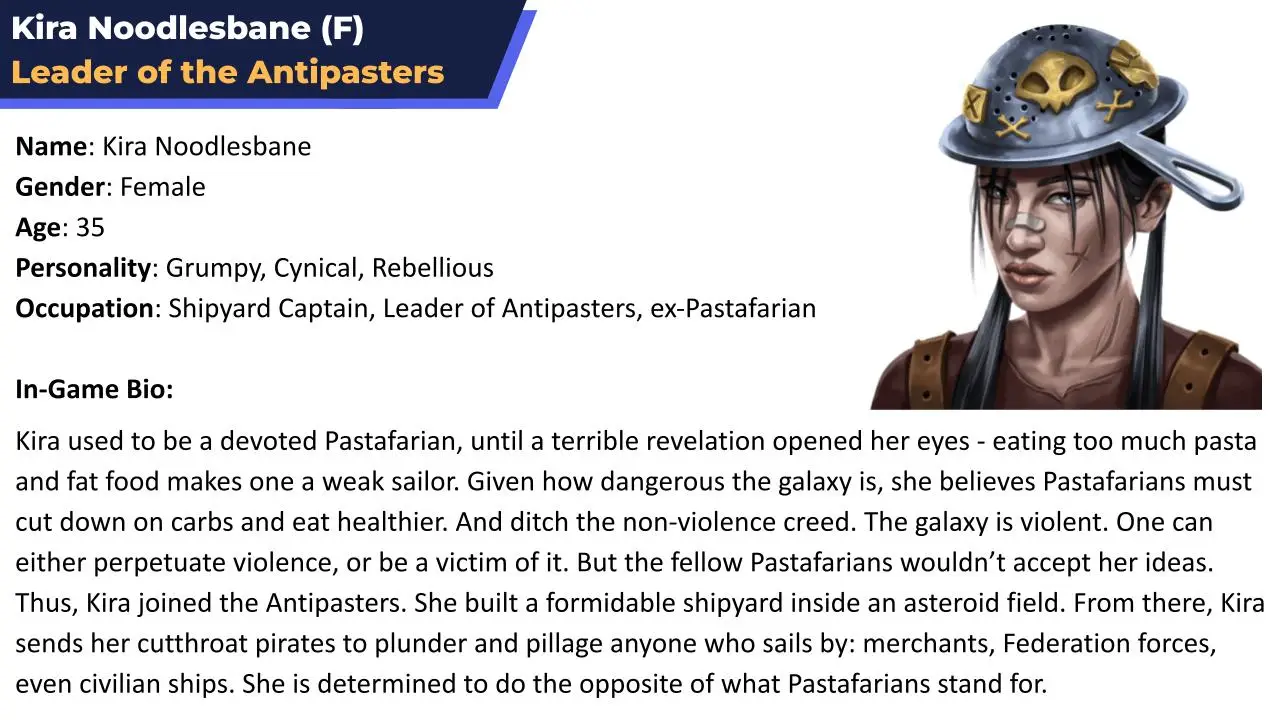
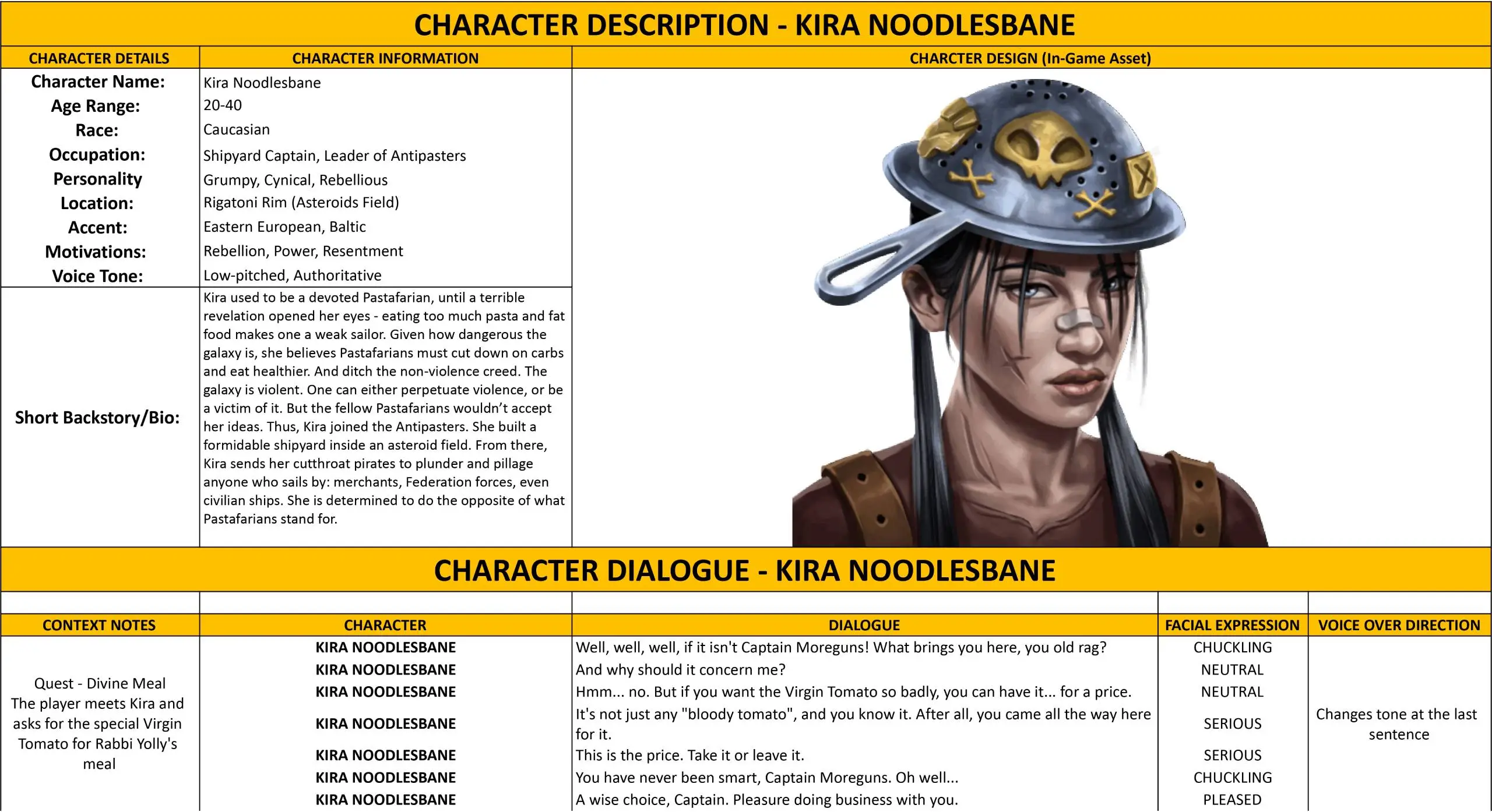
Enemy NPC: Kira Noodlesbane
Design
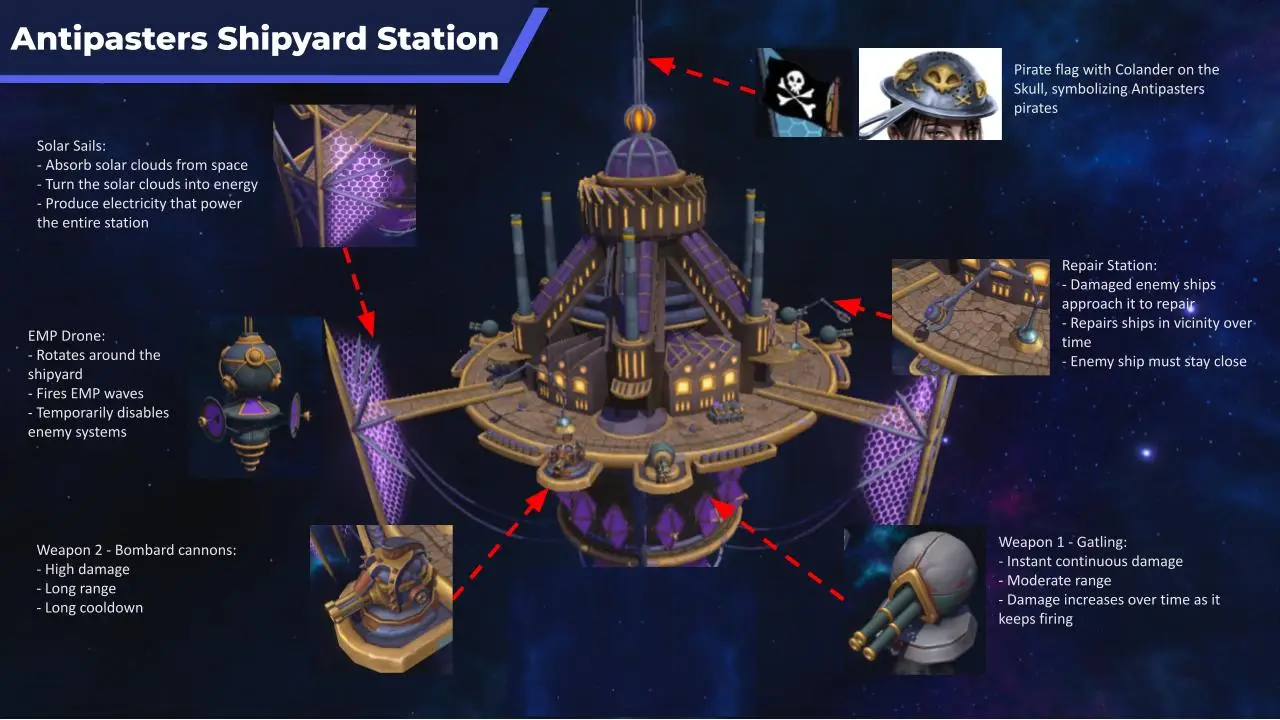
Kira's Shipyard
Kira Noodlesbane can be an enemy or an ally (later in the game), depending on the player’s choices. She runs a shipyard protected by automatic defenses and a pirate fleet. When writing this character, I took inspiration from Gamora from the MCU and Kitana from Mortal Kombat. She serves as a counterweight to the carefree lifestyle of the Pastafarians.
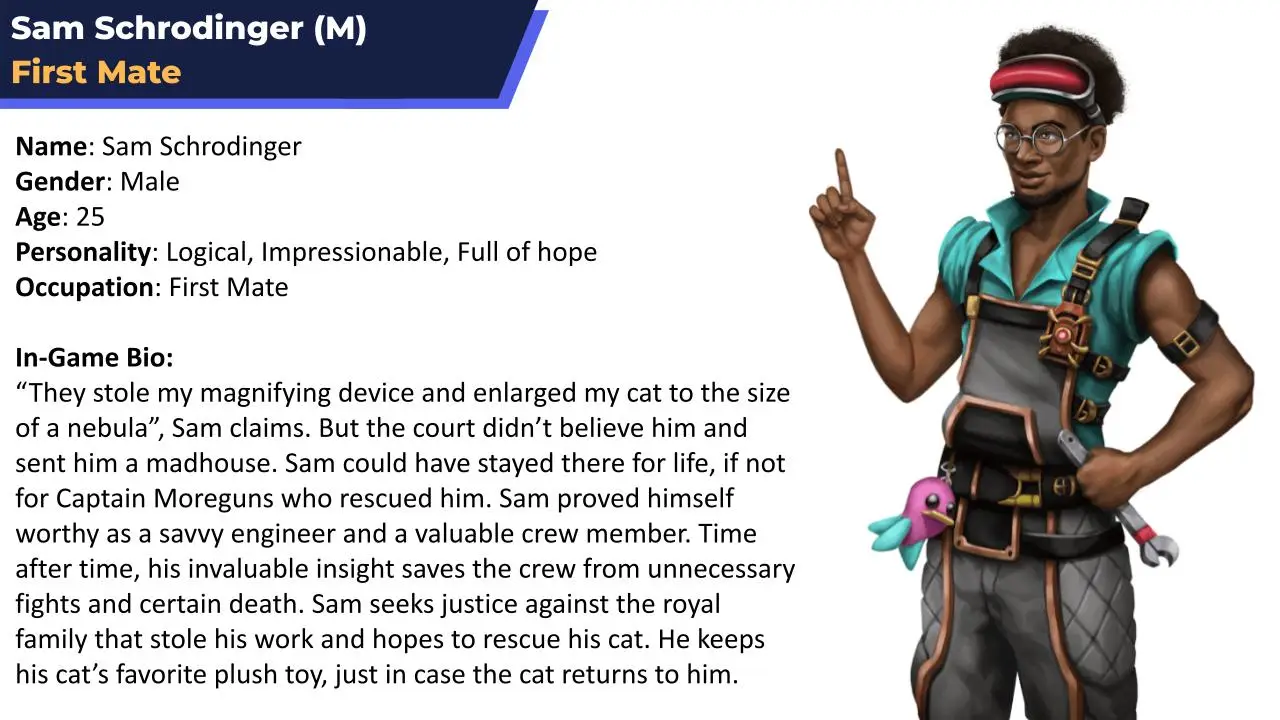
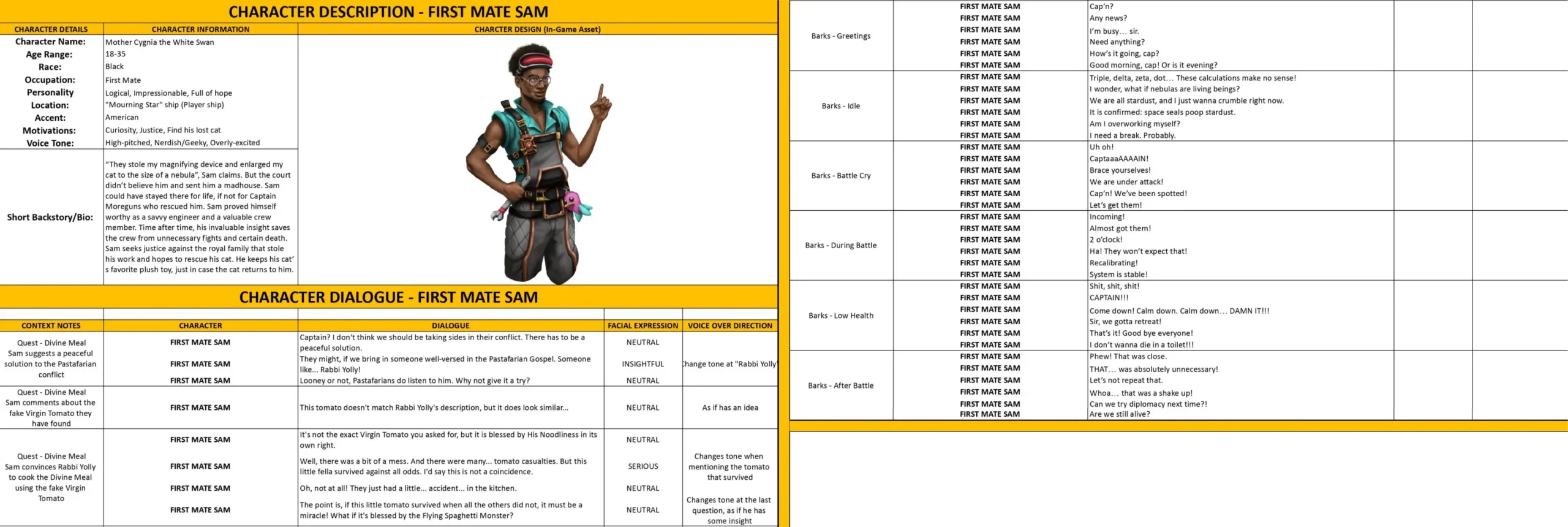
Companion: Sam Schrodinger
Design
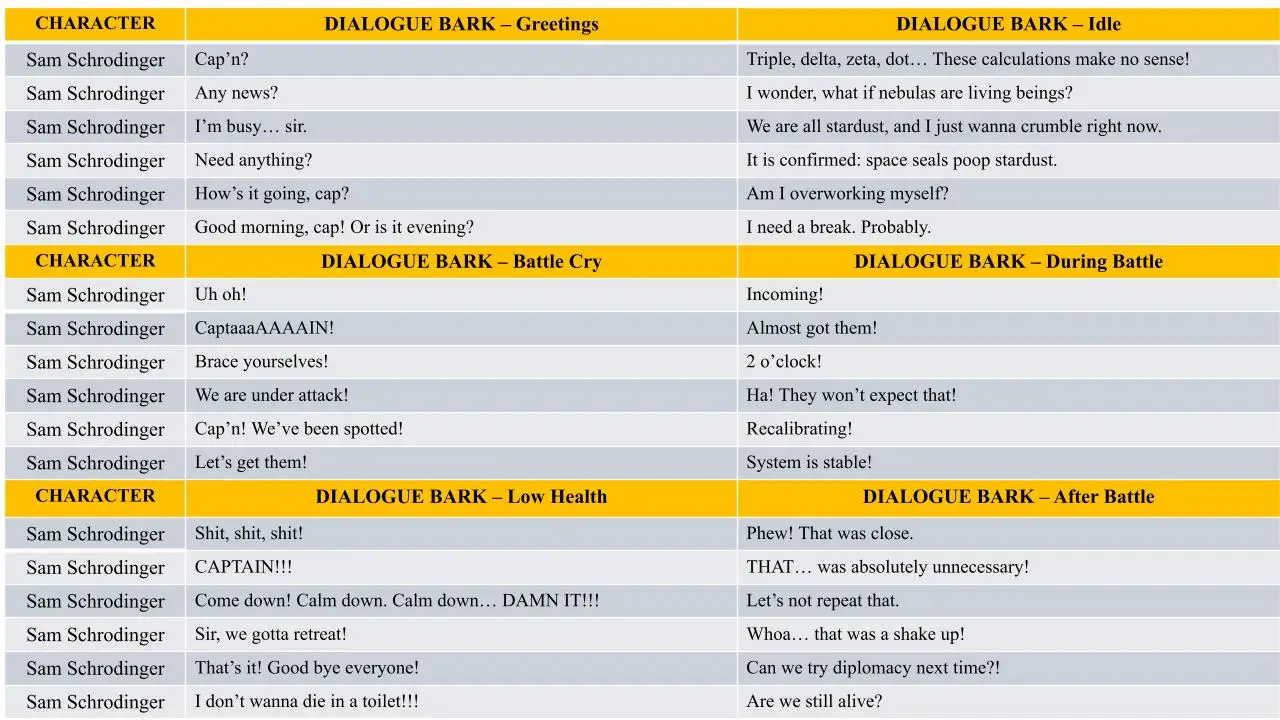
Barks
Sam is a crew member who can be trained for a specialization: steering, combat, support, or maintenance. He is nerdish and awkward, inspired by Steve Urkel from Family Matters. And also absurd – a person who is all about logic and science, believes he can find a cat in a galaxy that stretches light-years across. This is improbable. And yet…
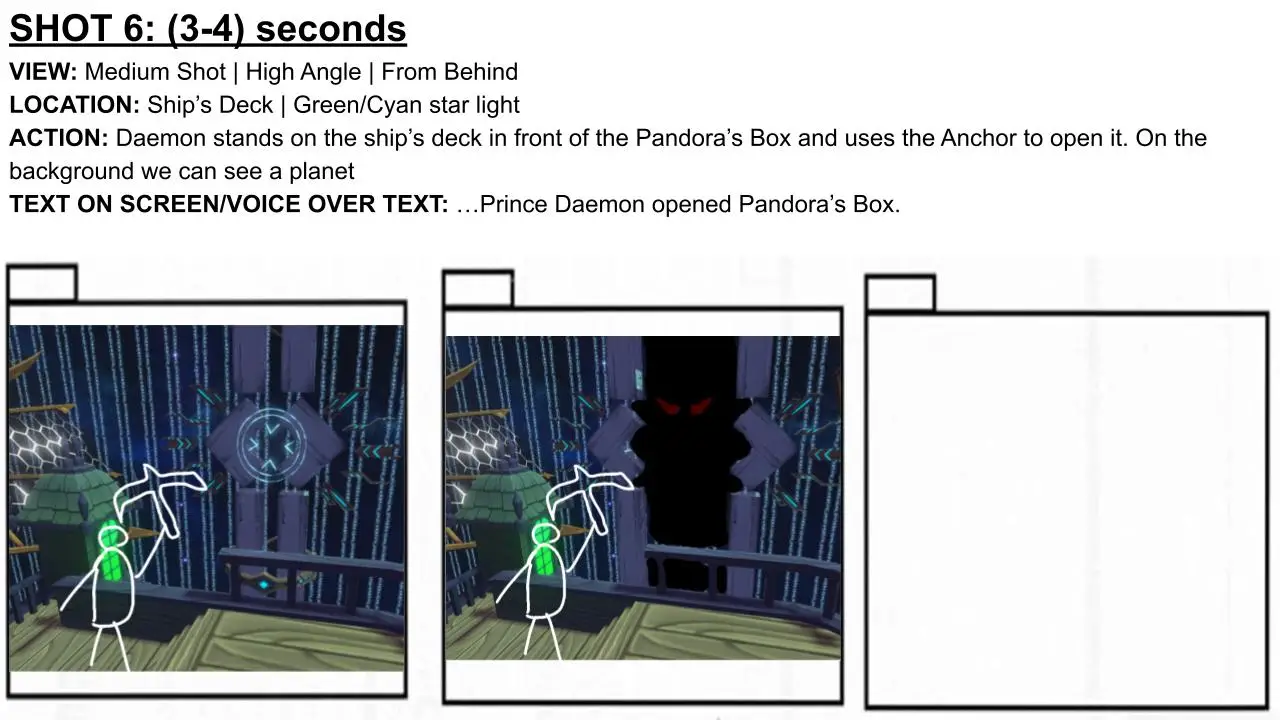
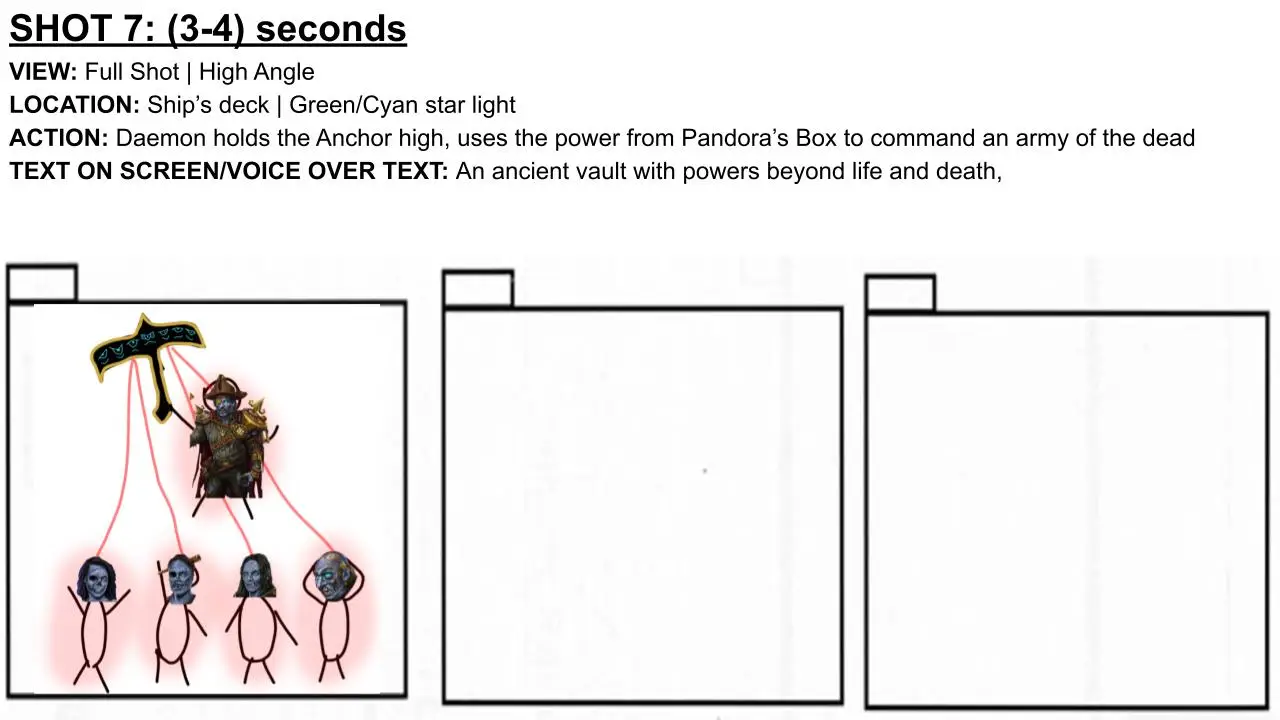
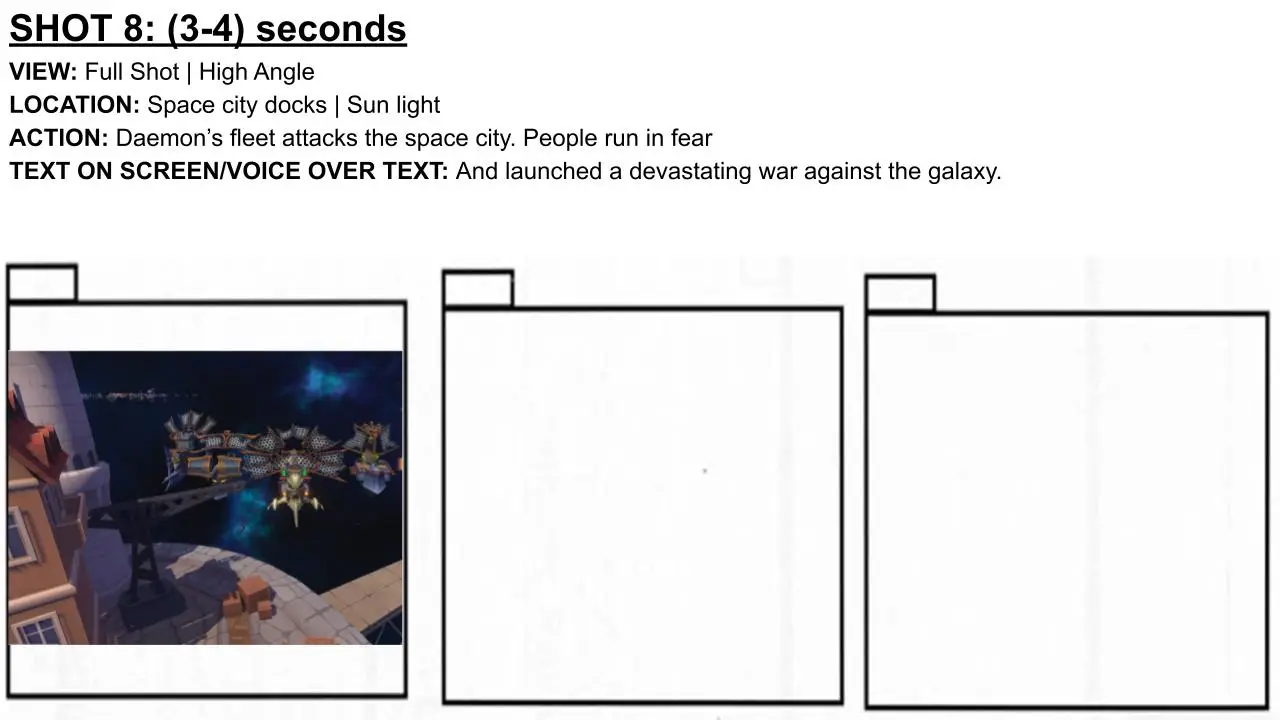
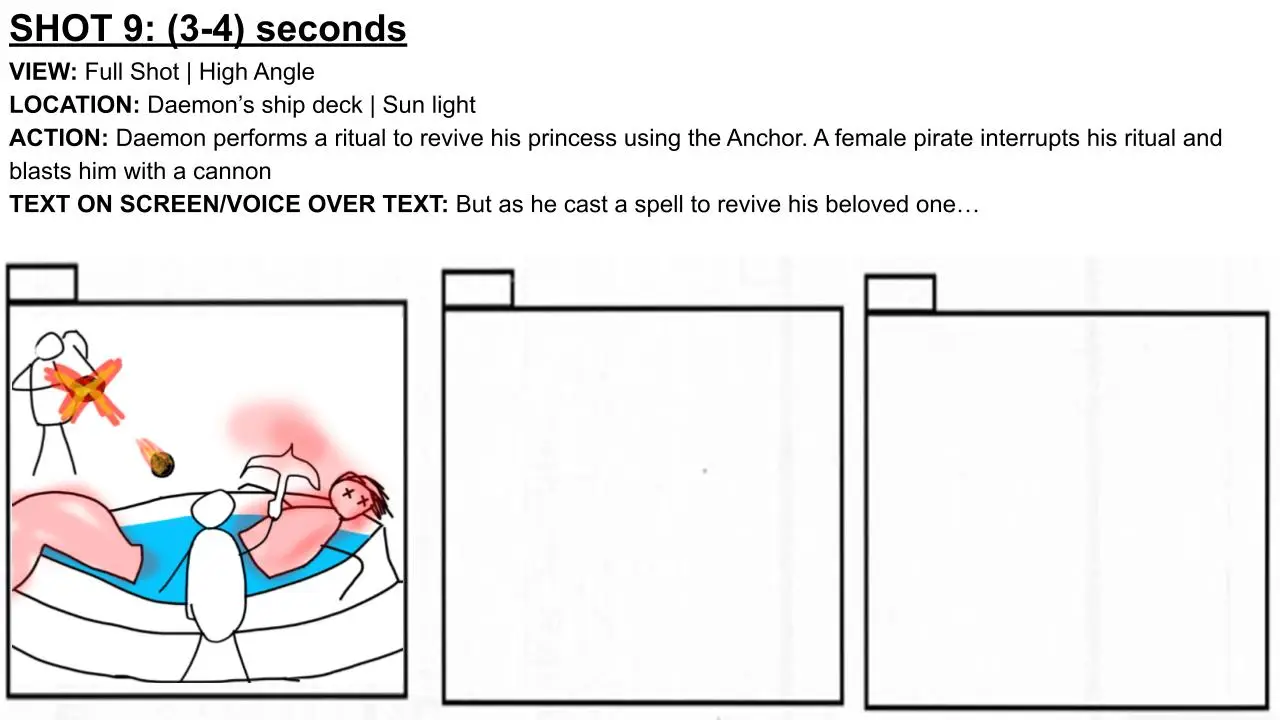
Storyboarding and Trailer Writing
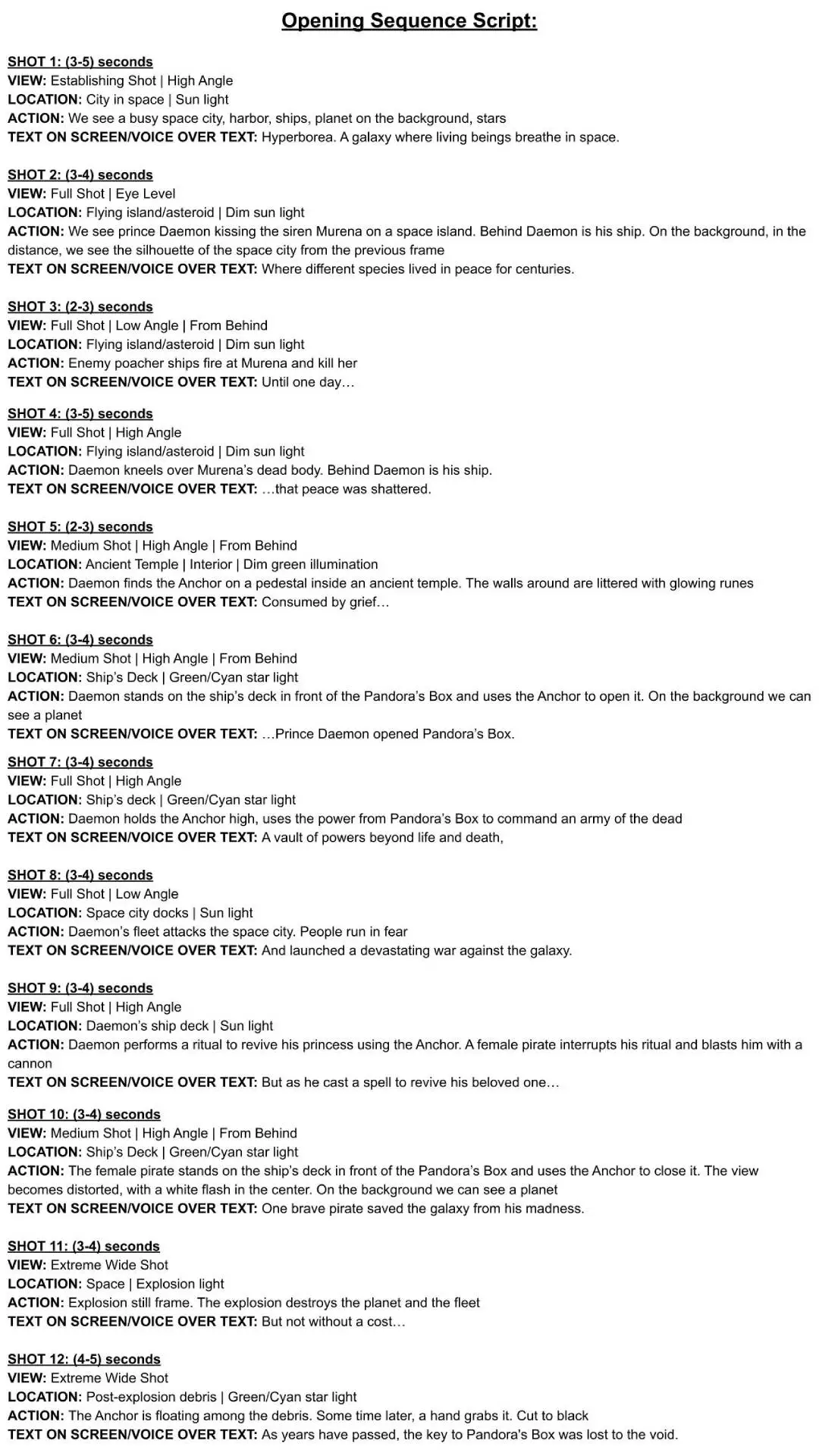
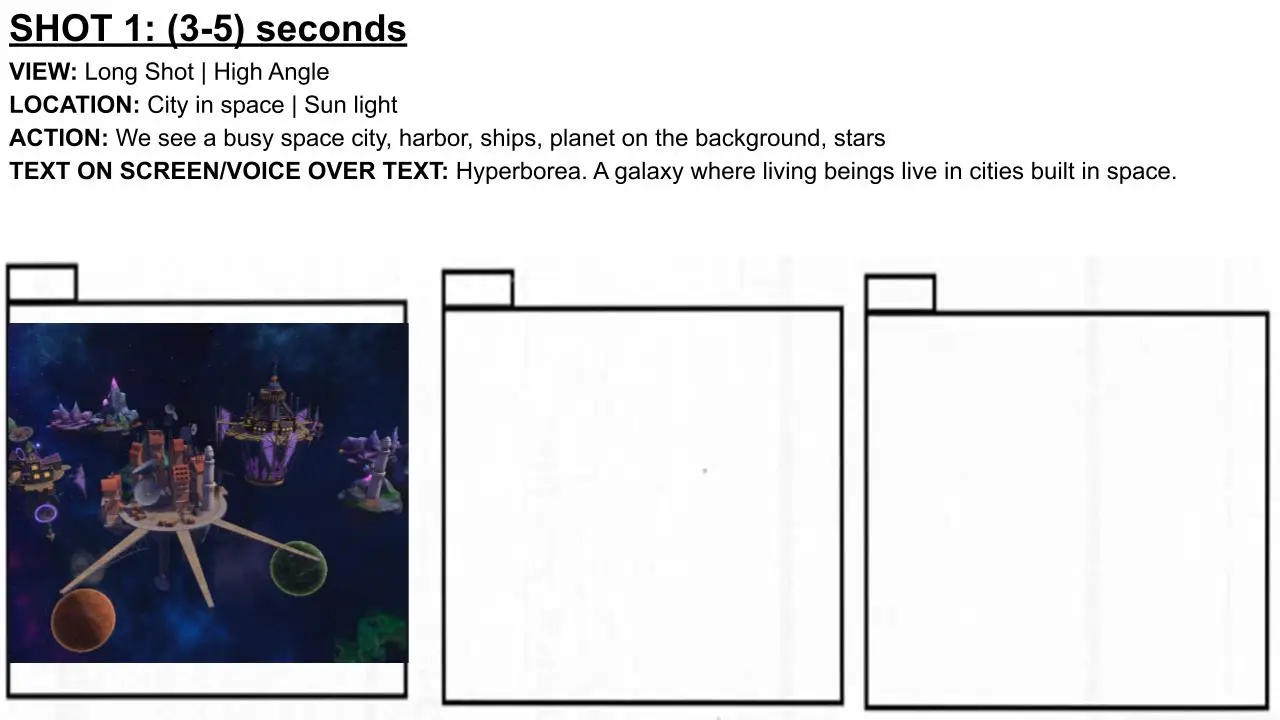
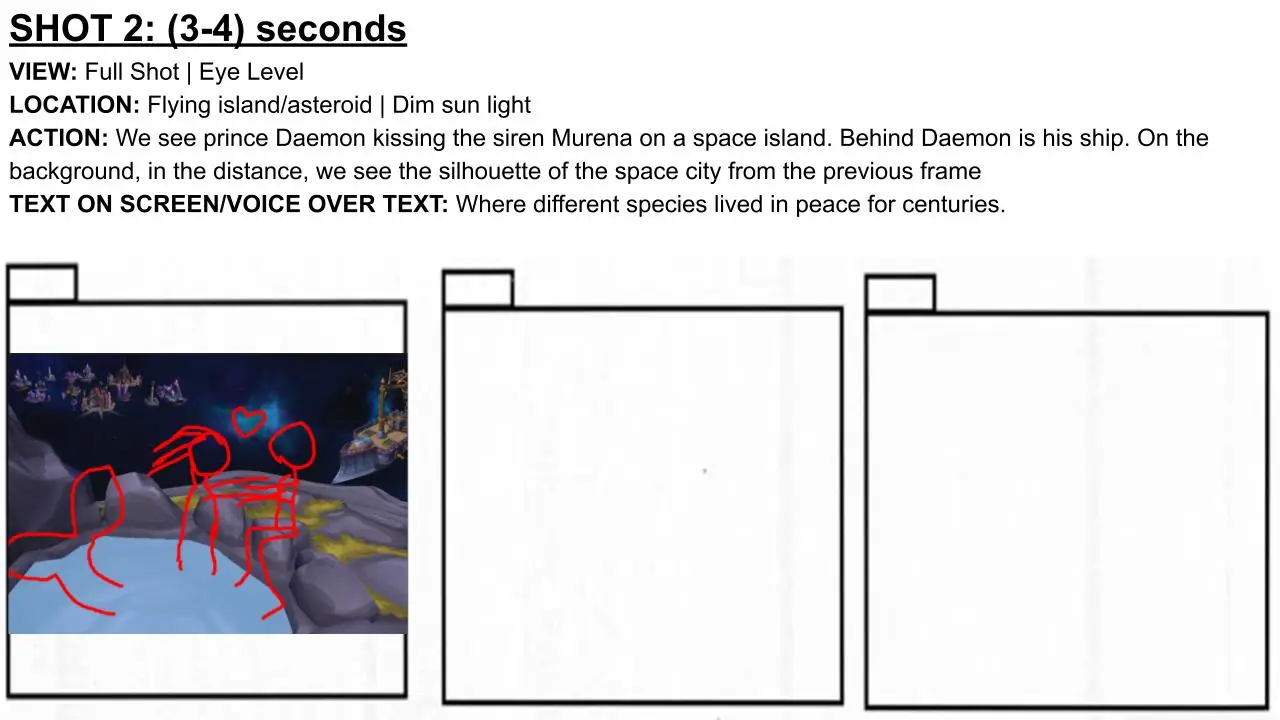
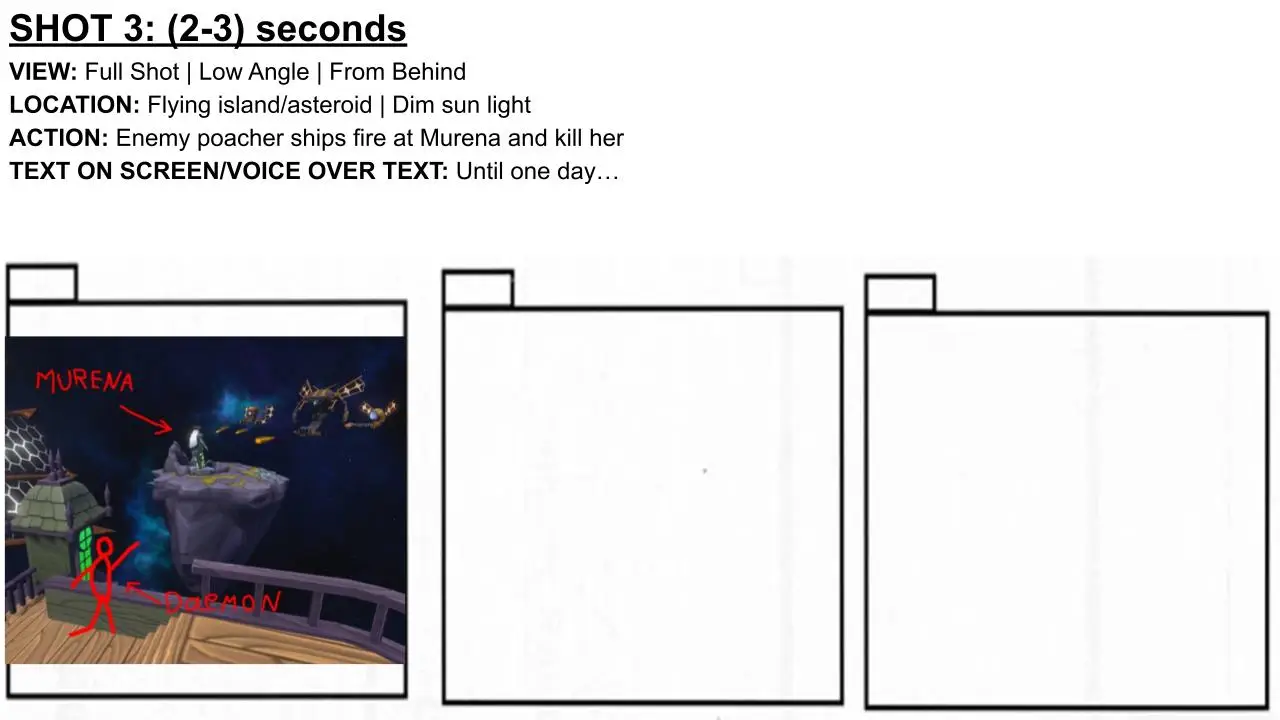
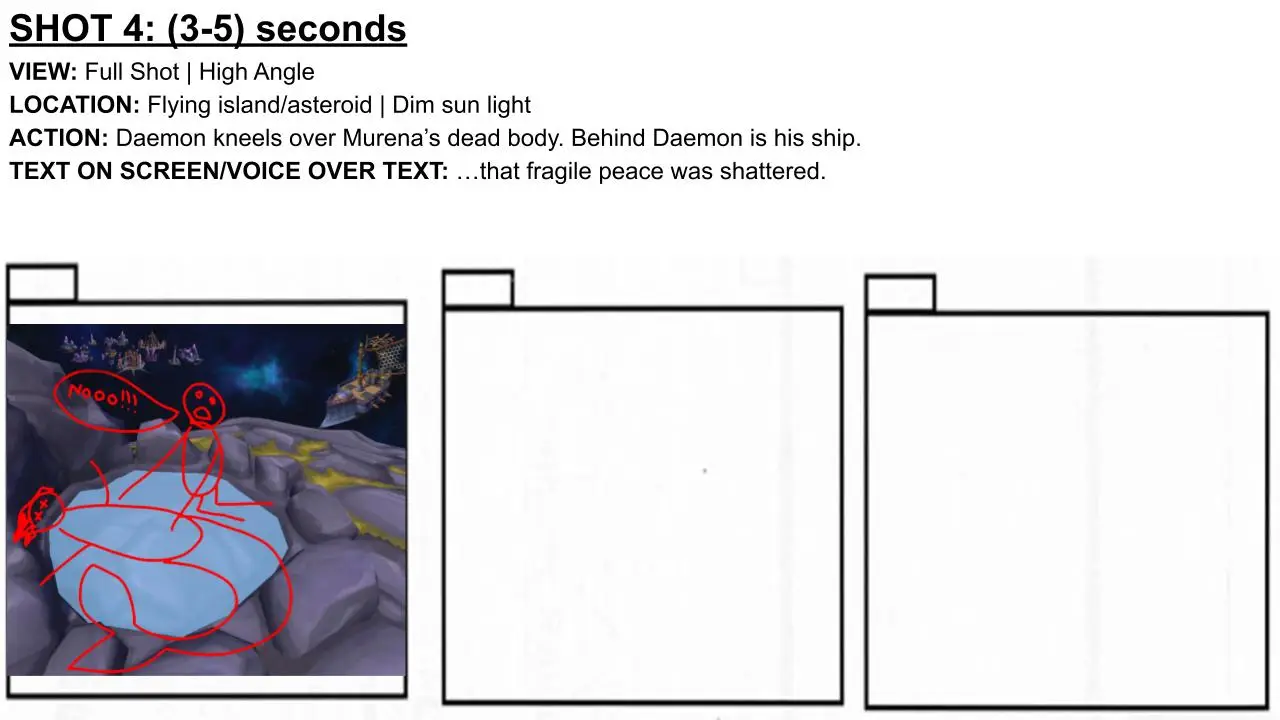
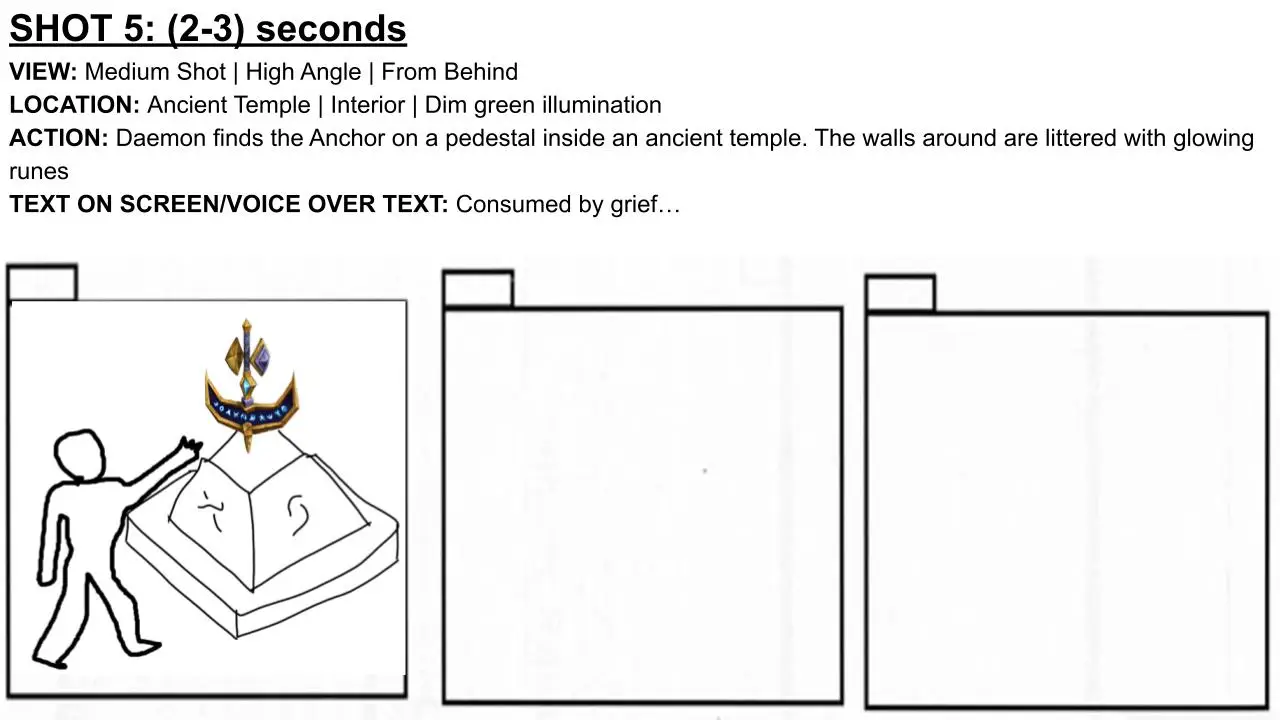
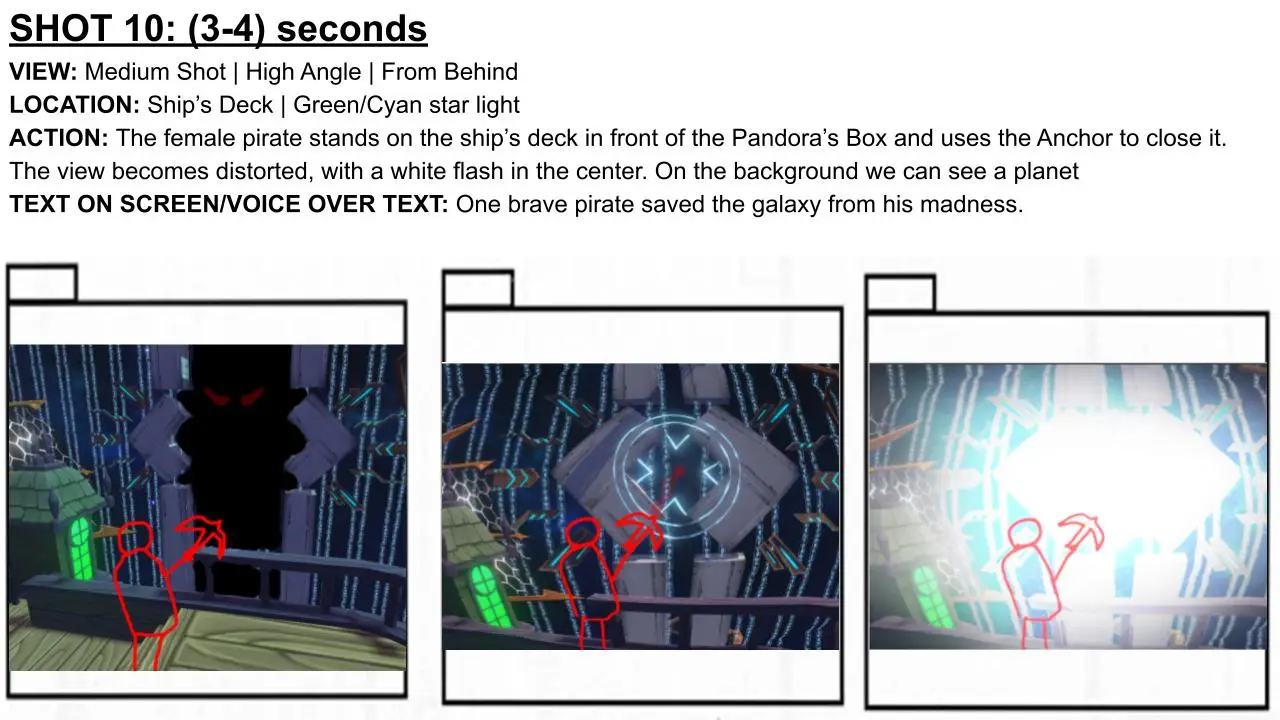
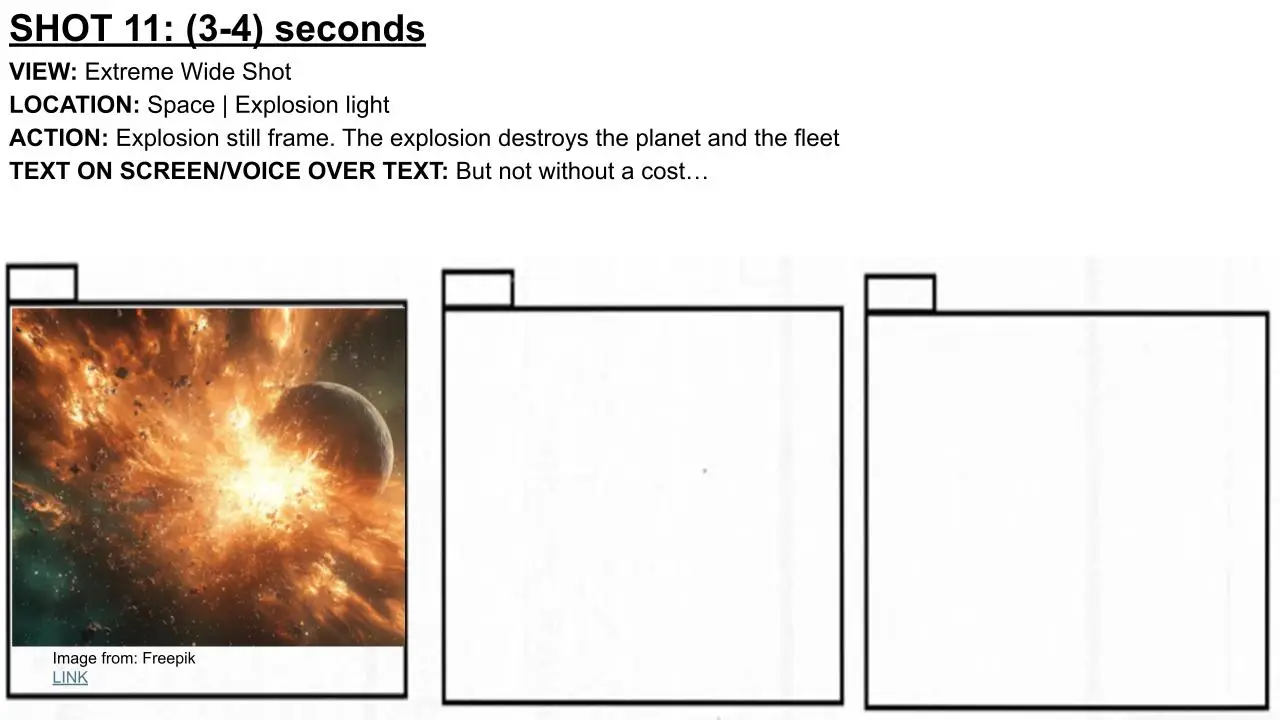
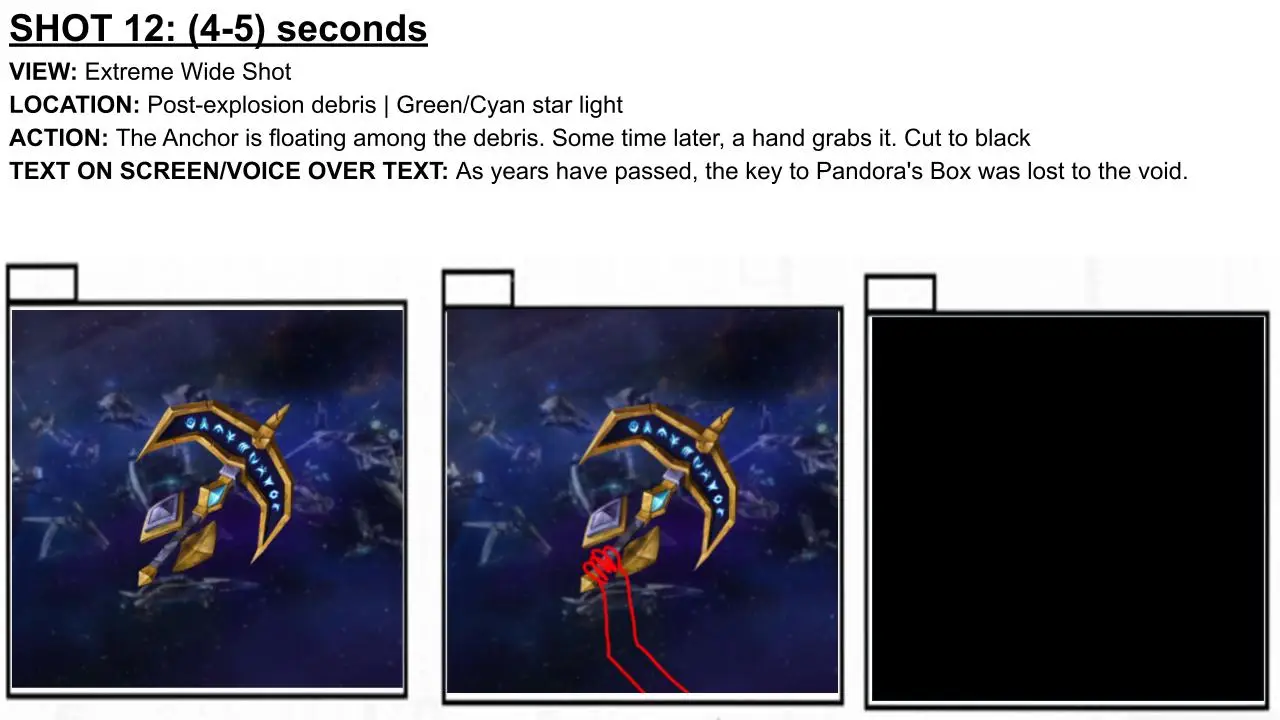
I designed a storyboard for the opening cutscene:
Described the shots with specific camera angles, locations, and their composition.
Added references, mockups, and action descriptions to convey my vision to artists.
Wrote narration dialogue that will accompany the scenery and tell the story.
Laid out length estimations for individual shots and for the cutscene as a whole.
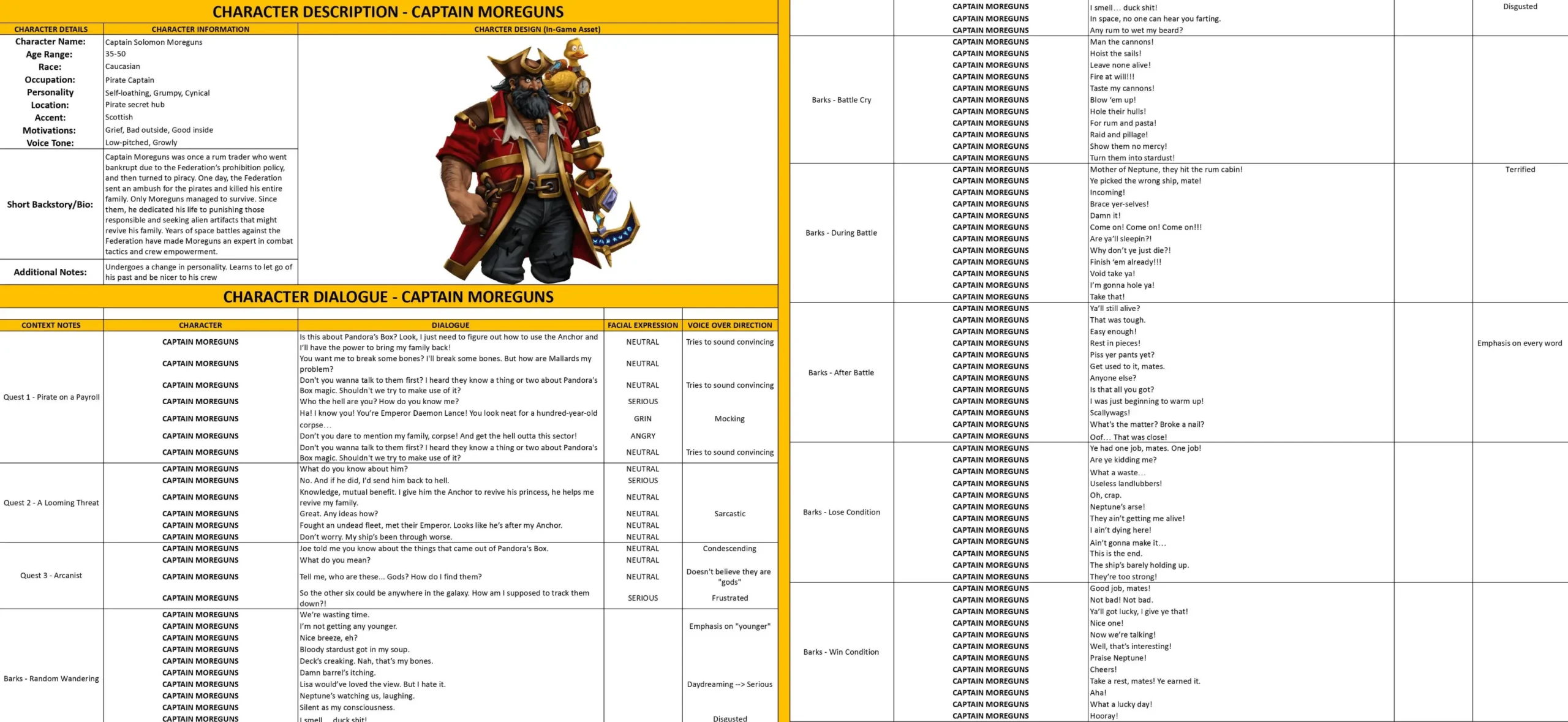
Voice Over Documentation
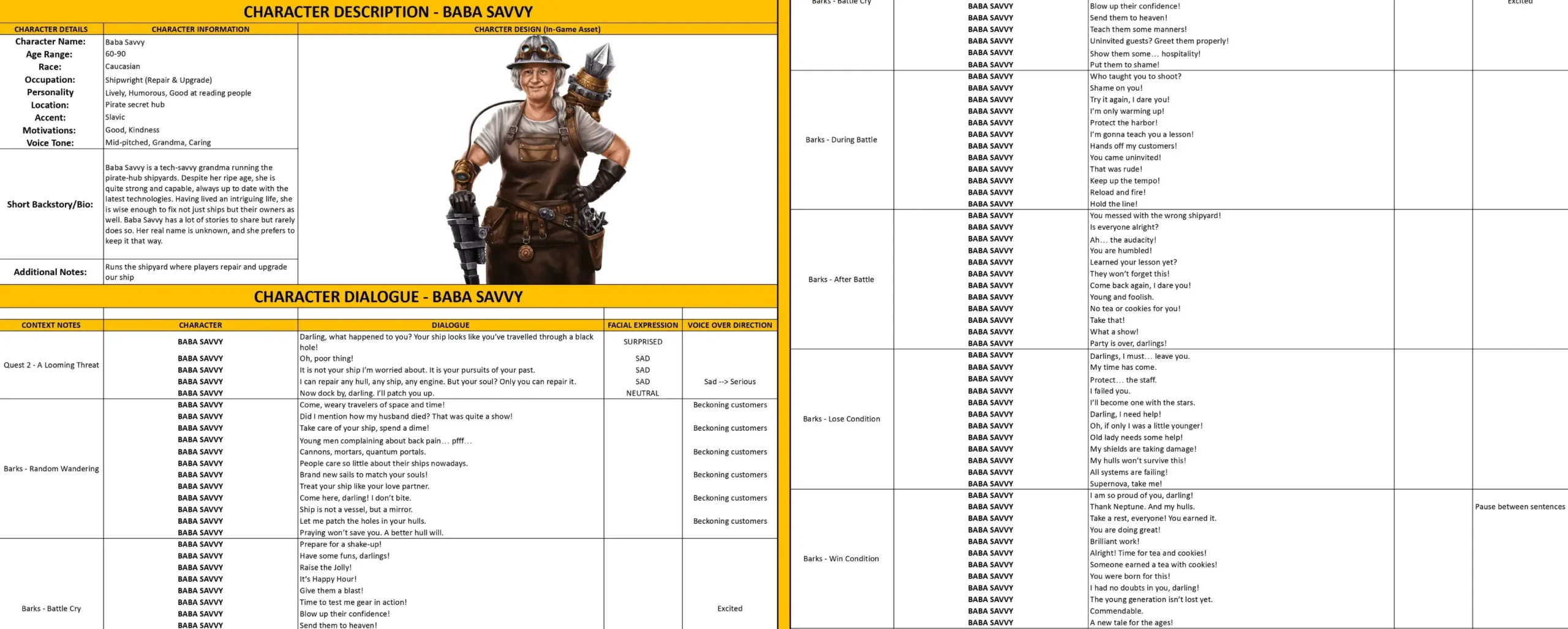
Voice actor casting sheets. Each sheet contains:
Visual Design – to convey the general vibe.
Character Info and Bio – to give an idea of who the character is, including relevant info about their speech.
Dialogue Lines and Barks – the character’s lines, including context, mood, and voice direction.
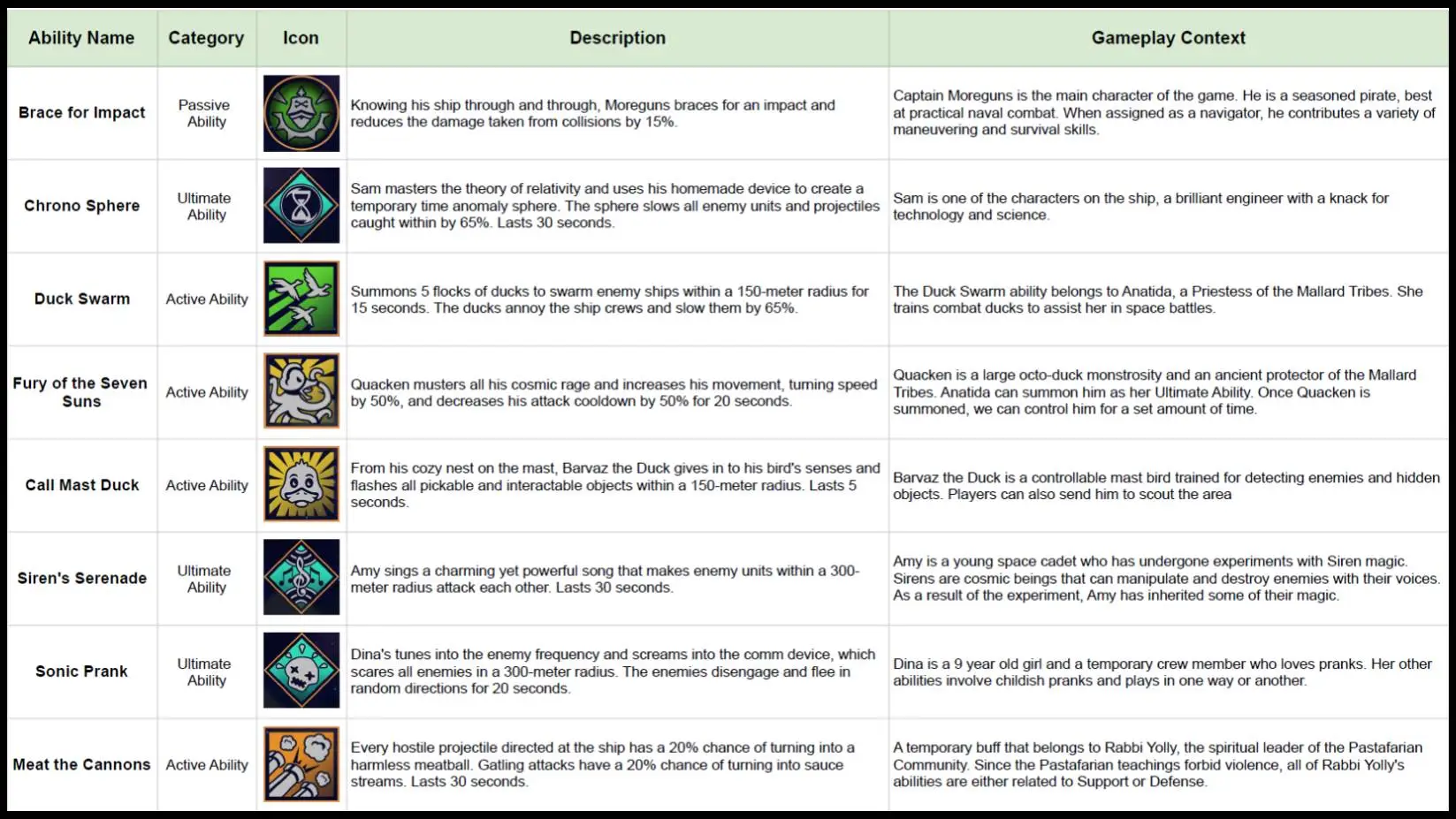
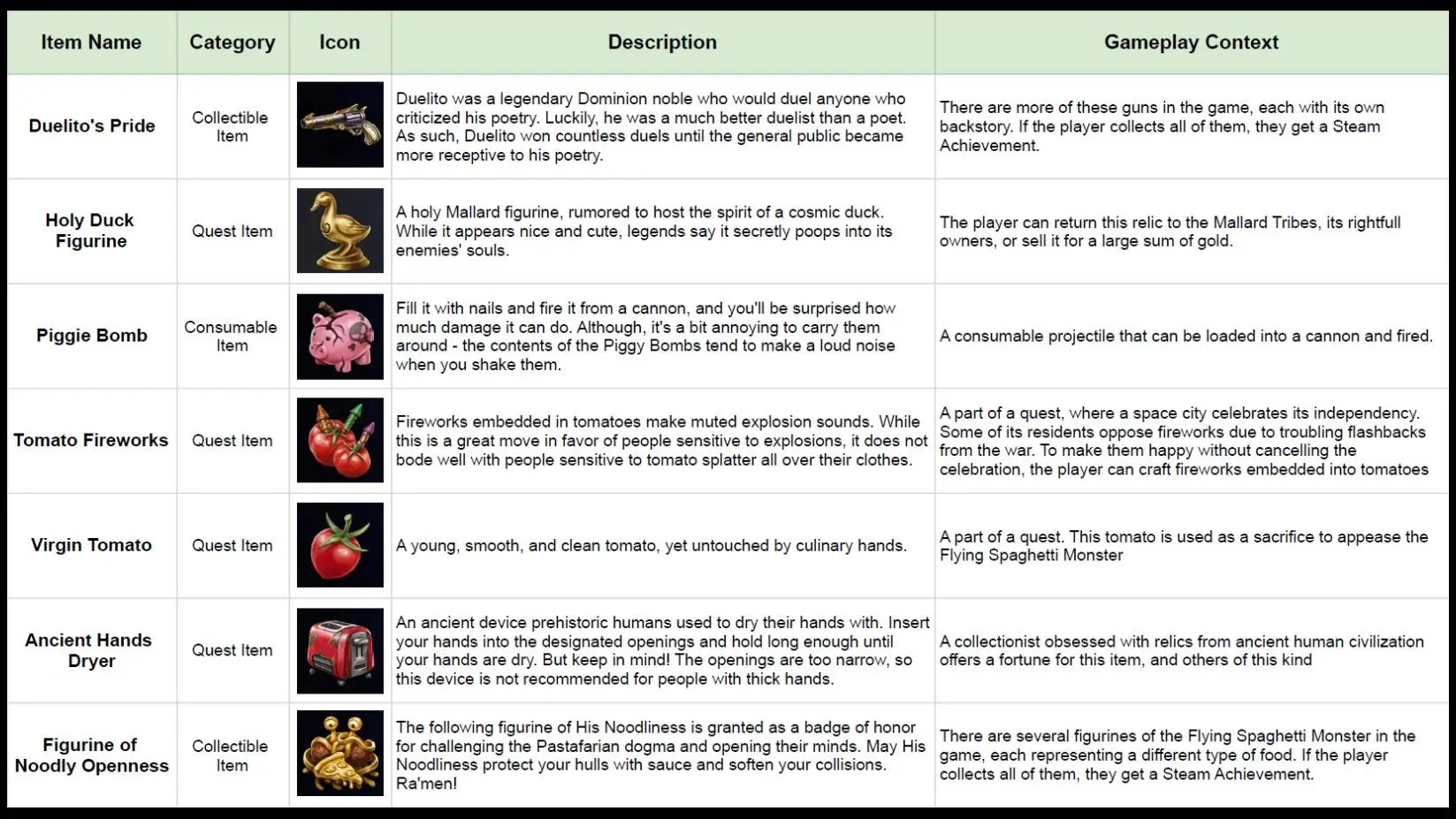
Flavor Text and Descriptions
The game has a satiric tone, so I reflect it in item and ability descriptions. These are the pillars I follow:
Gameplay Purpose – even if the player misses the pun, the ability/item must be clear in its purpose.
Lore/World – the description should reveal something about the world. It helps fill the world with detail.
Character – if it is an ability, the description must make it feel a part of their very identity.
Tone – not all descriptions have to be funny, but they do need to follow the established humorous flair.
Worldbuilding
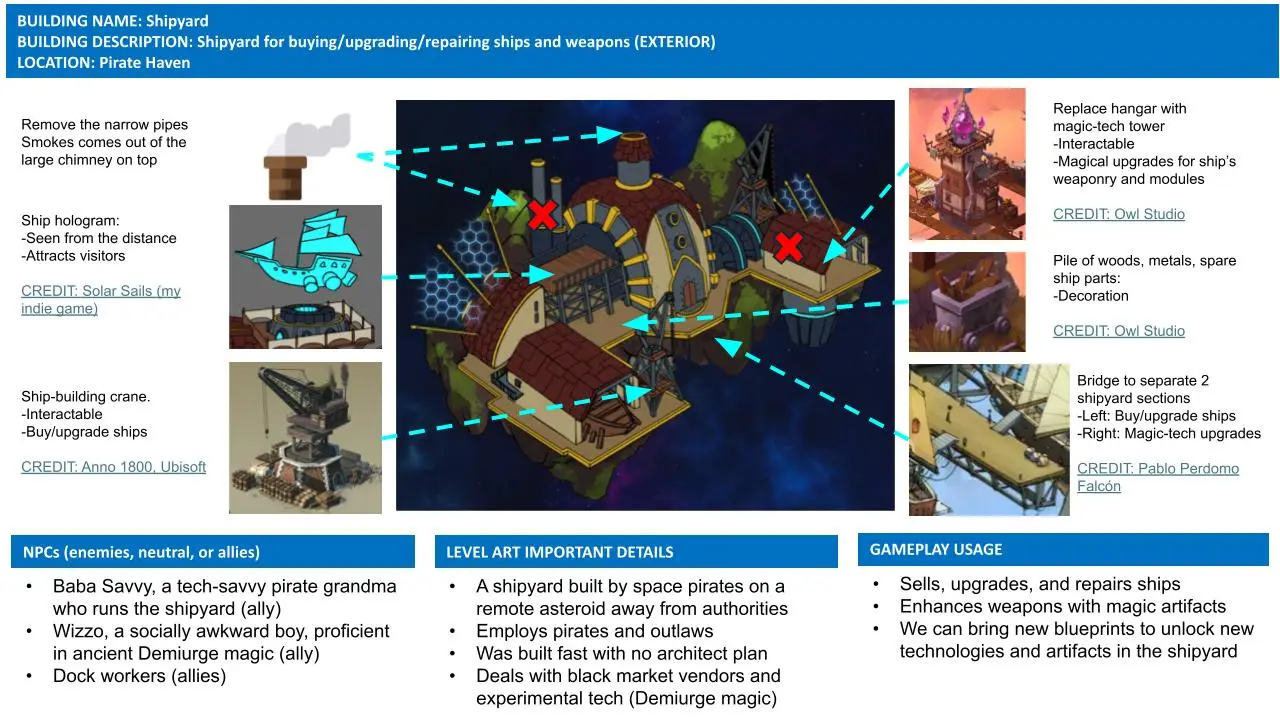
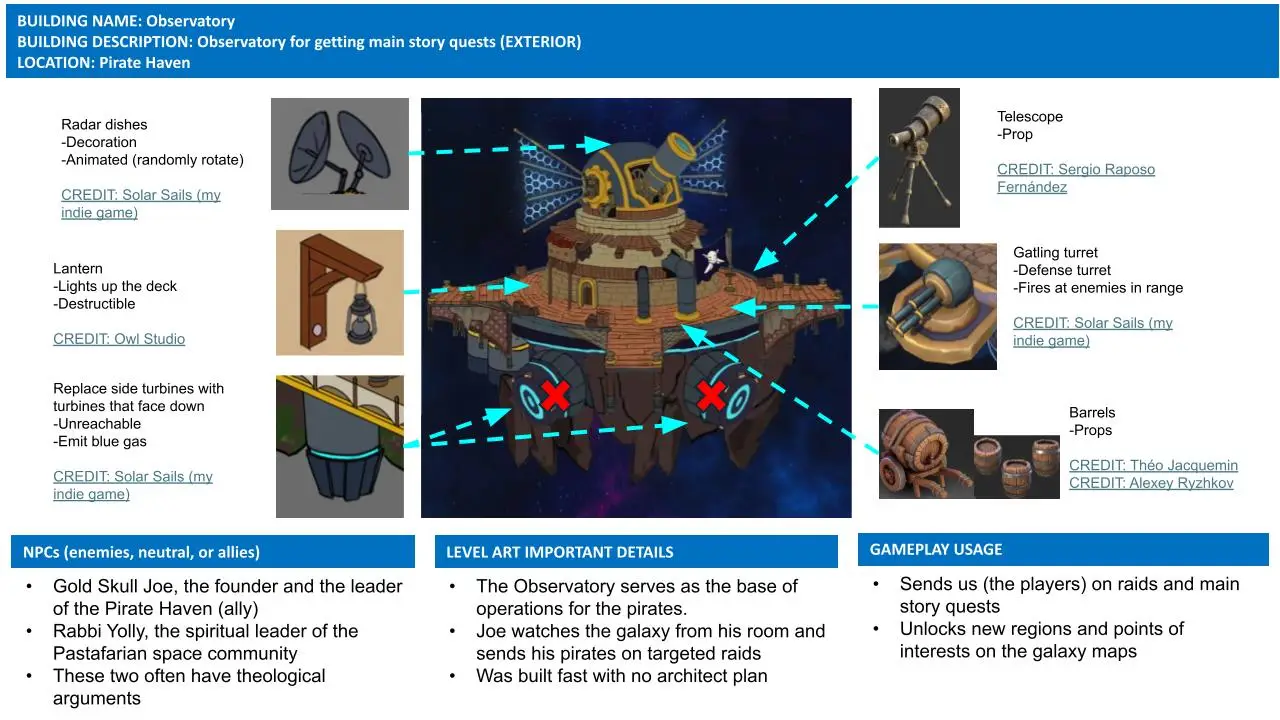
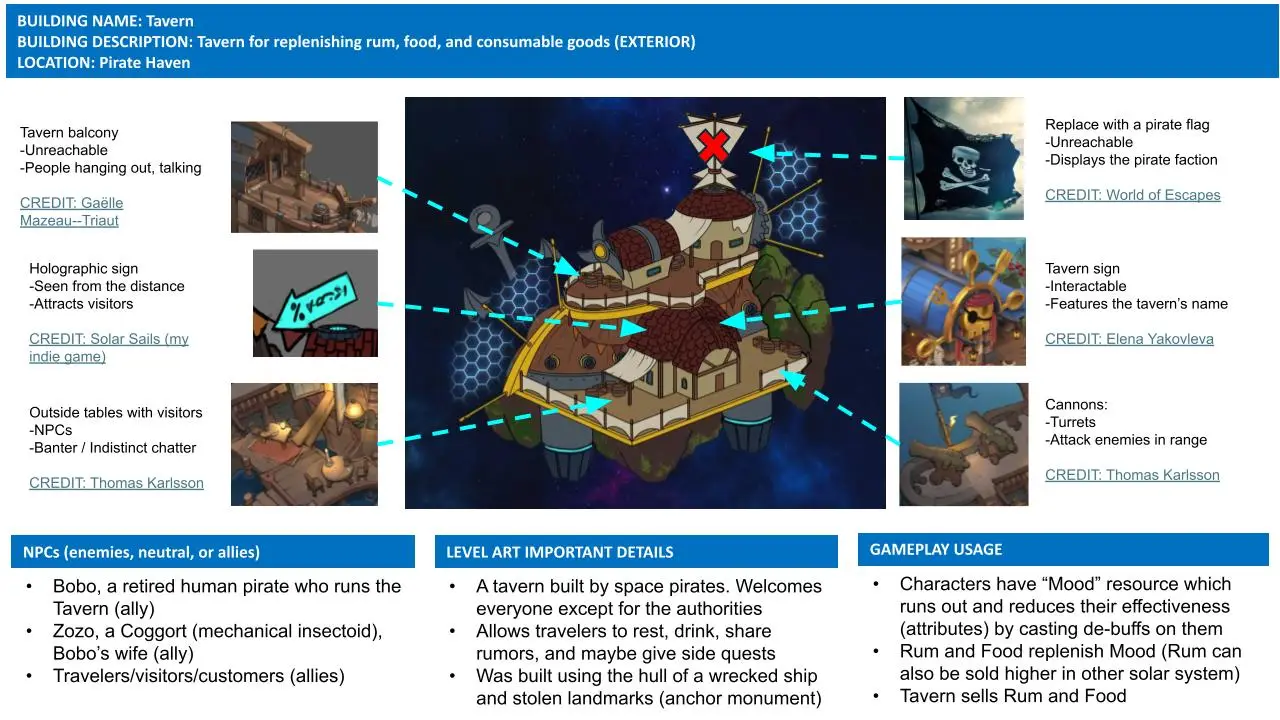
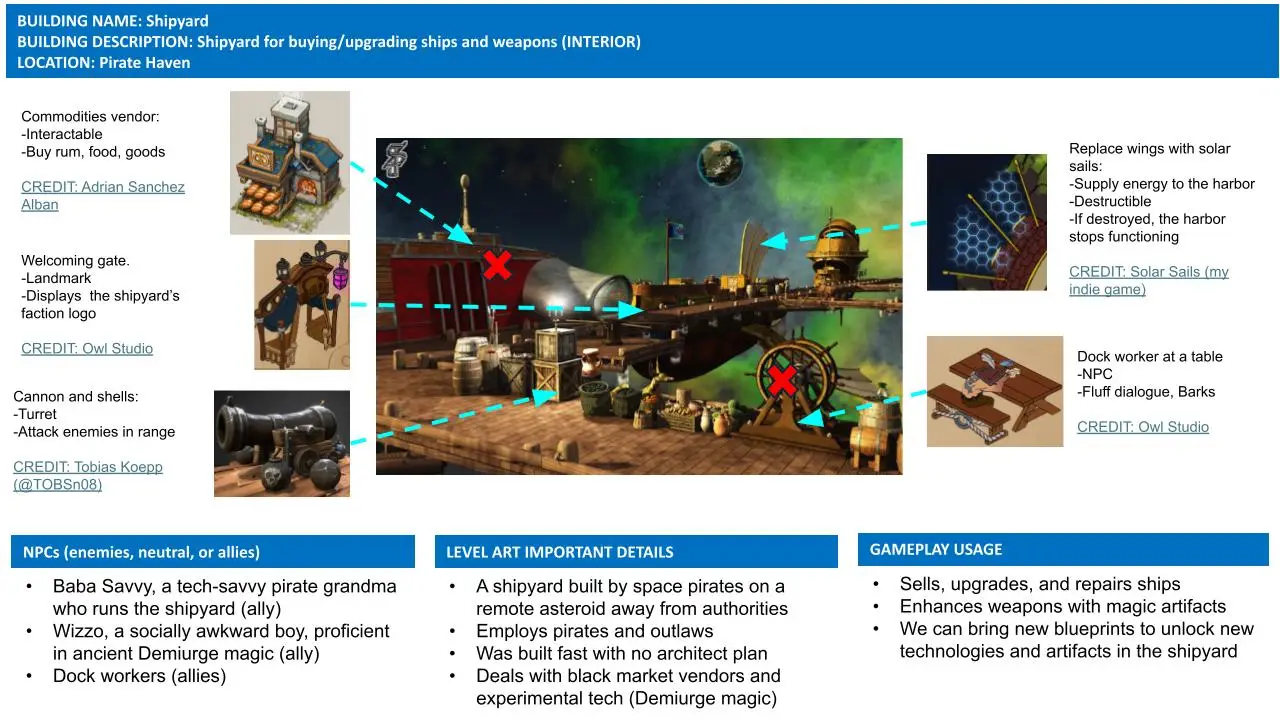
Fleshed Out The Exterior Locations for The Map
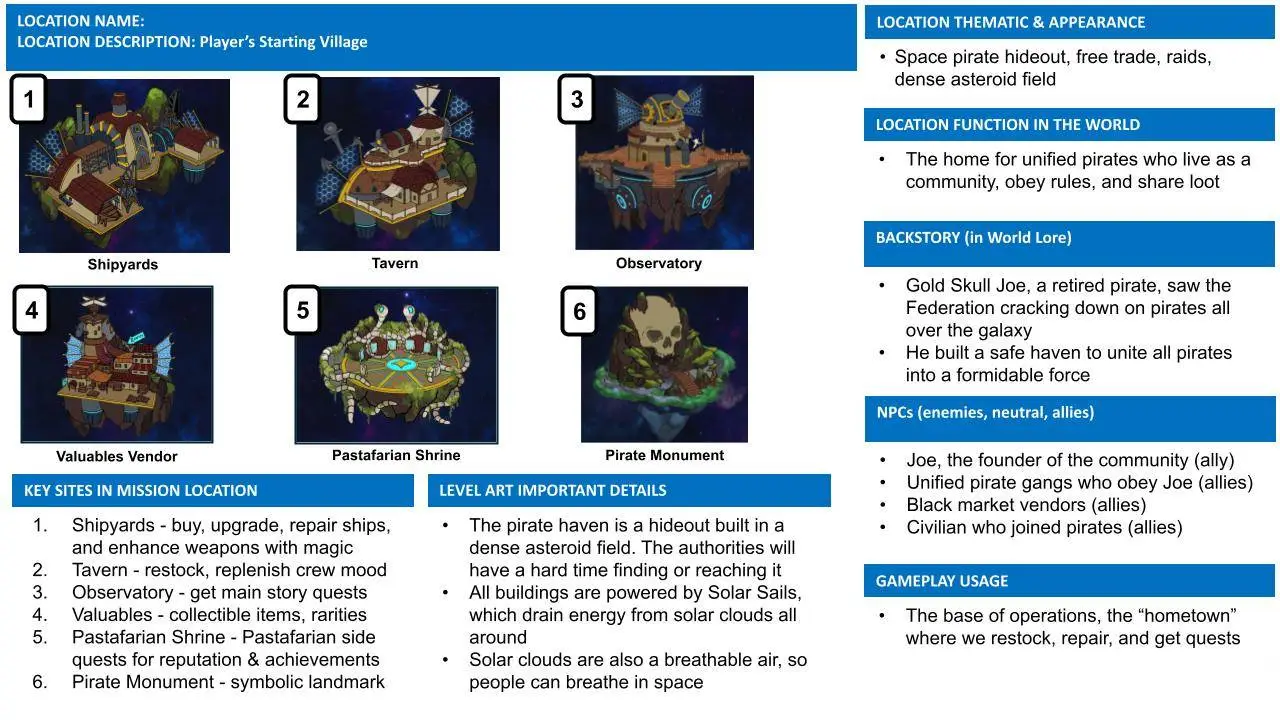
Designed buildings in the space pirate hub. They are all structures built upon asteroids or artificial platforms floating in space. When designing buildings, I emphasized the following:
Gameplay Function – what the player will use the building for, and what options it will provide to the player.
Narrative and Lore Context – the story behind the building, the character(s) that inhabit it, and their roles.
Visual Elements – what the building looks like, its key visual elements that tell a story, and its state & style.
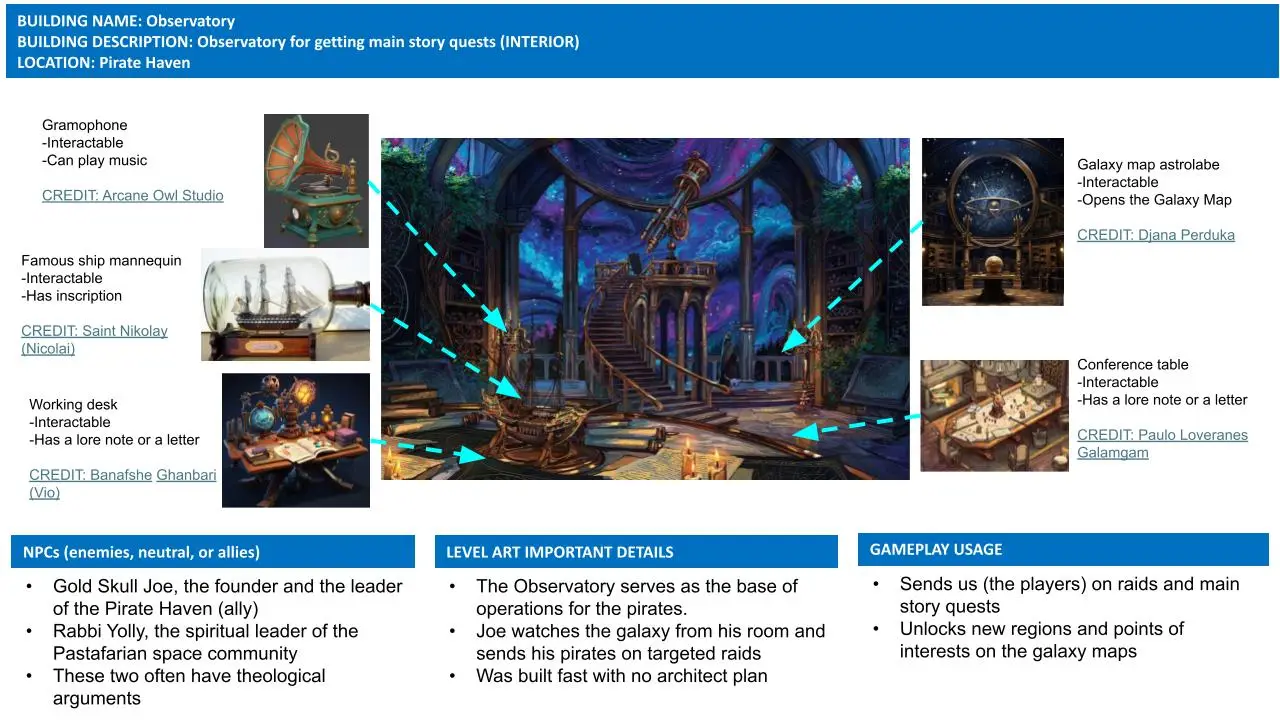
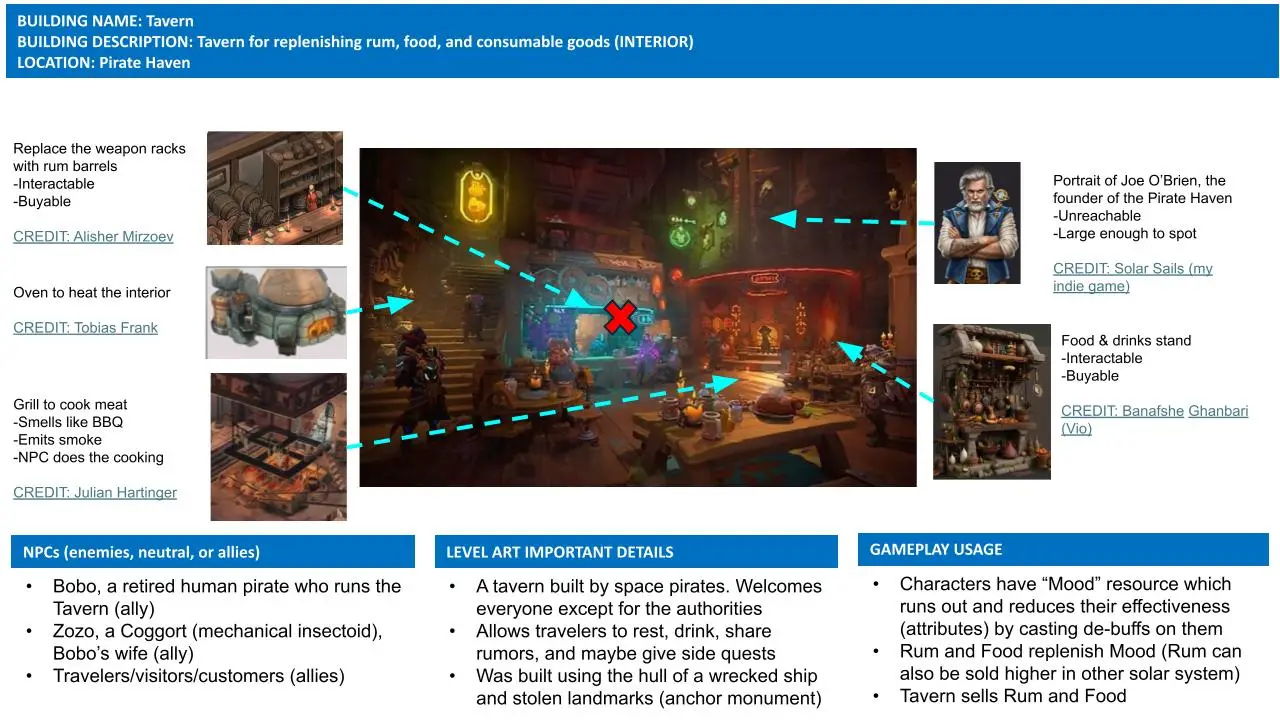
Fleshed Out The Interior Locations for The Map
Designed the interior for the pace pirate hub buildings. They give better insights into the characters that inhabit them. When designing buildings, I emphasized the following:
Gameplay Function – how the player interacts with the interior, and what options it provides to the player.
Character and Lore – what the interior composition of the building tells or hints about the character.
Visual Elements – what the building looks like, its key visual elements that tell a story, and its state & style.
Pirate Hub Map
I designed the map for the Pirate Hub, which serves as a home base for players. Here, they can interact with vendors, upgrade their ships, and talk to NPCs to start new quests. This isn’t the full map, just a sketch to show the basic layout. I based the positions of each vendor on how I want players to prioritize them. Frequently visited vendors are closer to the top center part.
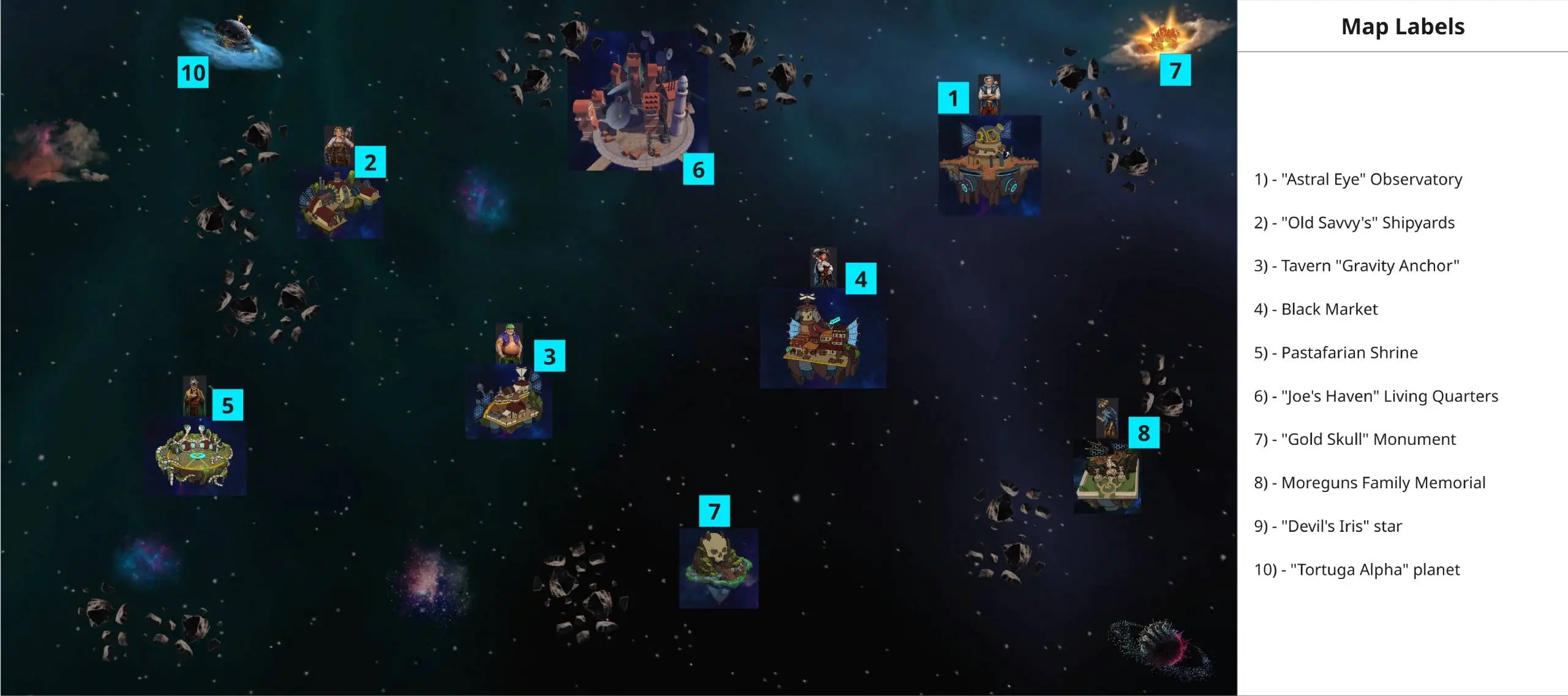
Hyperborean Galaxy Map
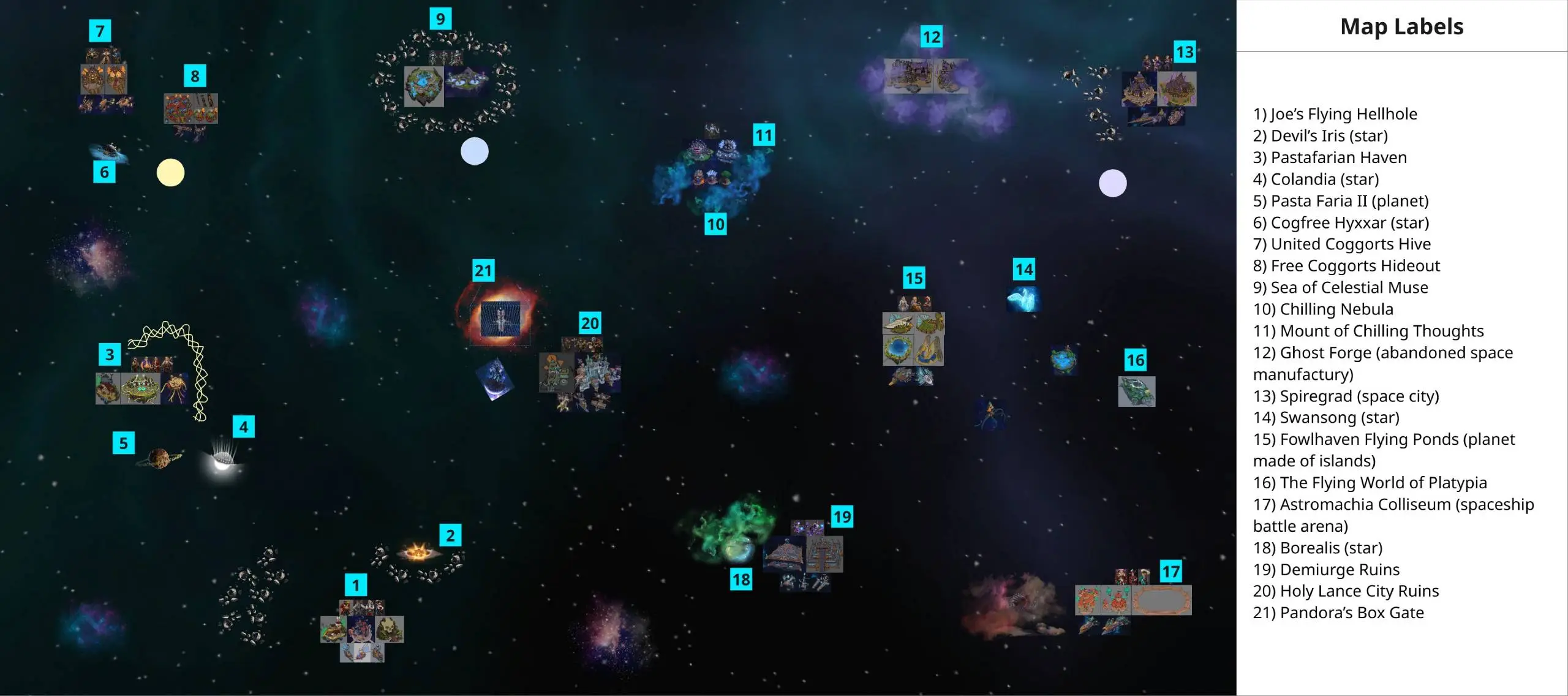
Designed a sketch for the map layout for the Hyperborean Galaxy, where the game takes place. This isn’t the full map, nor do the objects’ scales match their scales in the game. It’s just a sketch to show which points of interest there are and what they represent. This helped the team get a better scope for the size of the game’s world and the scope of its environments.
Pastafarian Solar System Map
I designed this map for the Divine Meal quest:
Laid out NPCs, key elements, and objectives to design the map around them.
Placed important points of interest to indicate the environmental themes of every sub-location.
Visualized the player’s path between objectives to plan their movement and validate the layout.
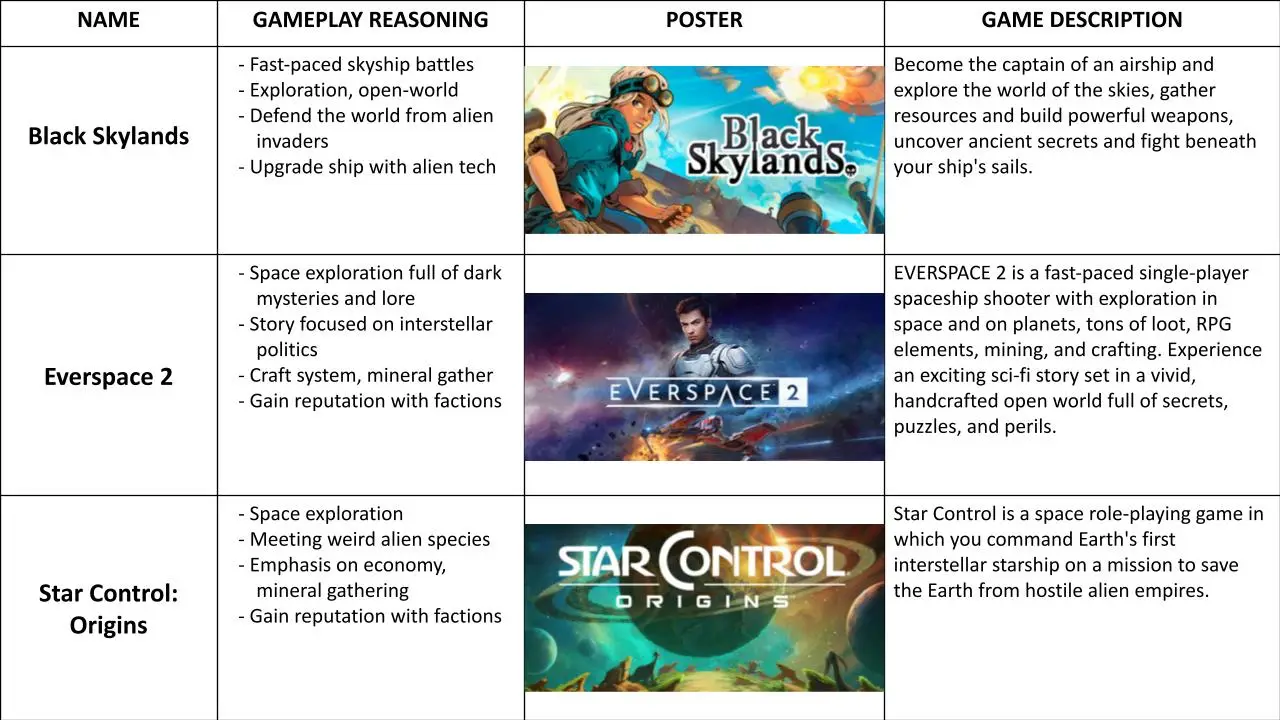
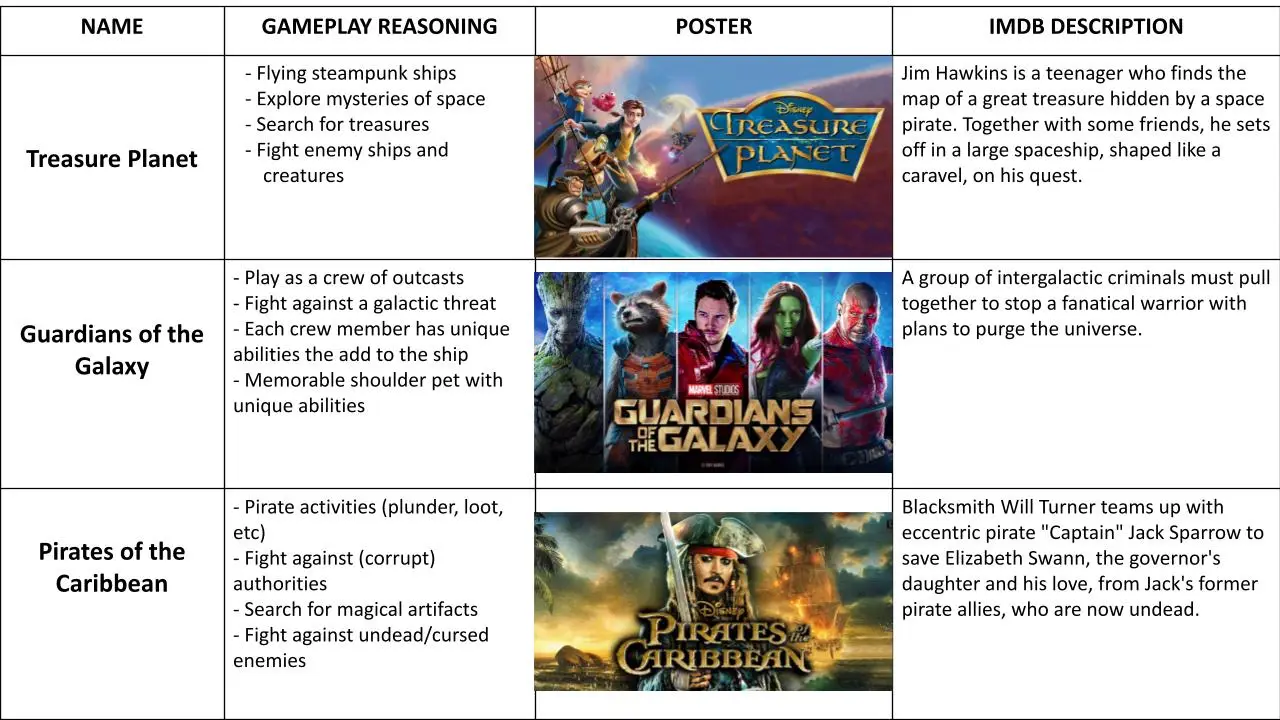
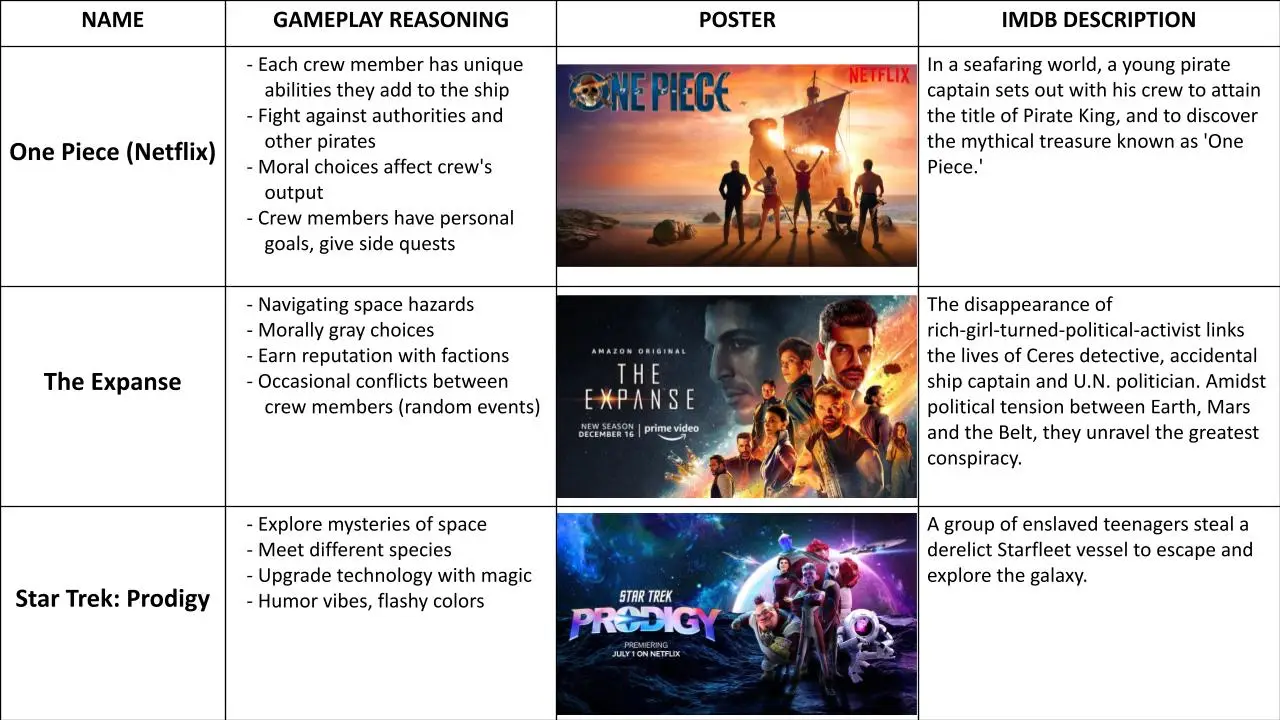
Genre and Content Research
Researched popular video games, TV shows, and movies to:
Find creations to draw inspiration from and broaden my creativity horizons.
Figure out what people like about these creations and what makes them so popular.
Get a better idea of what works in the genre, what doesn’t, and what my audience’s expectations are.
Get a practical understanding of the genre strengths, limitations, and conventions.
See what already exists and what I can do to stand out.