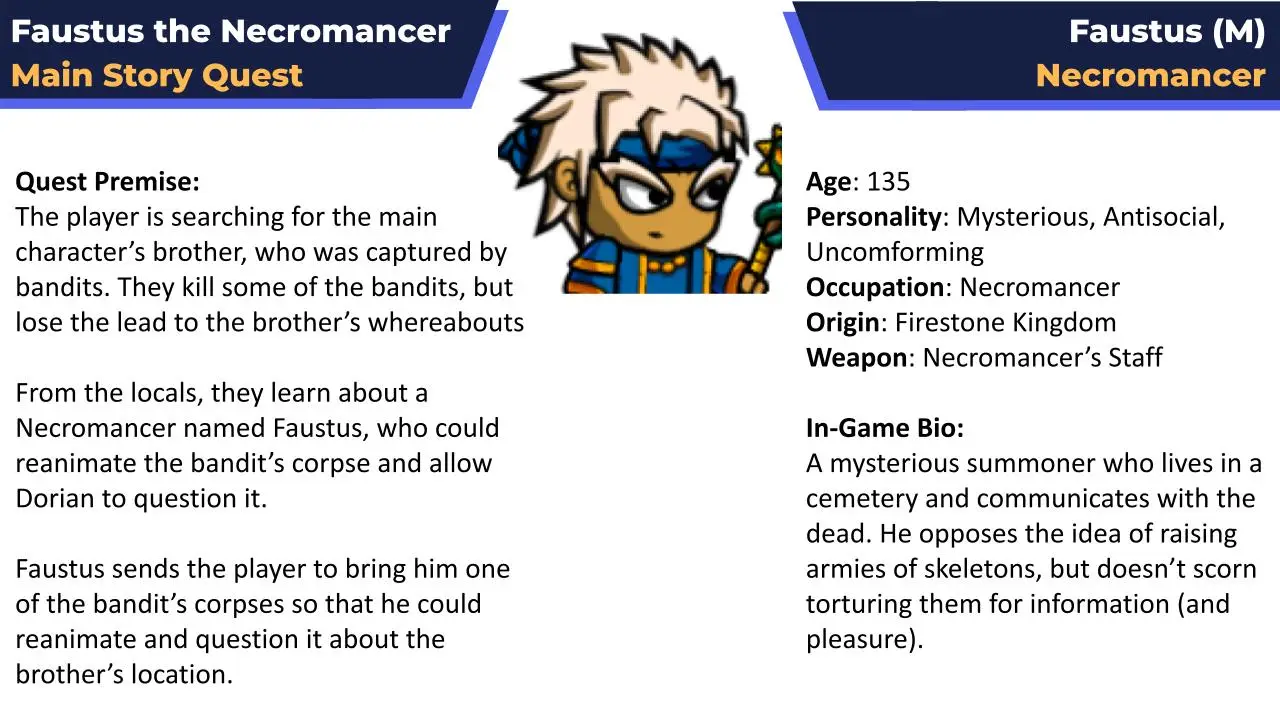
Faustus already existed as a playable character, but he had no connection to the story. Based on Faustus’s design and abilities, I gave him a personality and a backstory, and came up with a quest idea that fits the story.
Step 2. Drafted the Quest's Outline
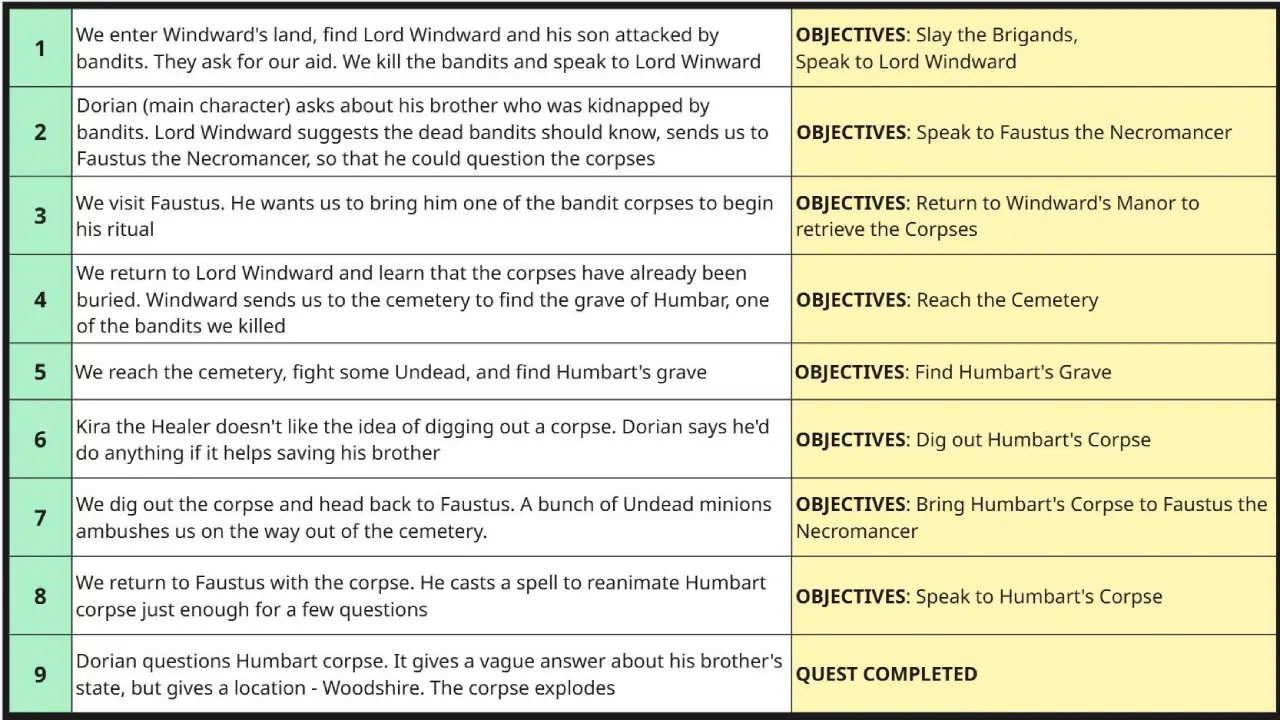
I took the quest story premise and outlined its story into story beats. Each story beat includes what the player does, how the game reacts to it, and what the player needs to do next (objectives).
Step 3. Wrote up the Quest's Basic Info
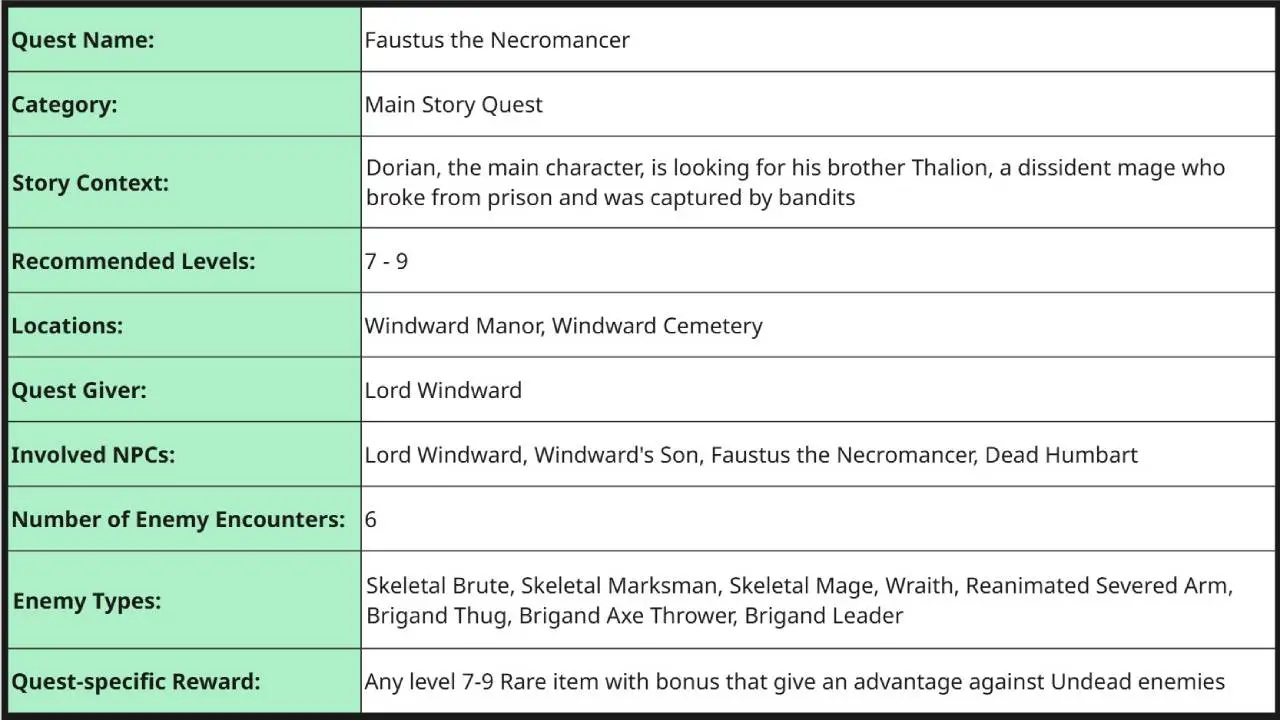
Before starting the work, I needed to sync with the lead game designer about the scope of the quest. So I wrote a spreadsheet that outlines the involved NPCs, locations, and enemies.
Step 4. Designed the Quest's Flow
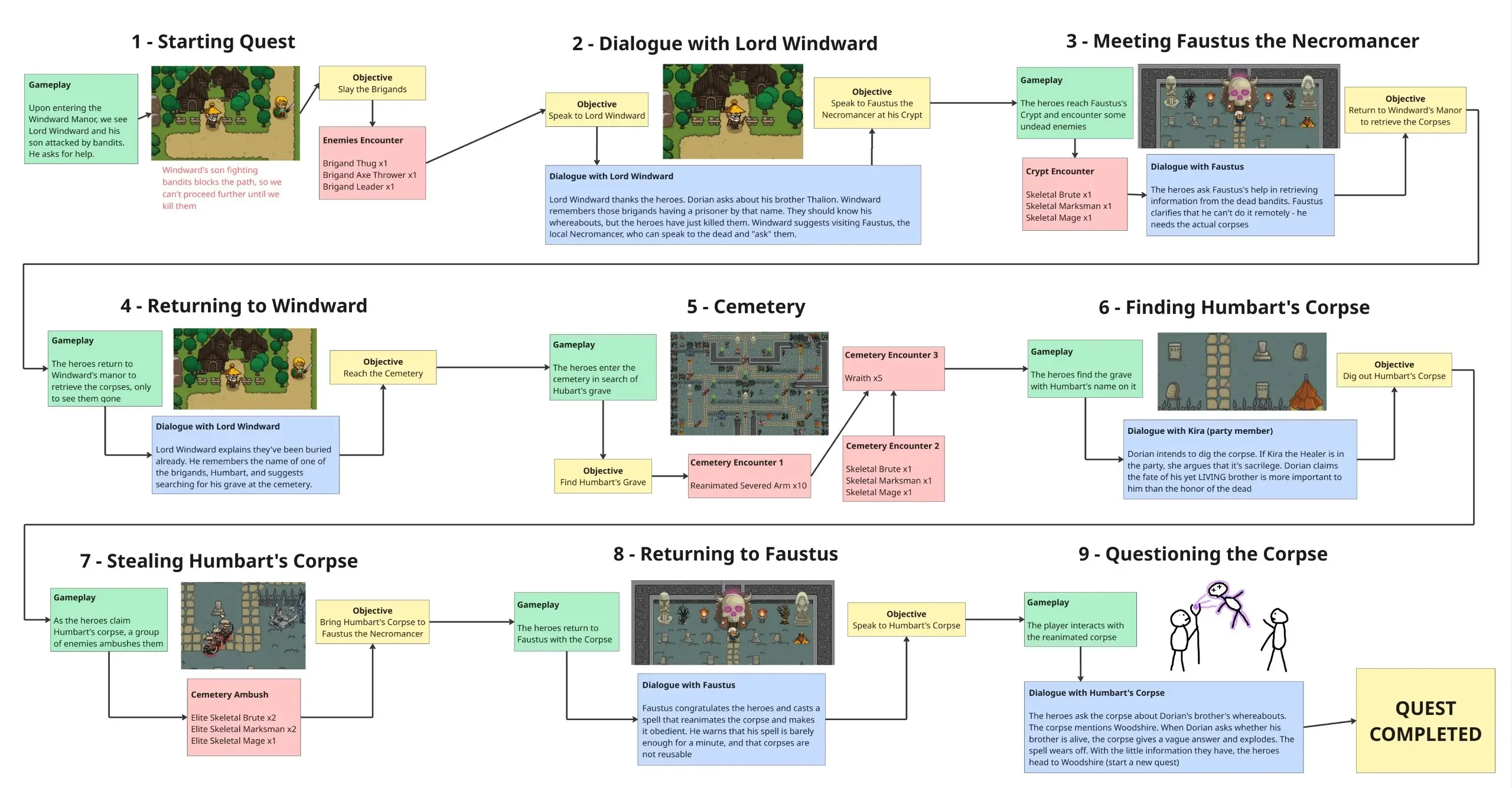
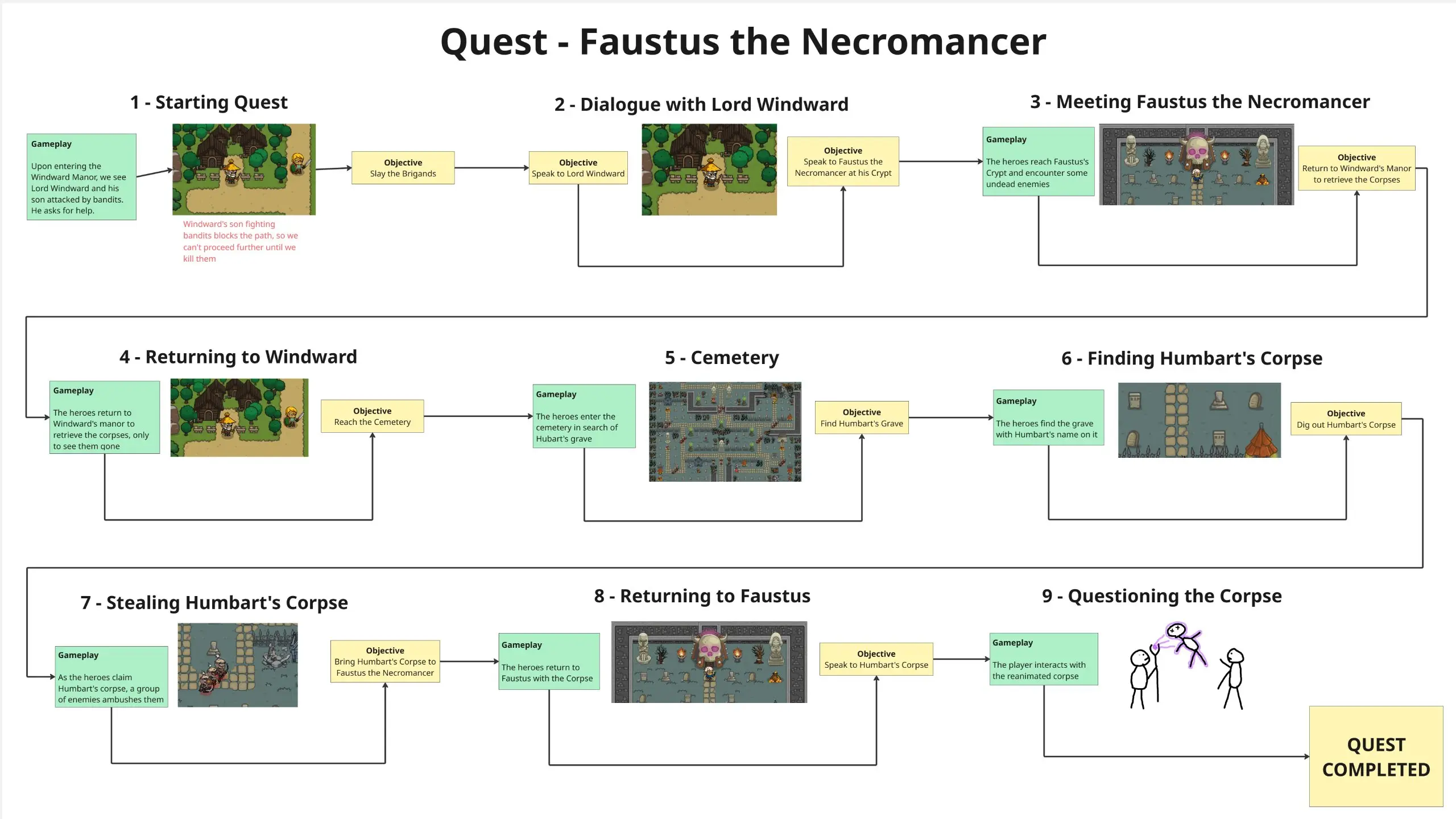
Once the outline was approved, I started the design process. My first step was to lay out the quest’s flow:
Gameplay – the players’ actions, usually corresponding with given objectives.
Reaction and Context – where the player is and how the game reacts to their actions.
Objectives – what players need to do next to reach the next step of the quest.
Step 5. Defined Interactions with NPCs
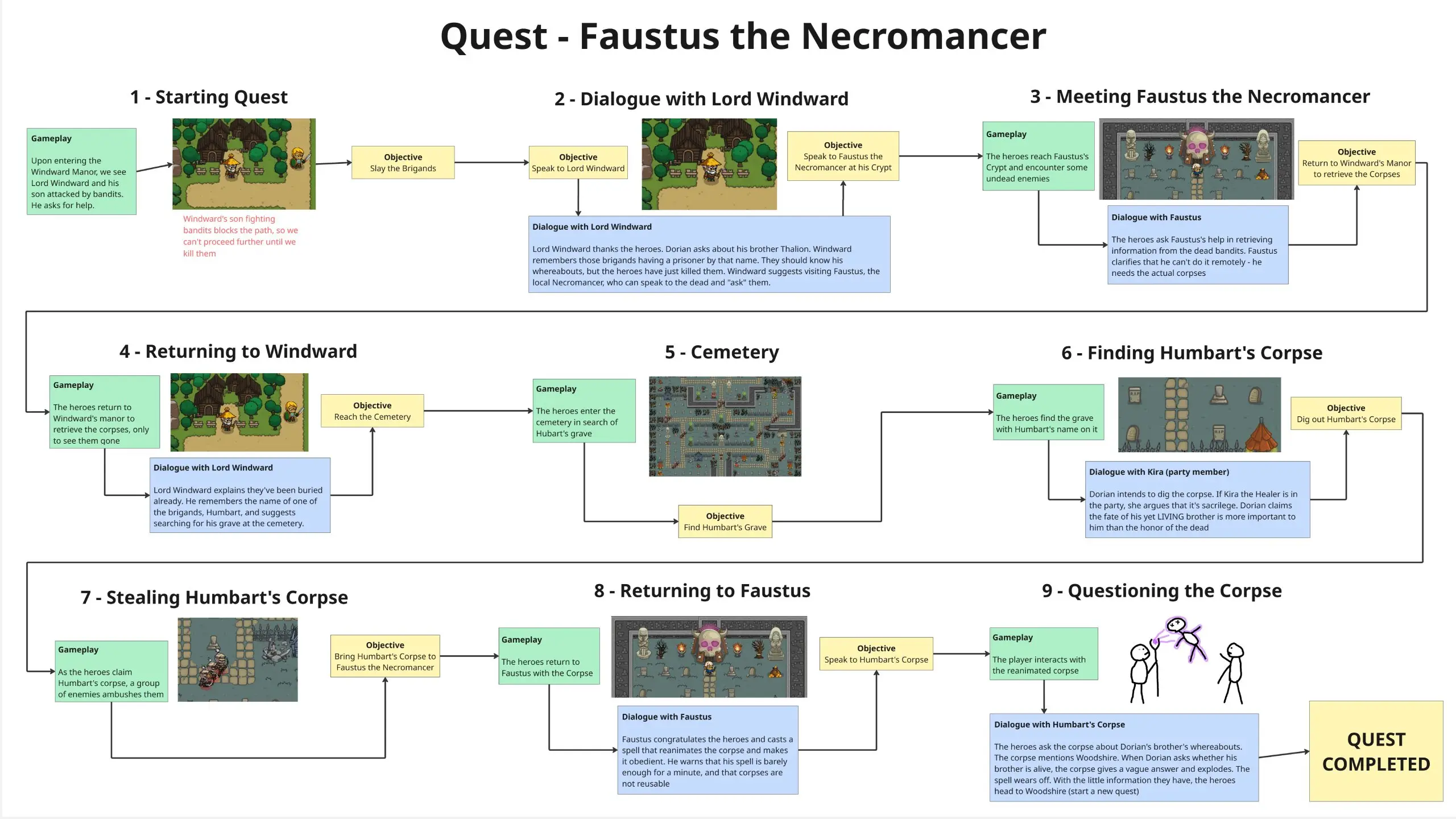
Next, I delivered the story via interactions with NPCs, depending on the quest’s needs.
Dialogue – this is just the placeholder, the topic of the conversation, not the actual dialogue yet.
Actions/Animations – to visualize some actions using existing tools. For example: NPC casts a spell.
Step 6. Defined and Added Enemy Encounters
Planned enemy encounters based on the quest’s pacing and flow.
Placed mandatory enemy encounters at choke points so that the players won’t pass them.
Diversified encounters with roles (tank, range, support). Sometimes, used uneven encounters (wraiths only).
Step 7. Set up Locations, Triggers, and Points of Interest
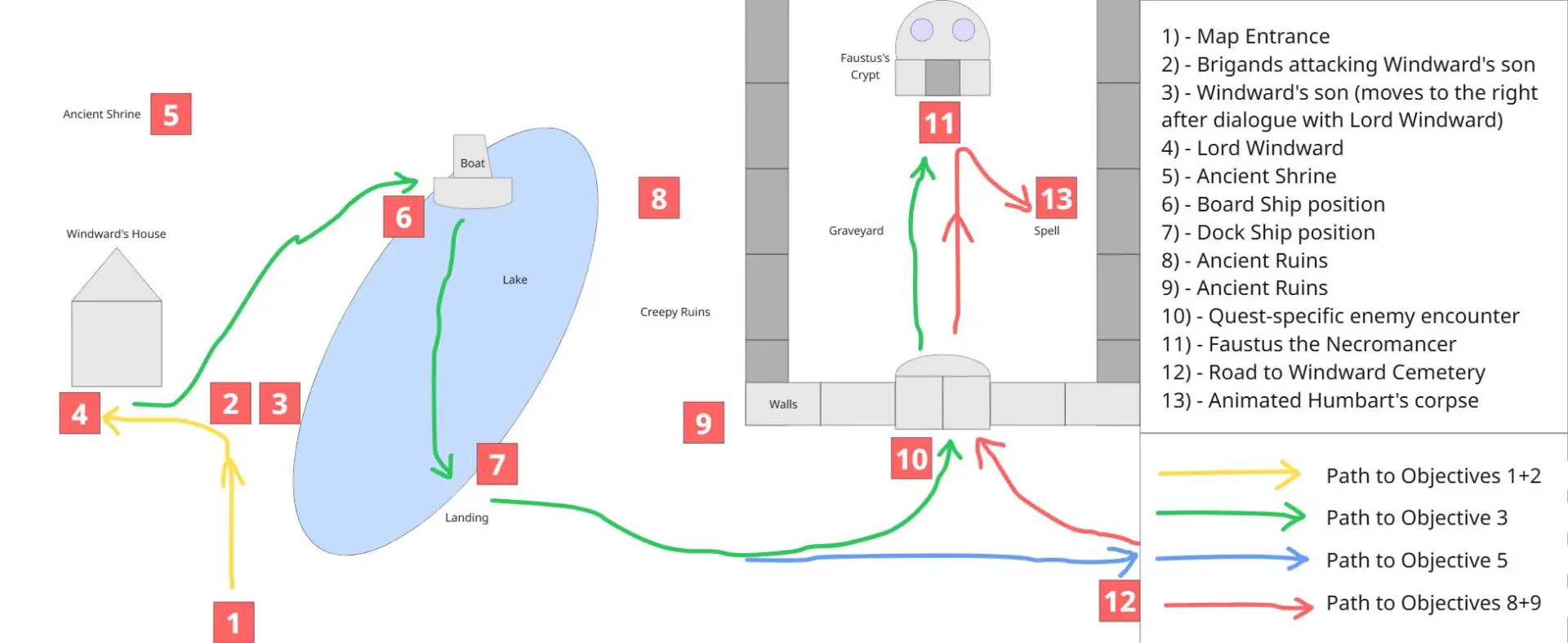
Once the flow was ready, I moved on to designing sketches for the map layout in Miro.
Divided the map into 3 large areas: manor, lake, and graveyard. Added major landmarks.
Set up points of interest, objective definitions, and interactions to test the flow in the engine.
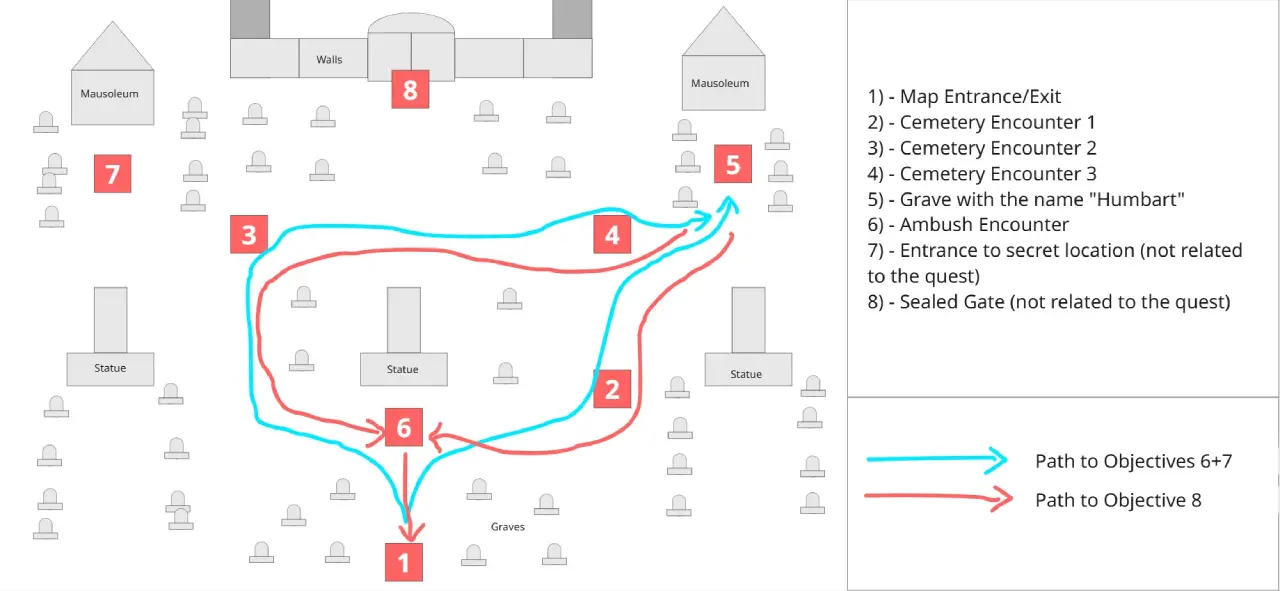
Visualized the player’s path between objectives to plan their movement and validate the layout.
Step 8. Designed, Built, and Iterated the Quest's Map
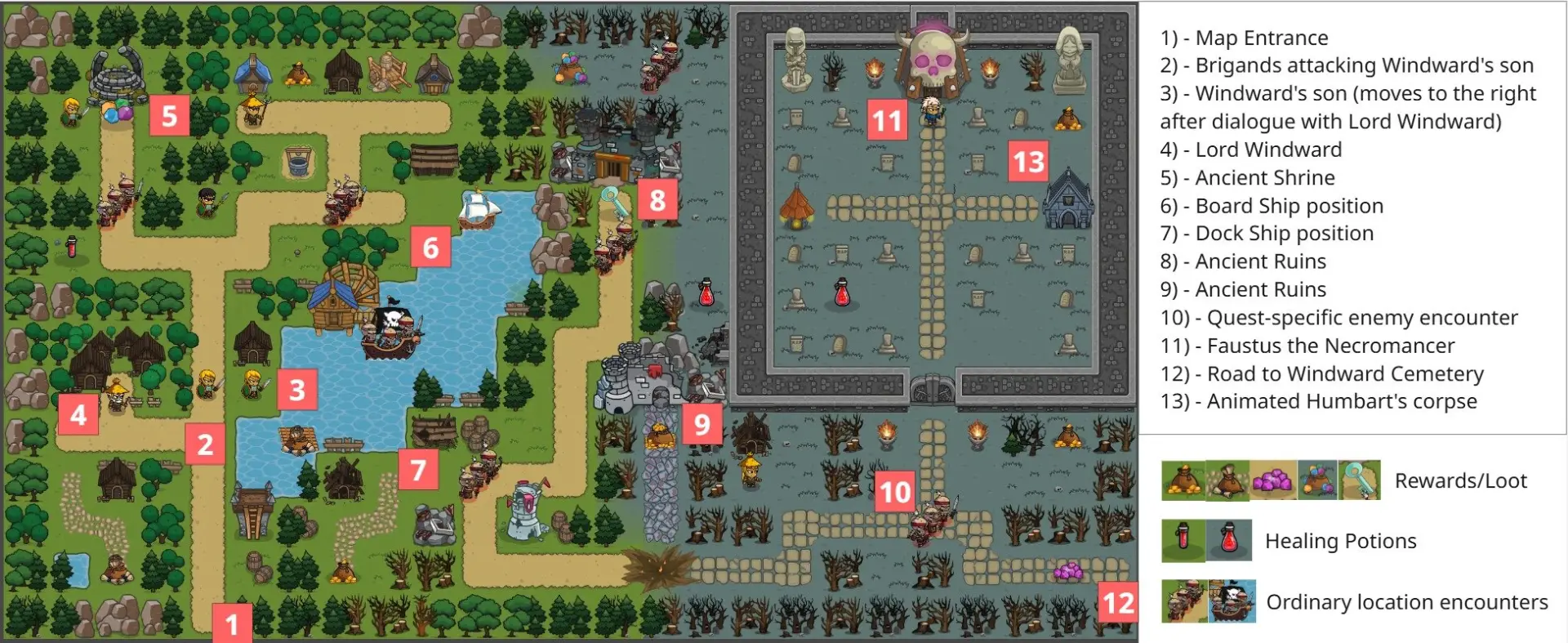
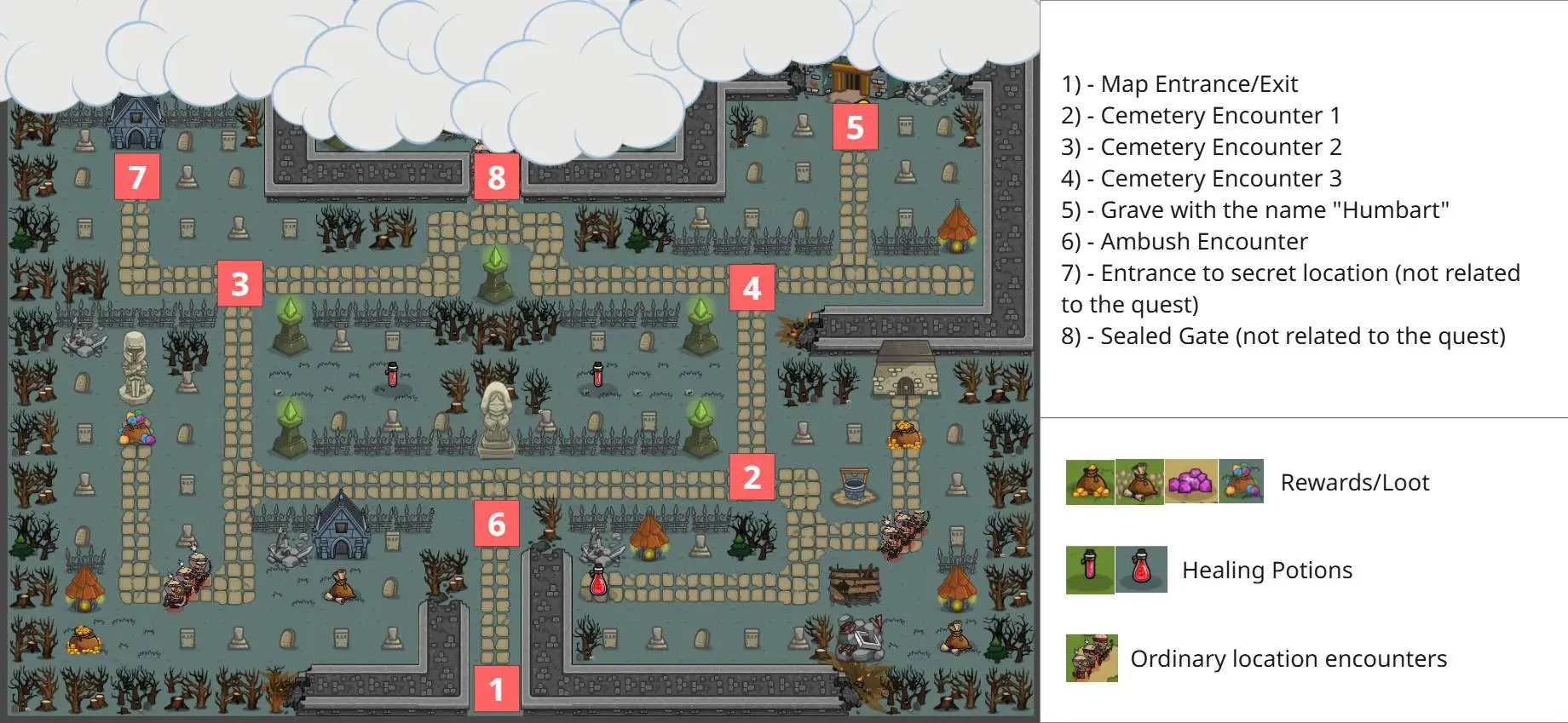
My final step was to design the environment in Unity using custom editor tools.
Focused on moment-to-moment visual storytelling. I designed every corner of the map to tell its own story.
Playtested and iterated the quest to make it fun, balanced, and not break when played off script.
Linear Dialogue
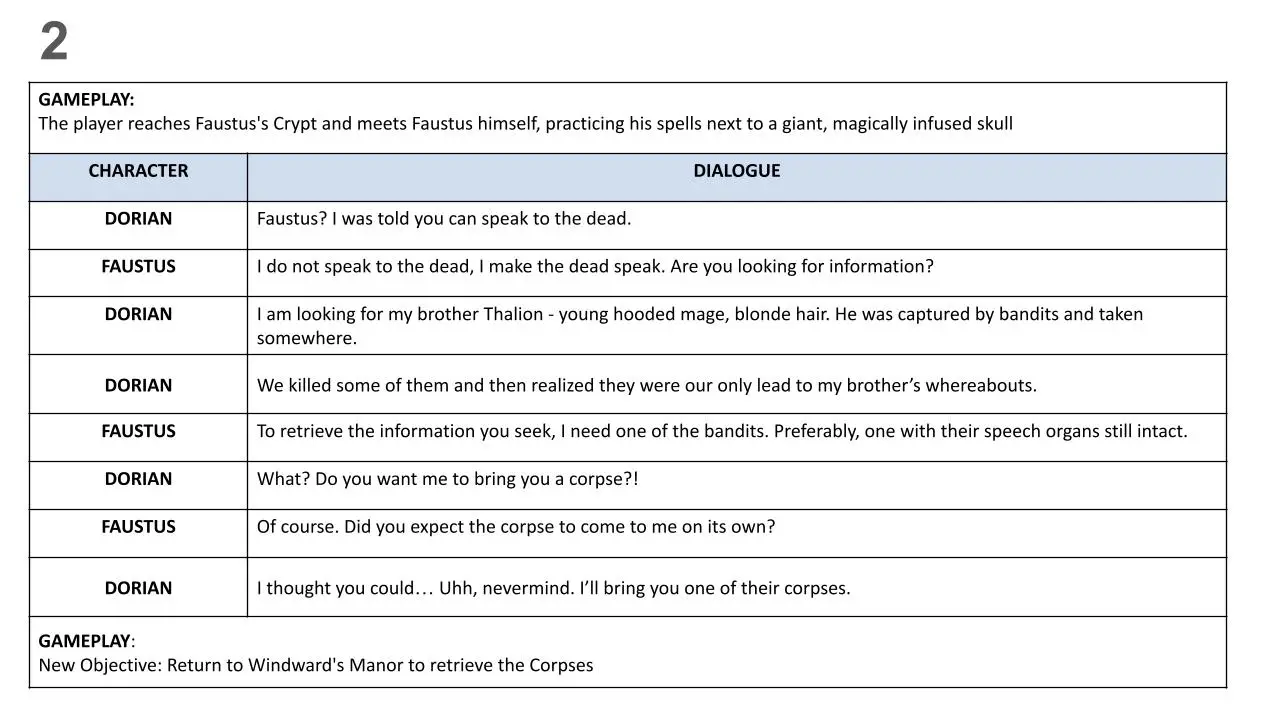
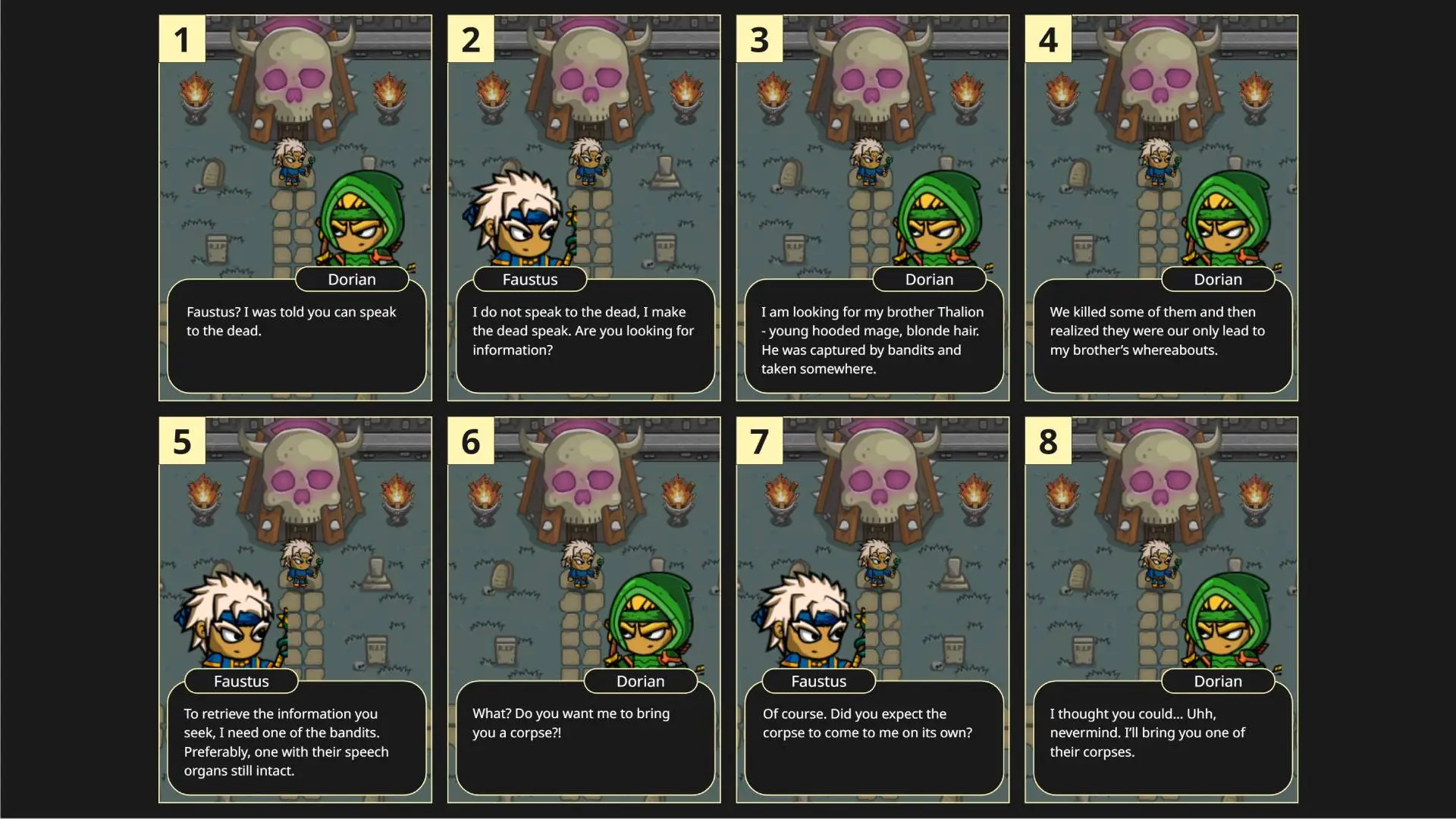
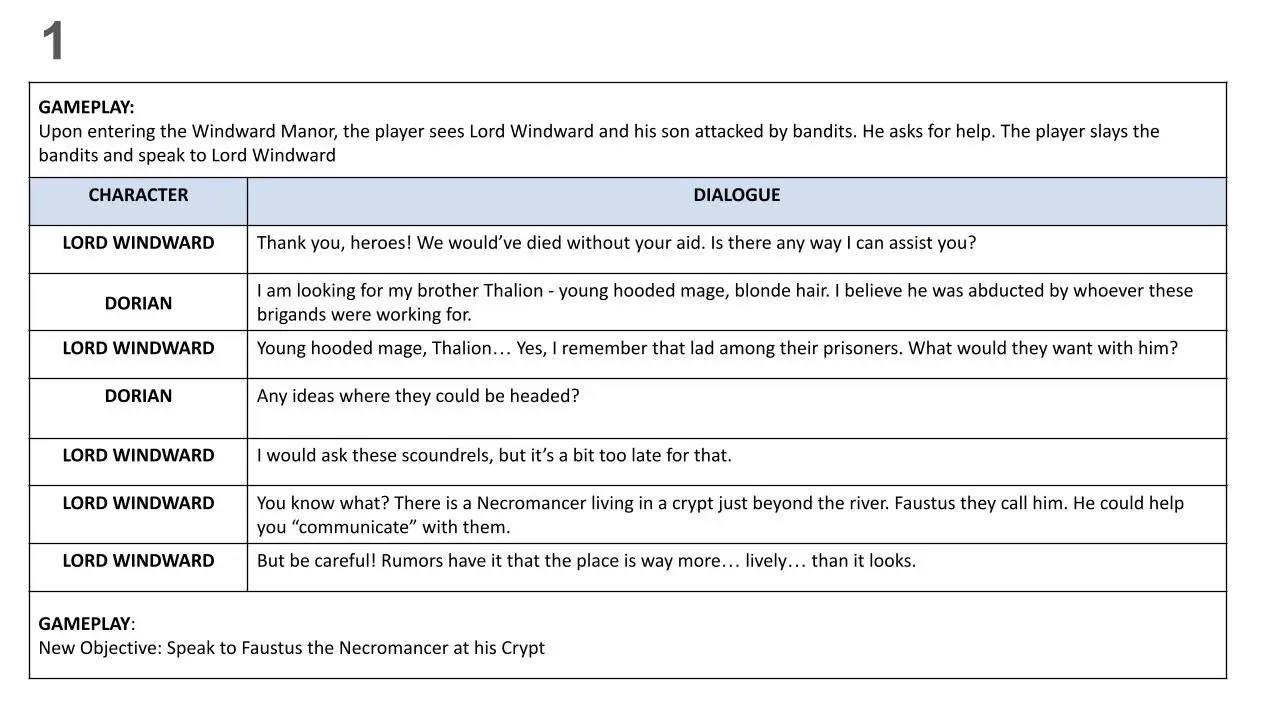
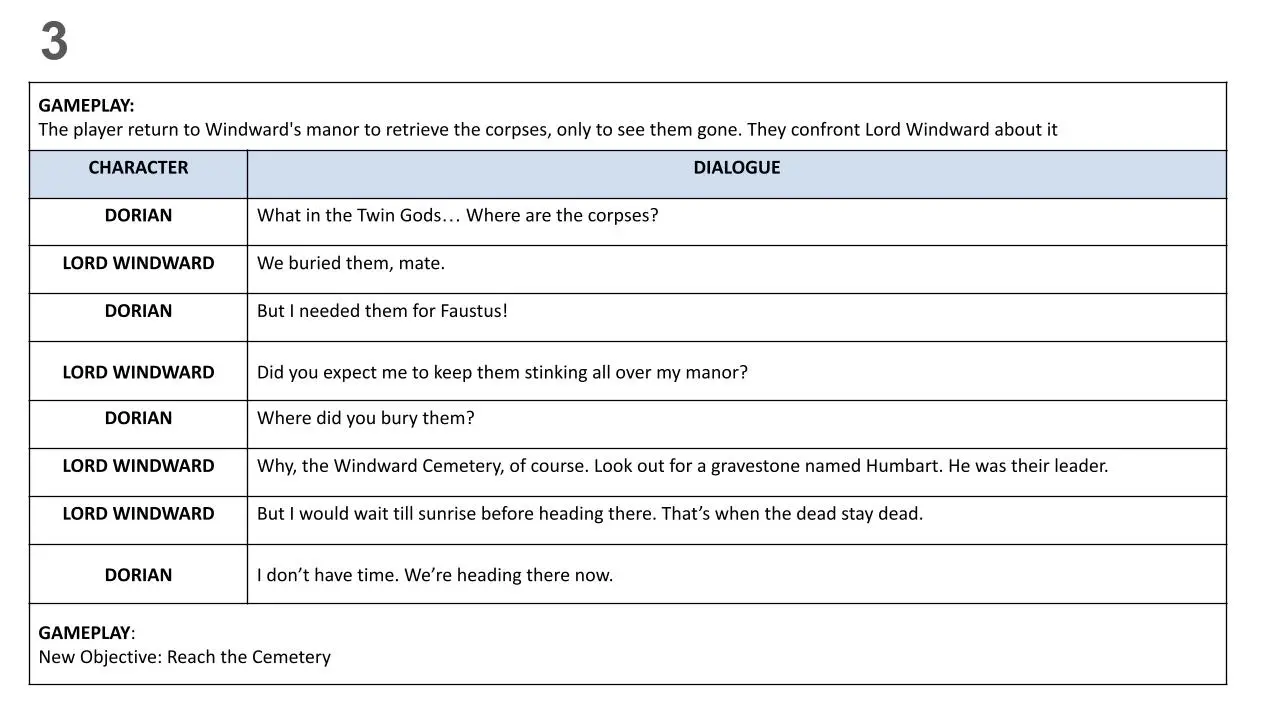
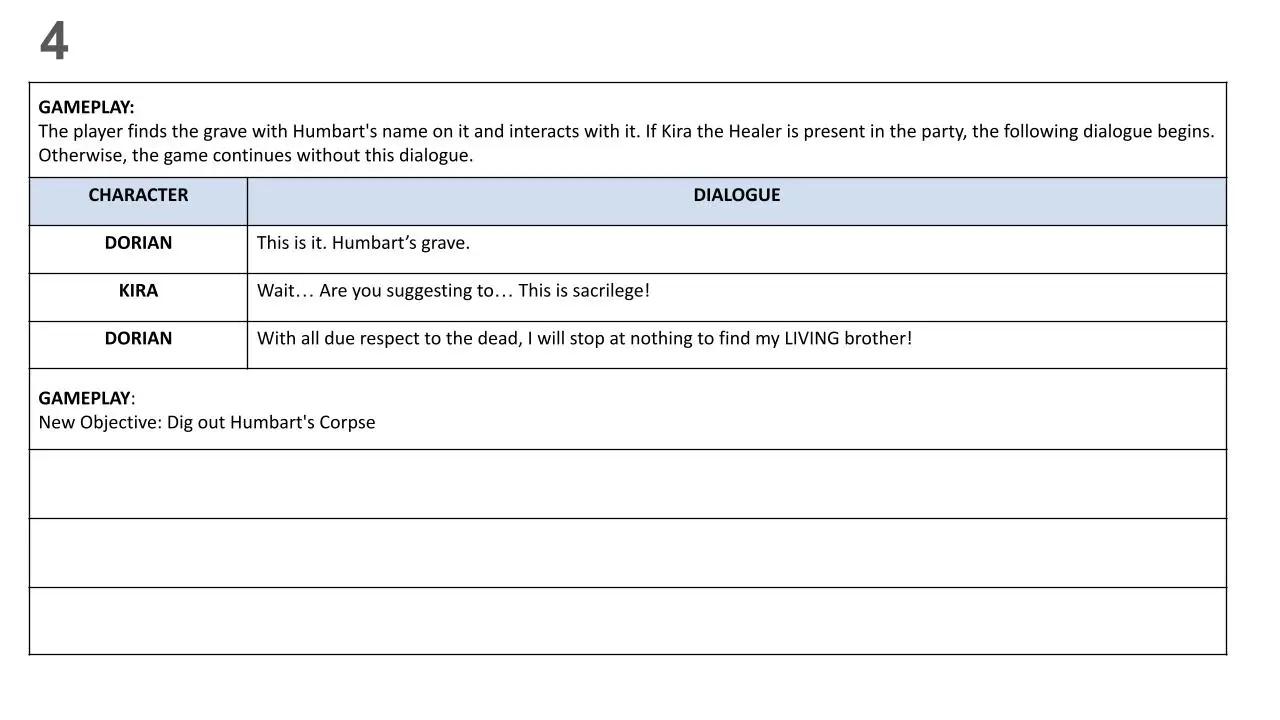
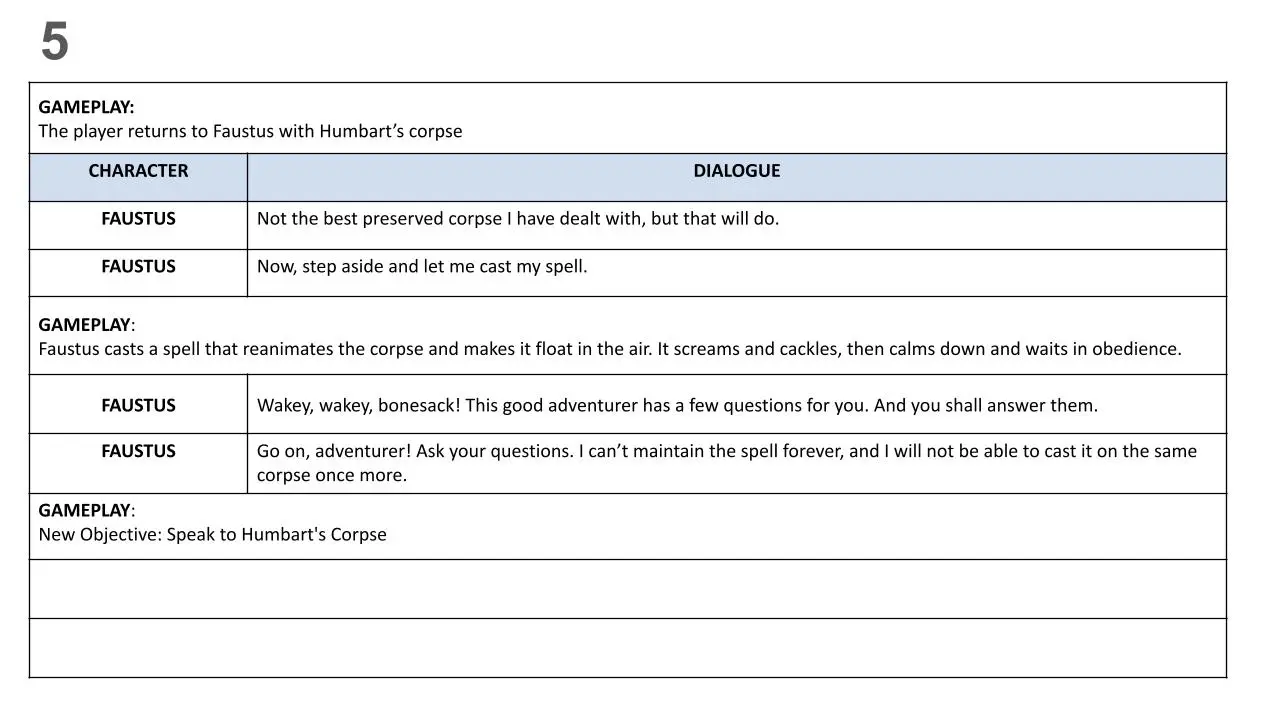
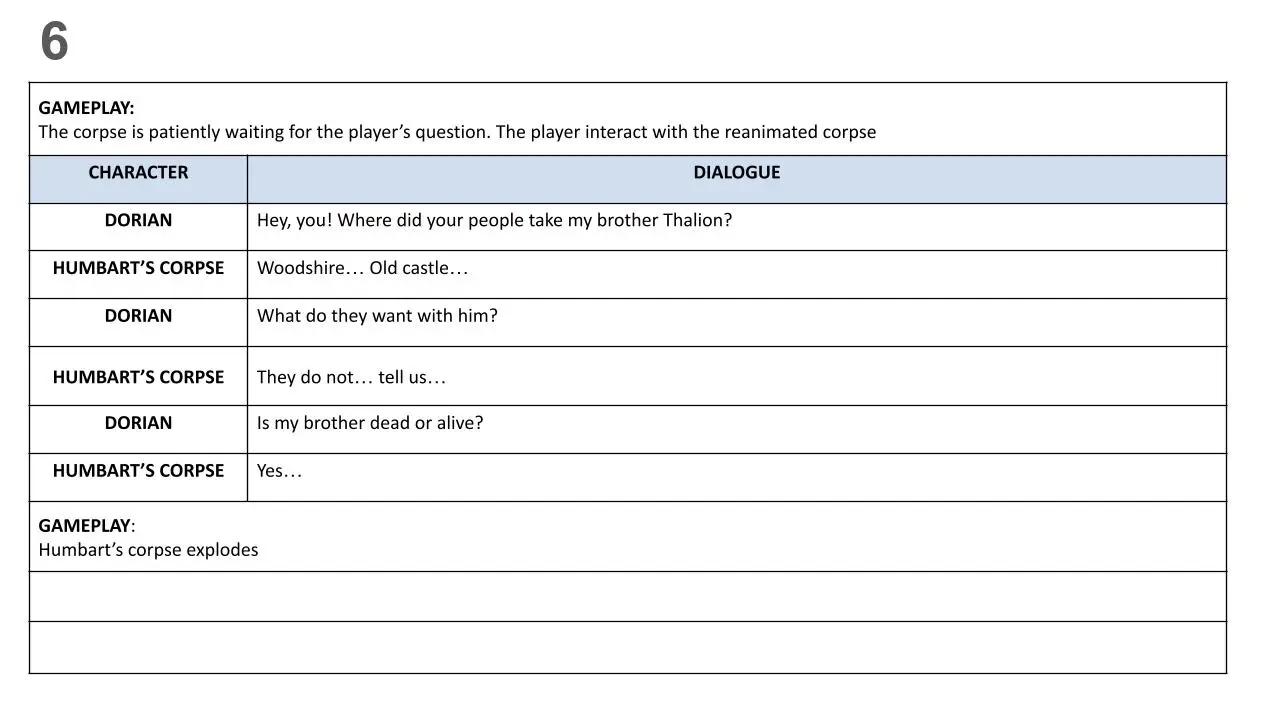
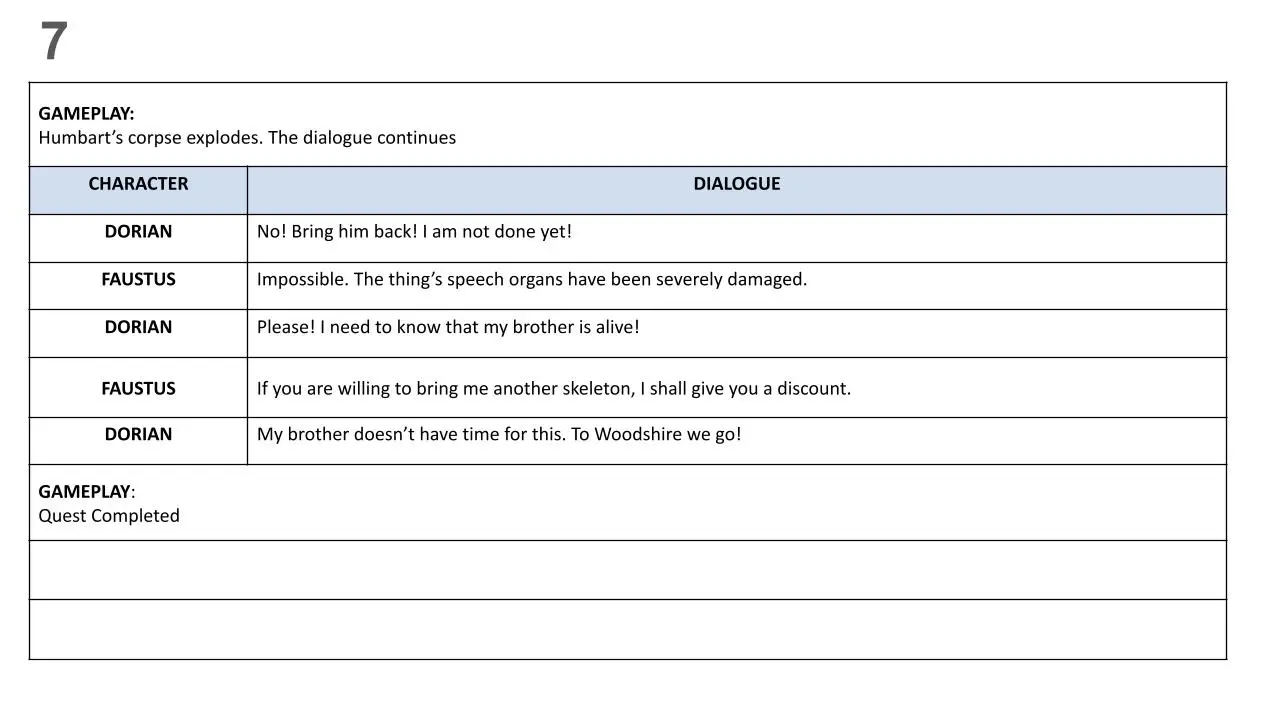
Dialogue for the Faustus Quest
I wrote dialogue based on the conversation topic I had mentioned earlier in the quest flow. These were my considerations during the writing process:
The dialogue serves its gameplay purpose and flow.
The participants are trying to achieve their goals.
The dialogue stays true to the game’s lore.
The dialogue reflects character personalities.
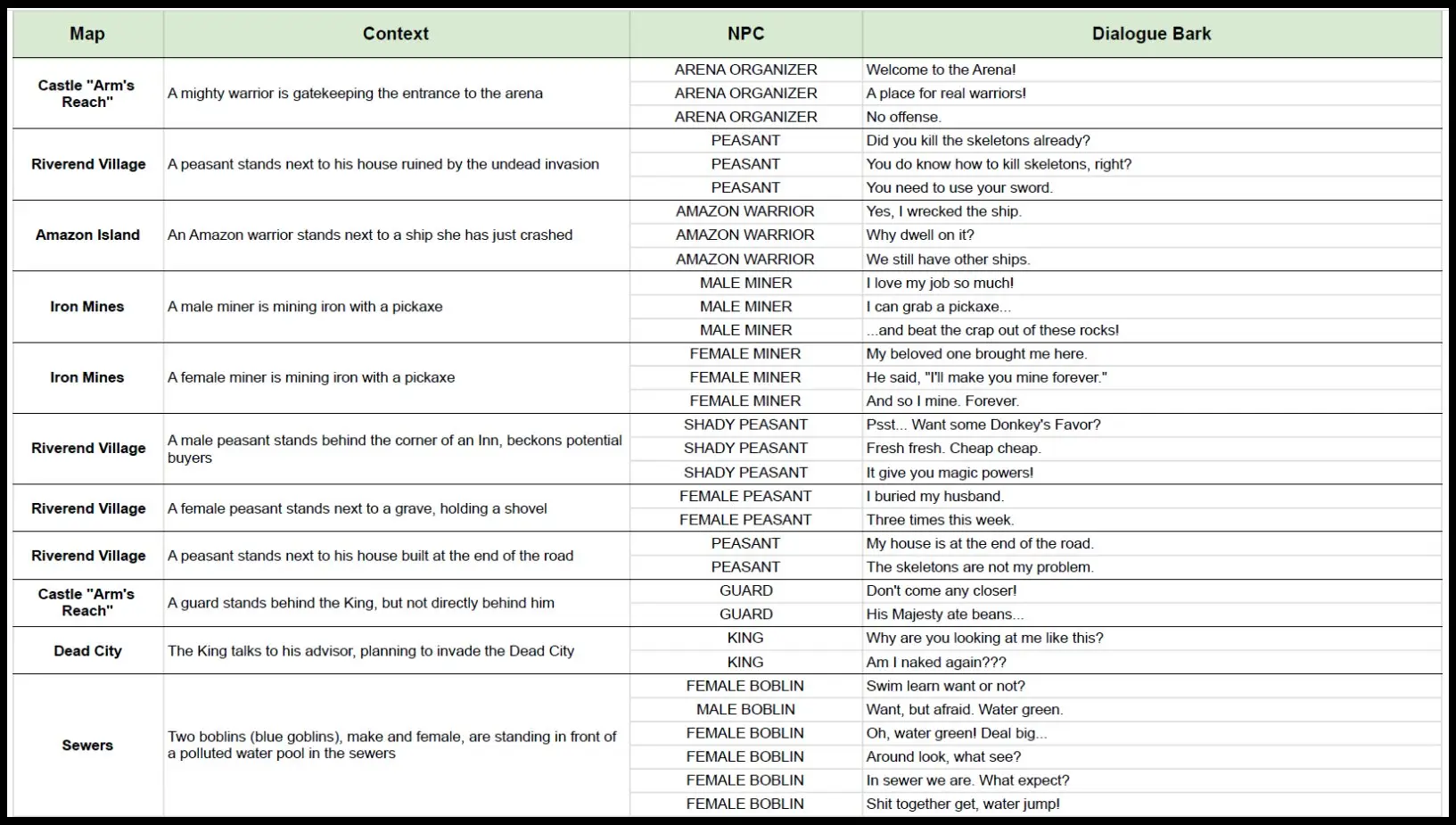
NPC Barks
Goal
To add humor and encourage the players to interact with NPCs and explore the map.
Solution
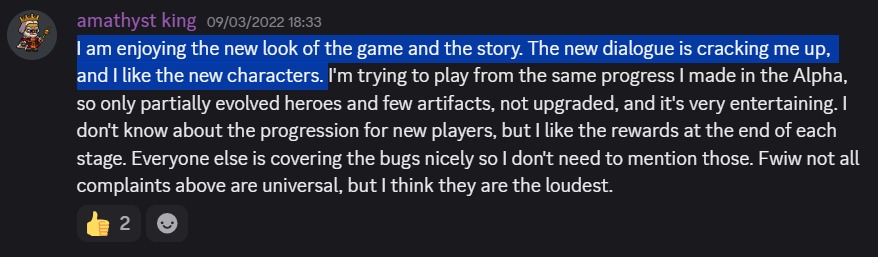
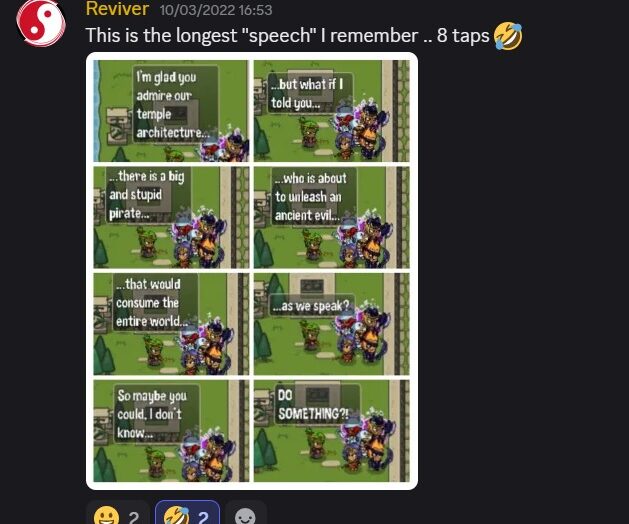
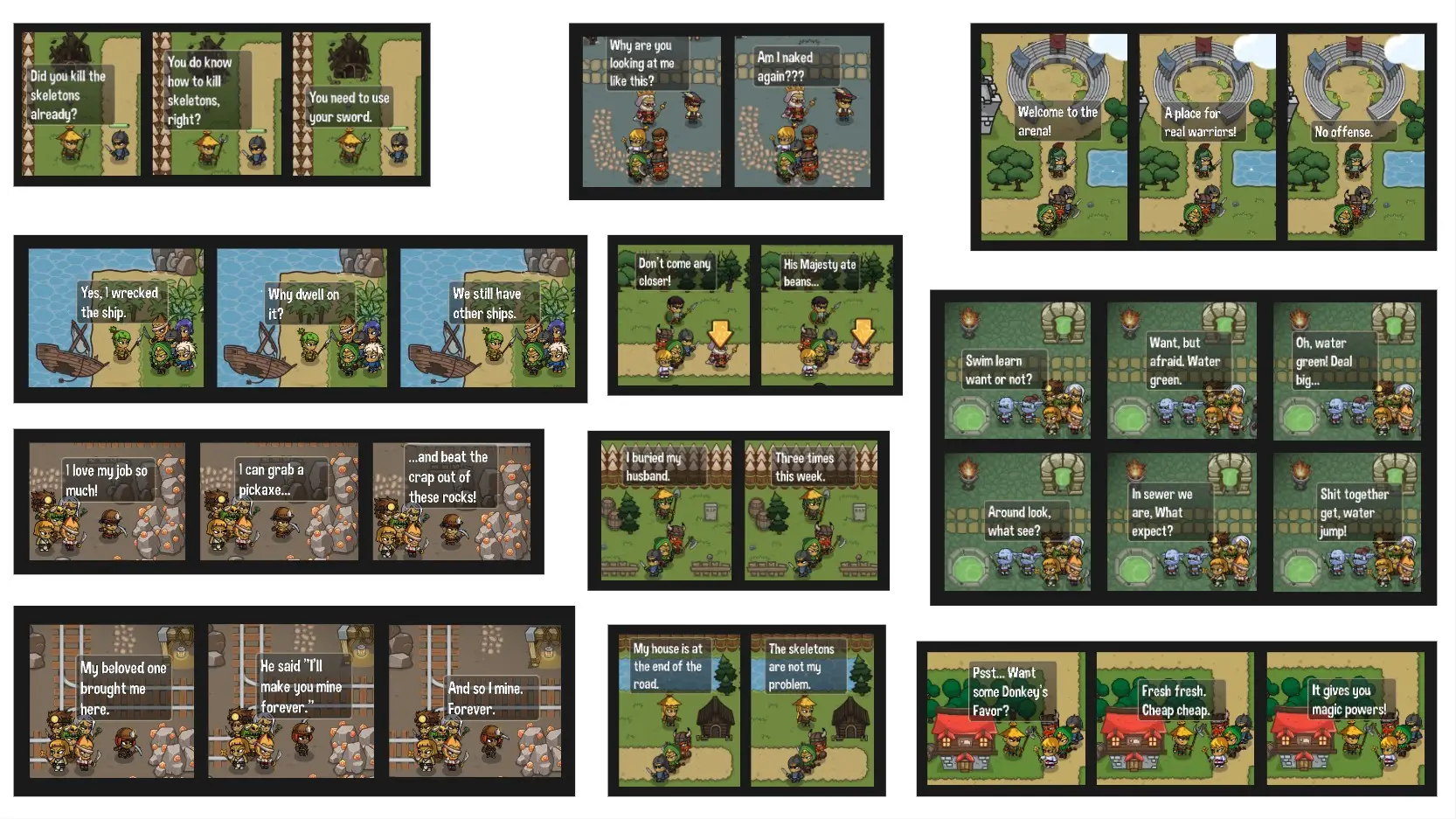
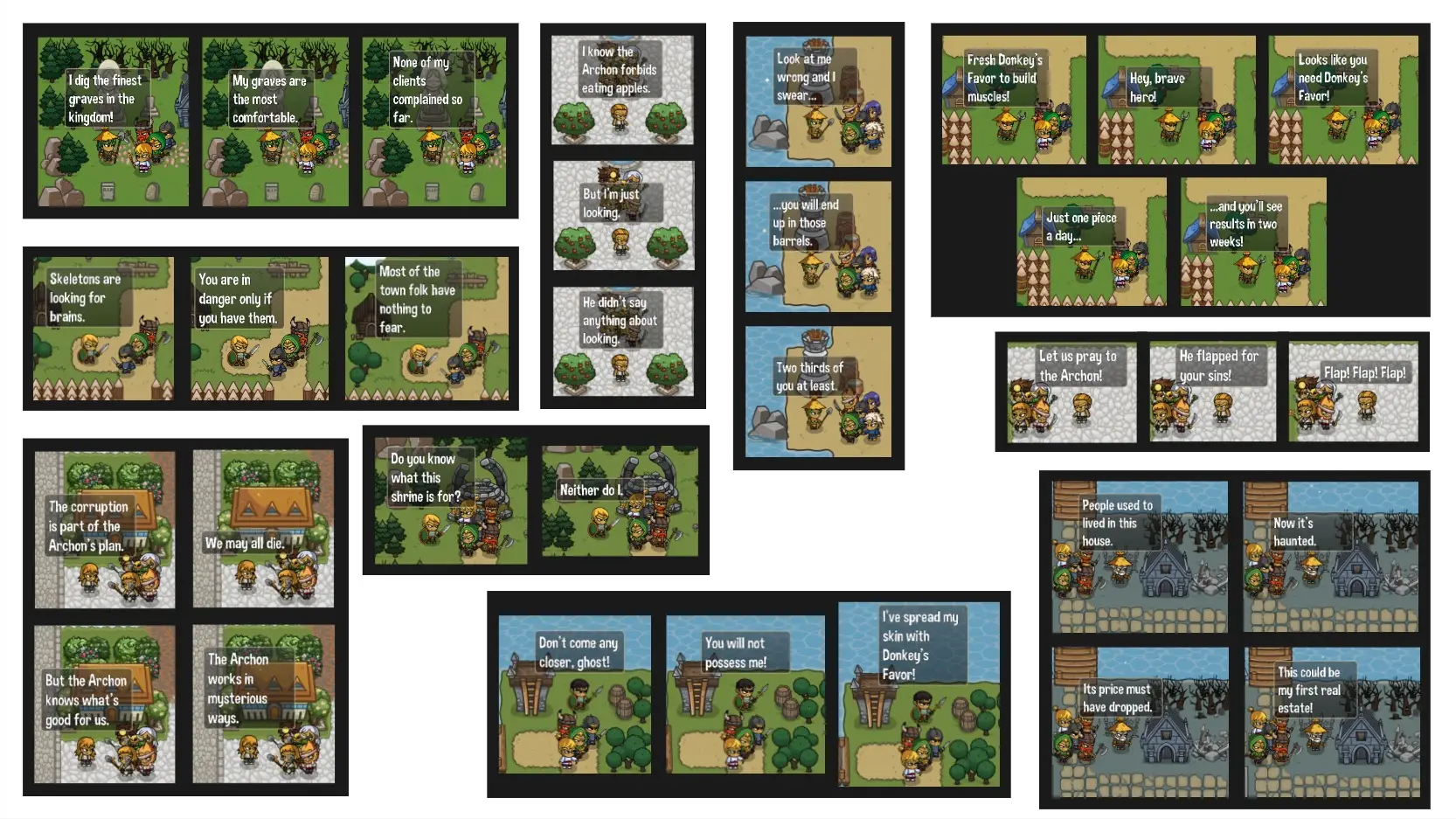
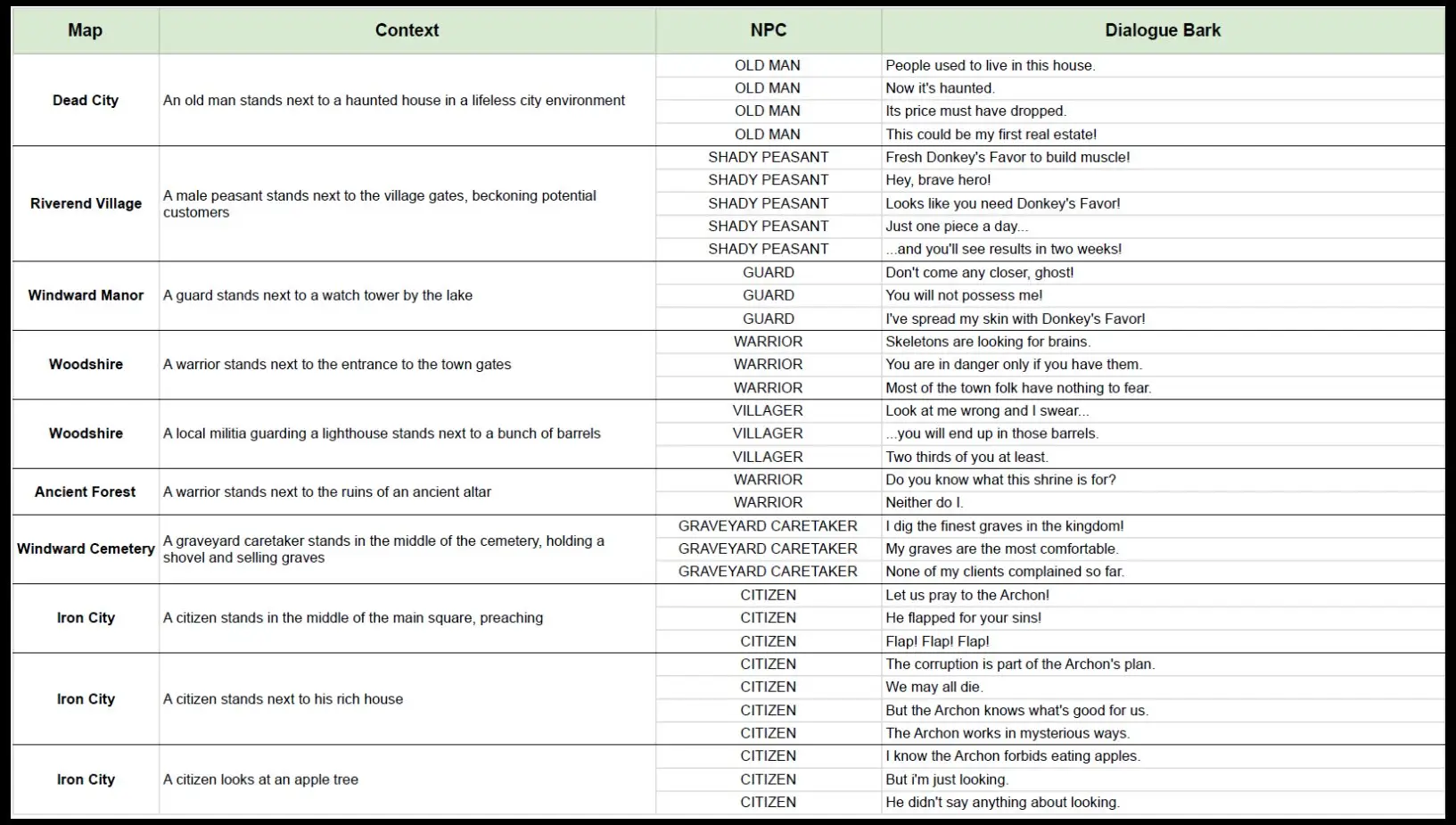
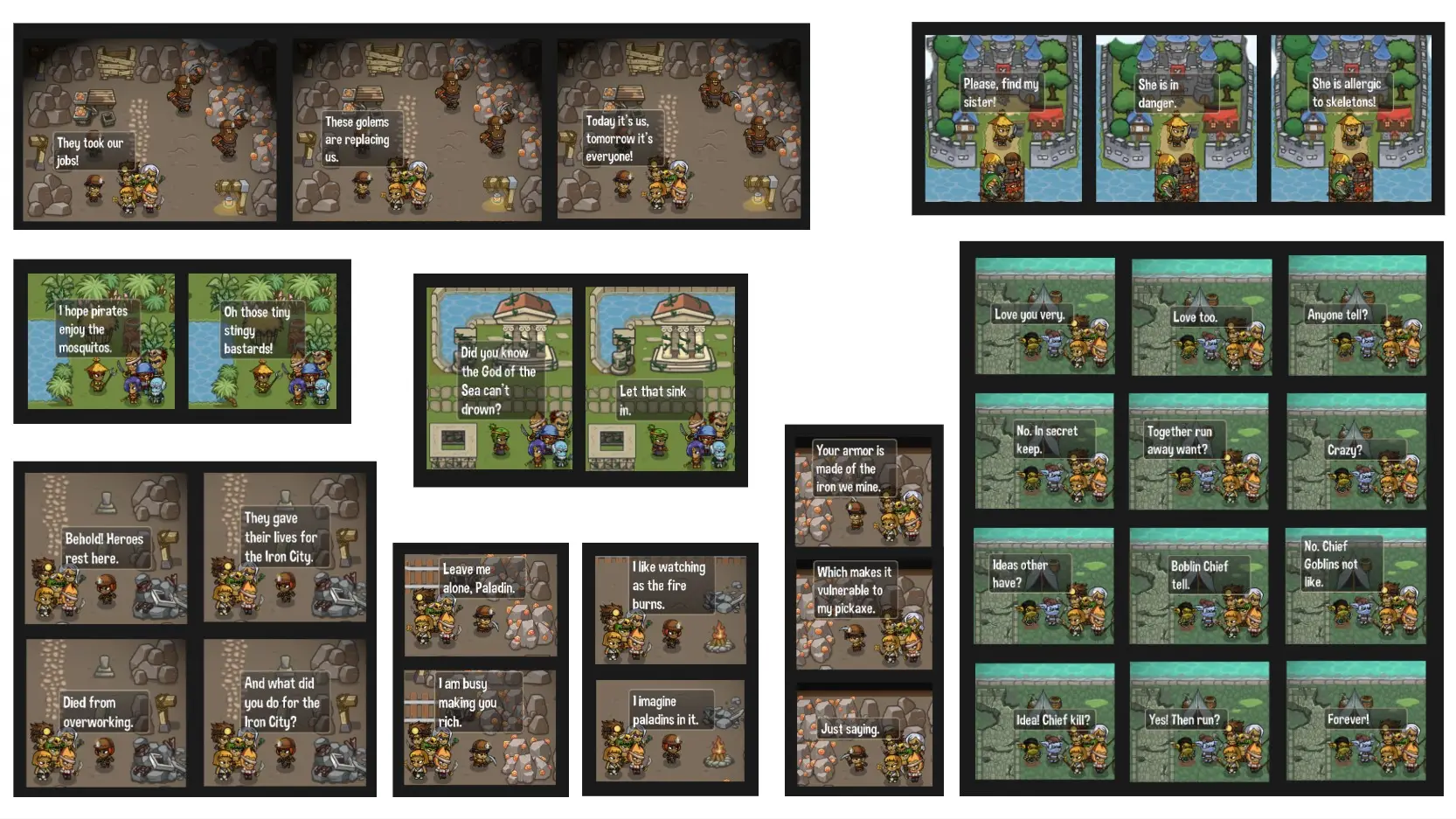
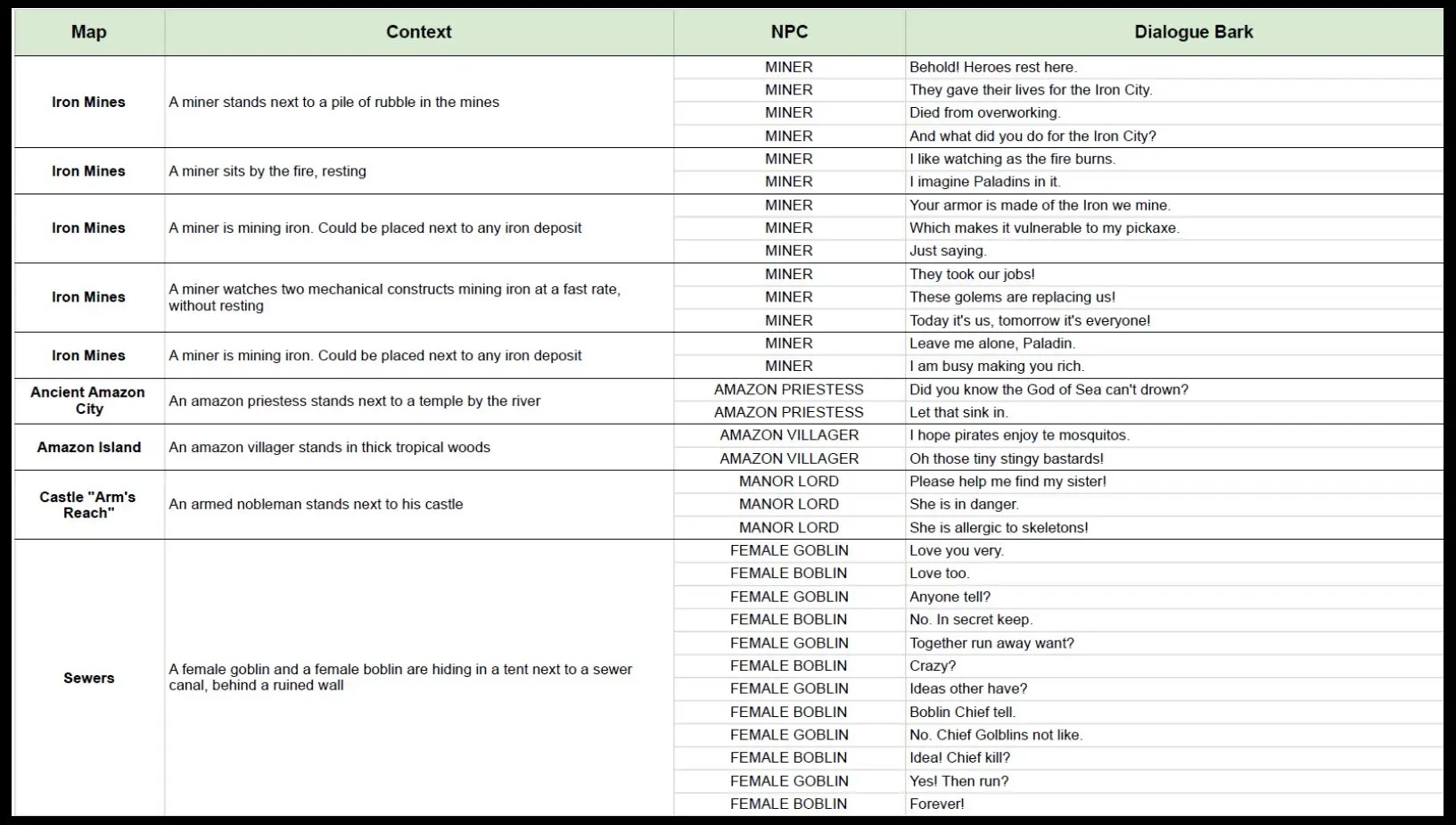
I wrote NPC barks for over 200 characters across 5 story campaigns. They occur when the player repeatedly taps an NPC. Every tap plays the next line in the loop. This allowed me to create sequences of lines, rewarding them with funny quips, personal NPC stories, or anecdotes that reflect on the game’s world.
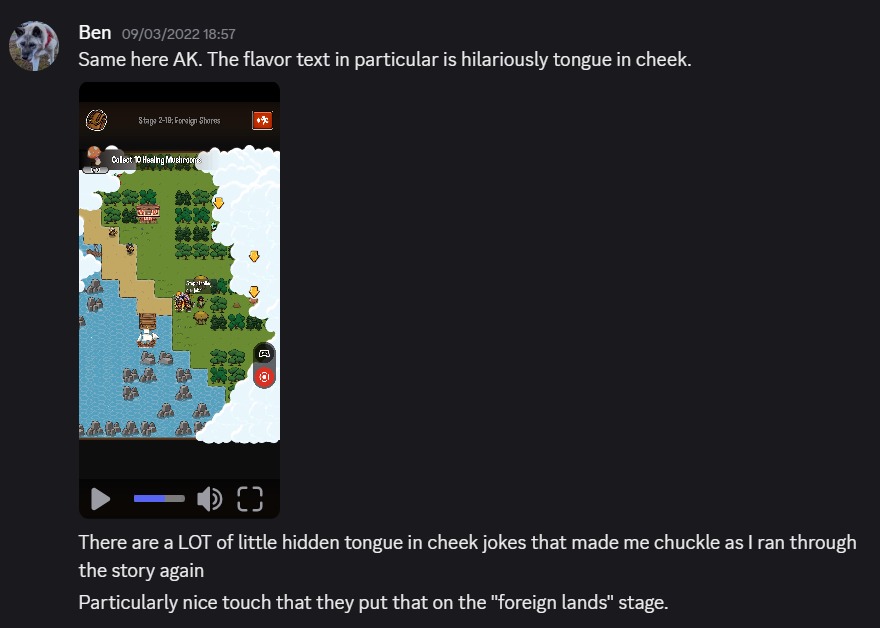
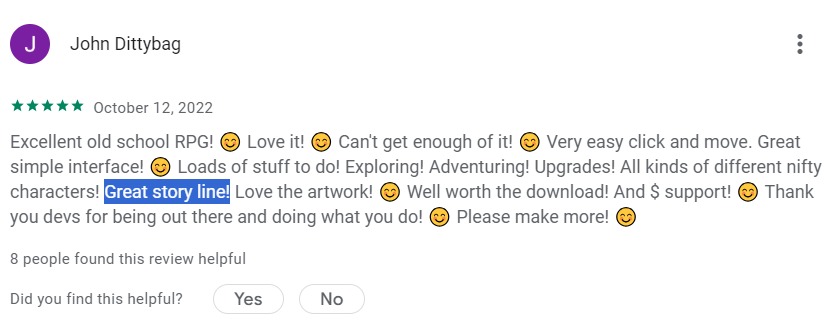
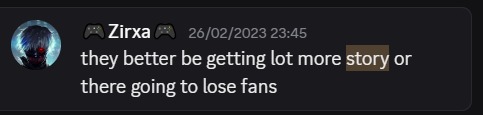
Players loved those:
Considerations
Visual Context – In most cases, the NPC barks relate to their surrounding.
Humor – Sometimes, they are reflections through the lens of the NPCs. Other times, they are just puns.
Lore Context – The dialogue stays true to the lore and the NPC’s place in the game’s world.
Additional Perspective – The NPC lines add something to the lore, and/or give the player hints about secrets and easter eggs.
Characters’ Tone and Traits – The way the NPCs speak matches their personalities.
Worldbuilding and Map Design
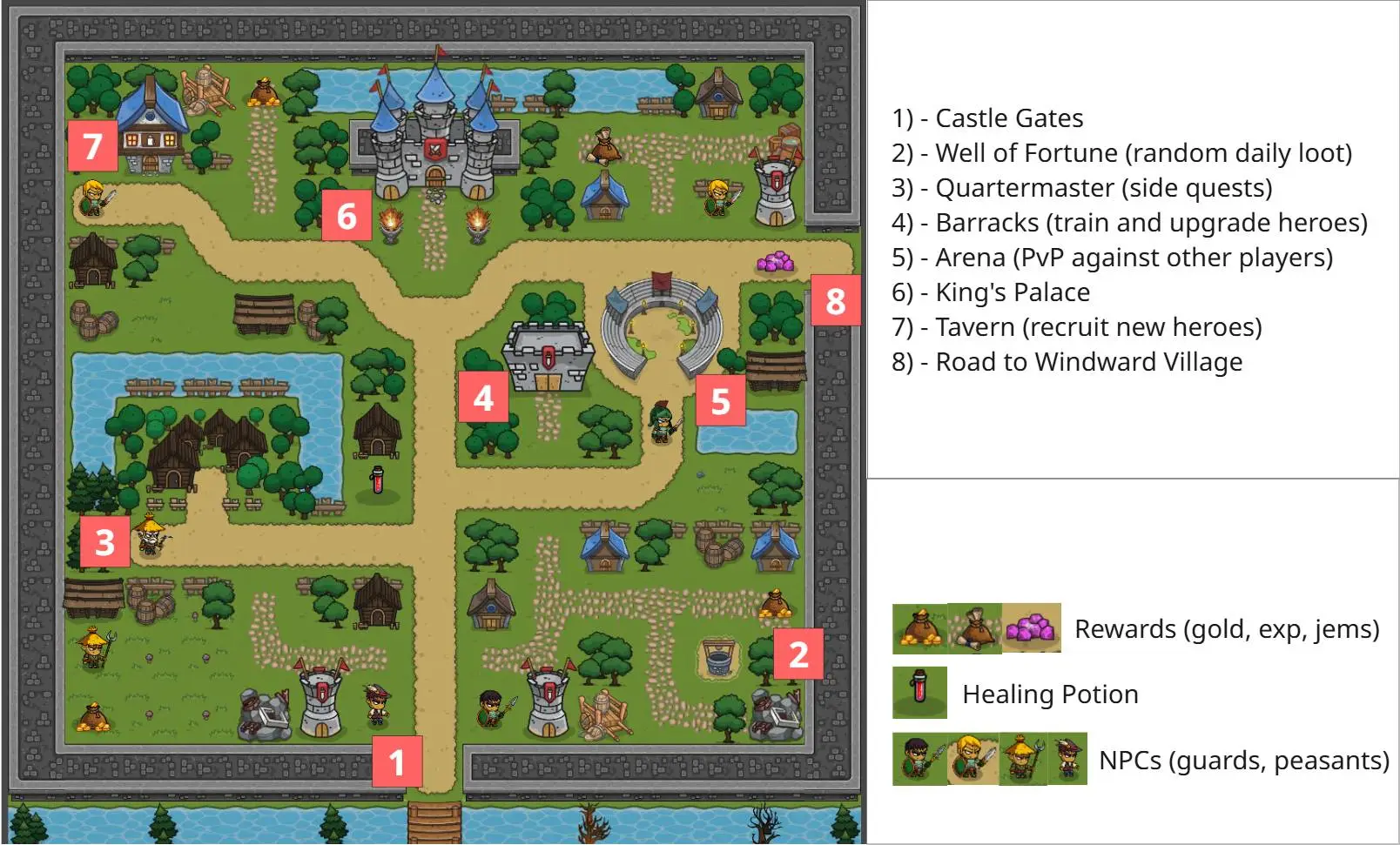
Arm's Reach Castle
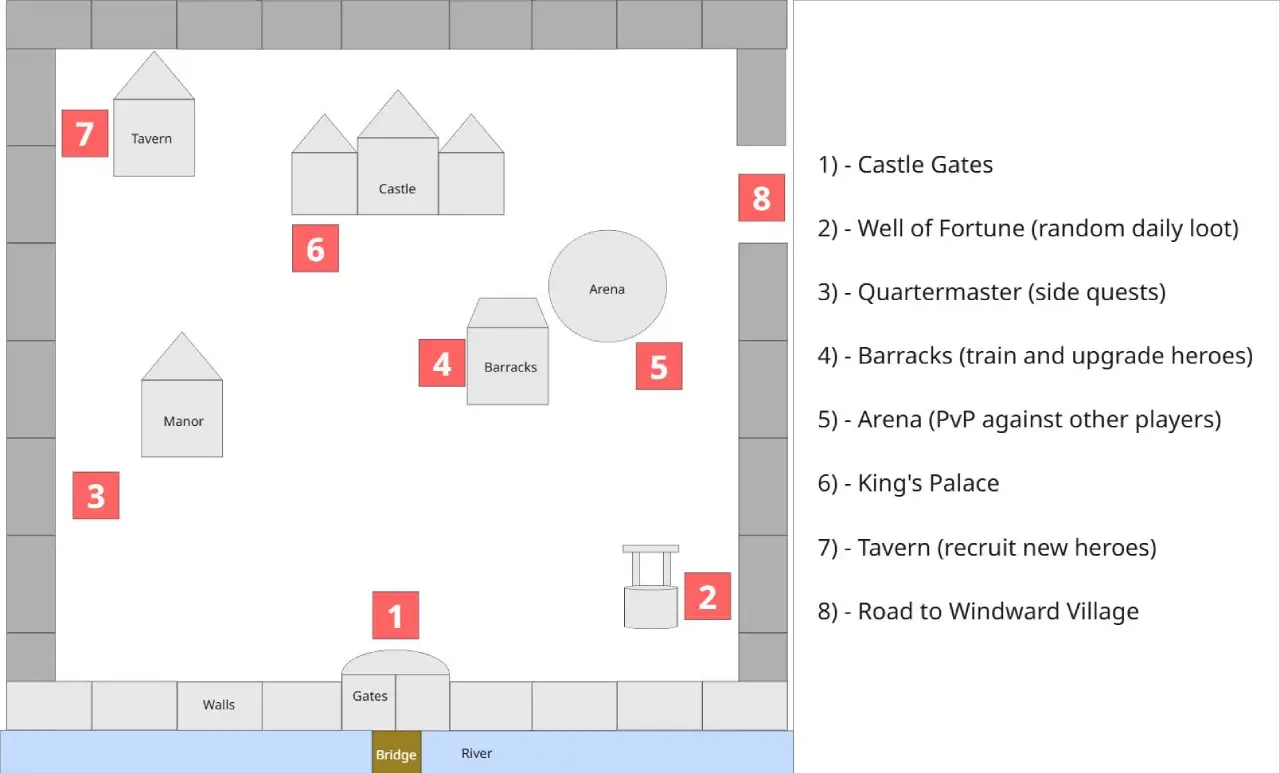
Designed the player’s home base. Players visit this area whenever they go “home” from the campaign map. Here, they can recruit new heroes, upgrade their gear, join PVP arenas, take side quests, and fish for loot.
Since players visit this map on a regular basis, I made it small and accessible. I designed the map like a castle’s inner yard, and made sure the key objects are close enough to each other.
Windward Village
Designed a map that includes Windward’s Manor and Faustus’s Crypt, so that both areas are visually distinct and separate, even though the map is small. I made the path to the crypt, and the crypt itself, deliver strong, morbid vibes about the Faustus character. To create a natural separation between the manor and the crypt, I’ve put a lake right between the two. Finally, I encircled the crypt with walls to emphasize on Faustus’s isolationism.
Windward Cemetery
Designed a cemetery map where the player would search for a specific grave and fight undead creatures along the way. I made the map non-linear so that the players would stick around longer when exploring it.
I didn’t design the map for this specific quest, but rather for an entire questline that follows after the Faustus quest. That’s why there is a sealed gate at the top – it leads to a section of the cemetery we will explore in the future.
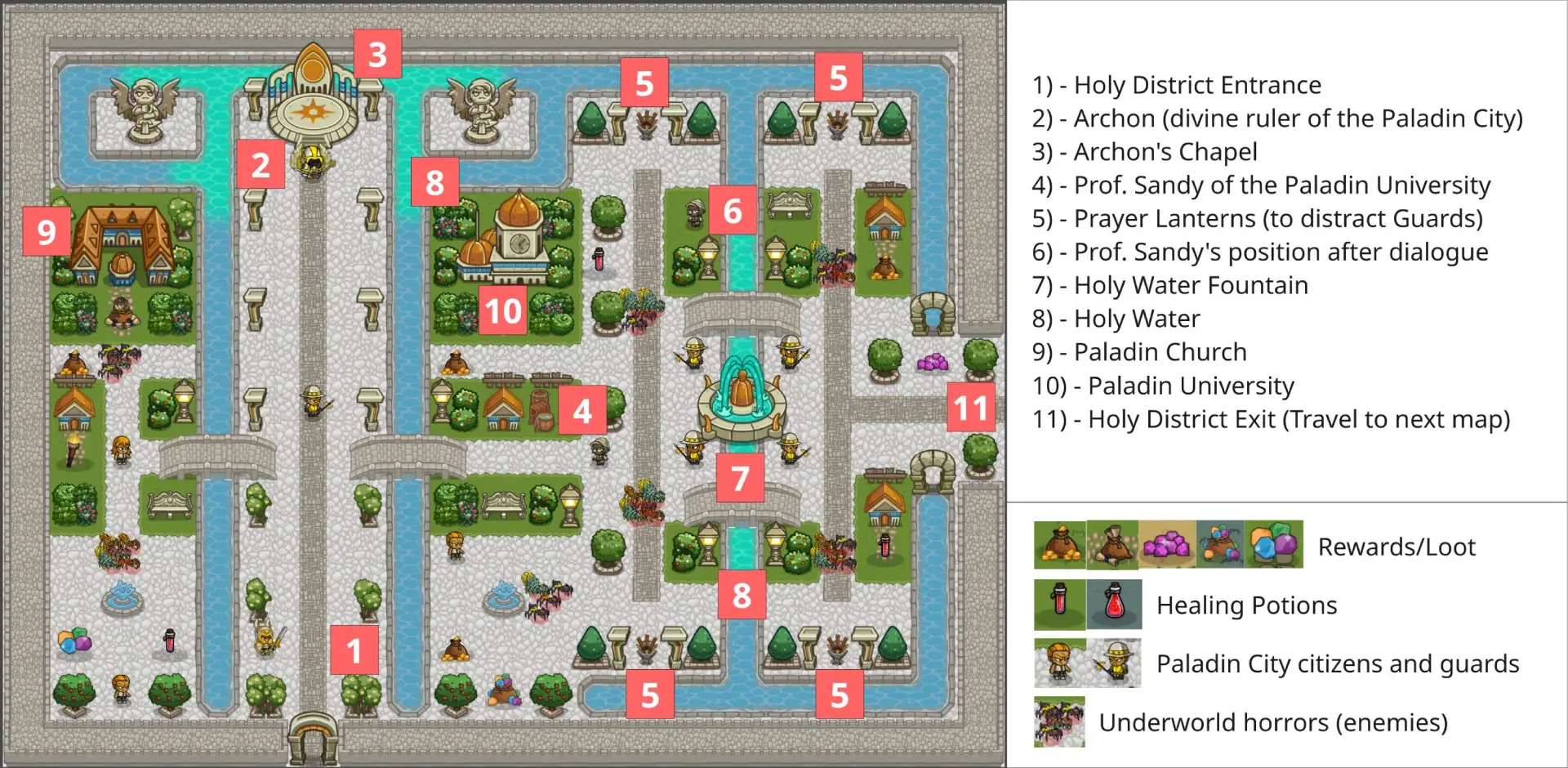
Paladin City - Holy District
I designed this map for the Paladin City story campaign. The player must save the beautiful city from corruption that lurks beneath and taints its Holy Water canals. In this quest map, the player asks the Archon, the angelic leader of the Paladins, to spare some Holy Water for the corrupted citizens. When the Archon refuses, the player distracts the Guards and steals some Holy Water from the Holy Fountain.
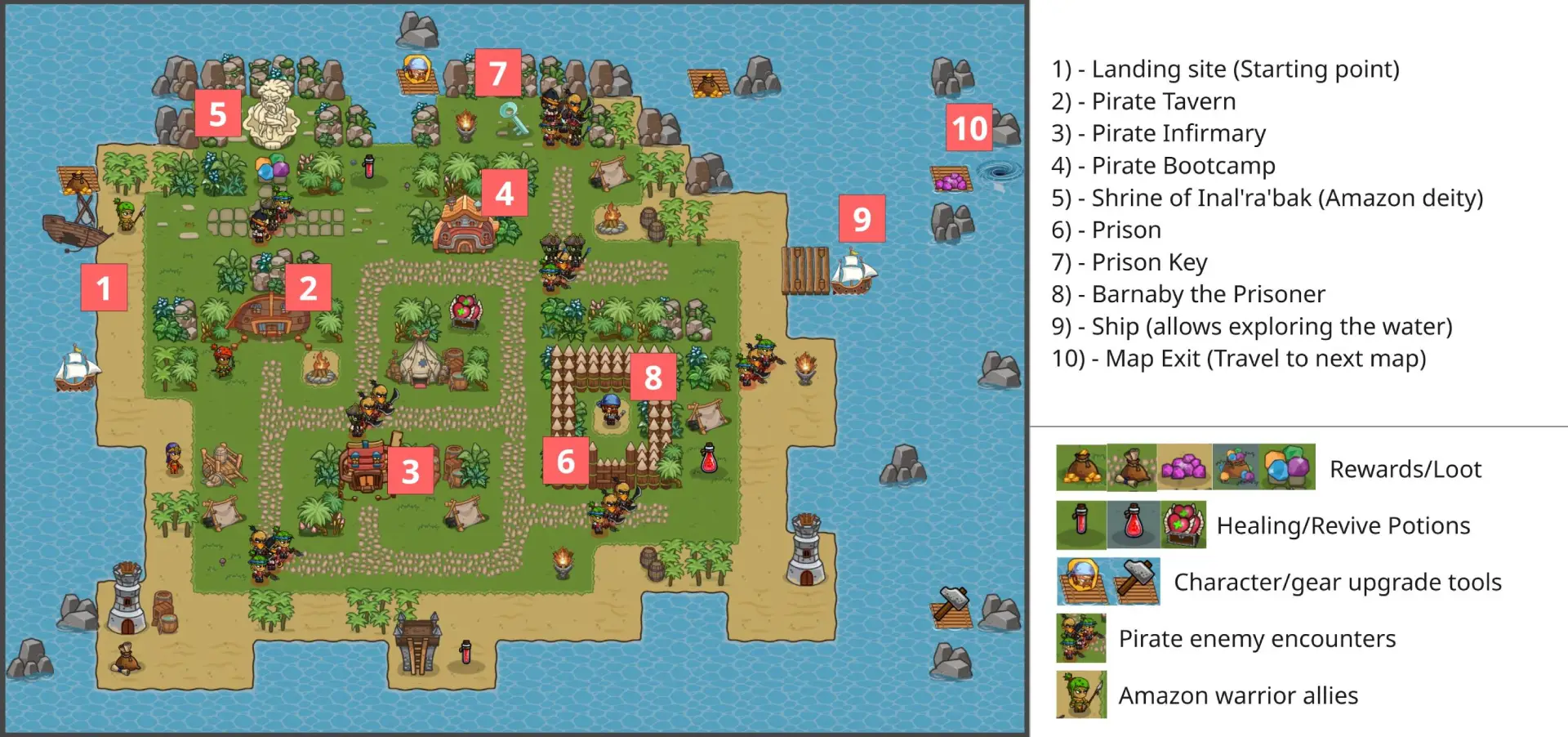
Tortuga Island
The Tortuga Islands map is a part of the Midland campaign, where the player helps the Amazons against Pirates. This island was once home to a thriving Amazon community, until the Pirates took over.
I designed this map for a quest, where the player needs to free an ex-Pirate navigator who knows the location of an ancient Amazon temple. The player must find the key to his cell and set him free.
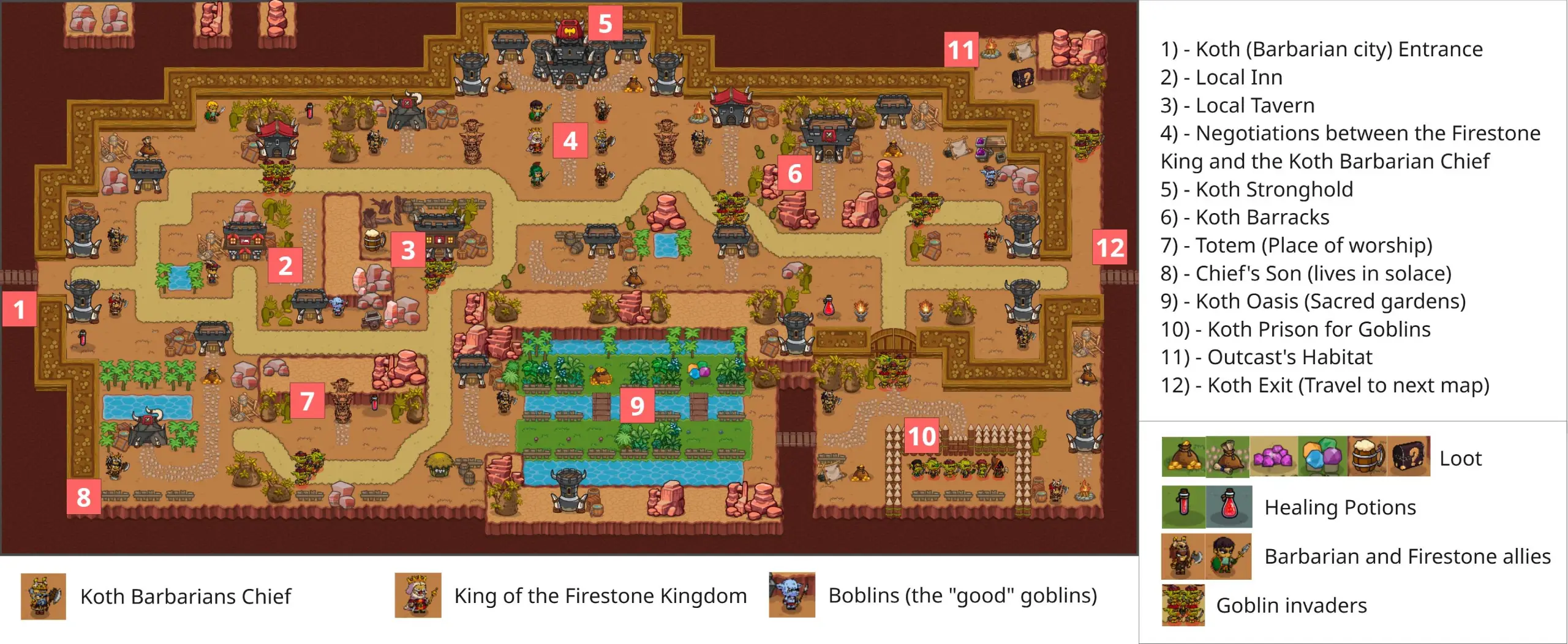
Barbarian Stronghold
I designed this map for the Iron Desert story campaign, where the players unite the Barbarian tribes to fight the Goblin invasion. This map is the Koth Stronghold, the seat of power for the Koth Chieftain. During the Chieftain’s negotiations with the northern kingdoms, Goblins invade the city and attempt to prevent the peace treaty. The player controls the Chieftain’s son to stop them.
Map Design Process and Consideration
Process
I create a basic sketch just to show where the key areas are – manor, crypt, lake, and NPCs.
I place NPCs, enemies, trigger points, and rewards.
I implemented the dynamic changes triggered by the quest’s progression.
I design the environment based on the blockout and make sure it serves the visual storytelling.
I playtest the map to make sure everything works in line with the Faustus quest needs.
Considerations
Quest Givers and Vendors – key units that answer metagame and progression needs.
Traversal and Functionality – clear indication of where the player can walk and what to interact with.
Lore and Storytelling – what purpose the location serves, who lives there, and what story it needs to tell.
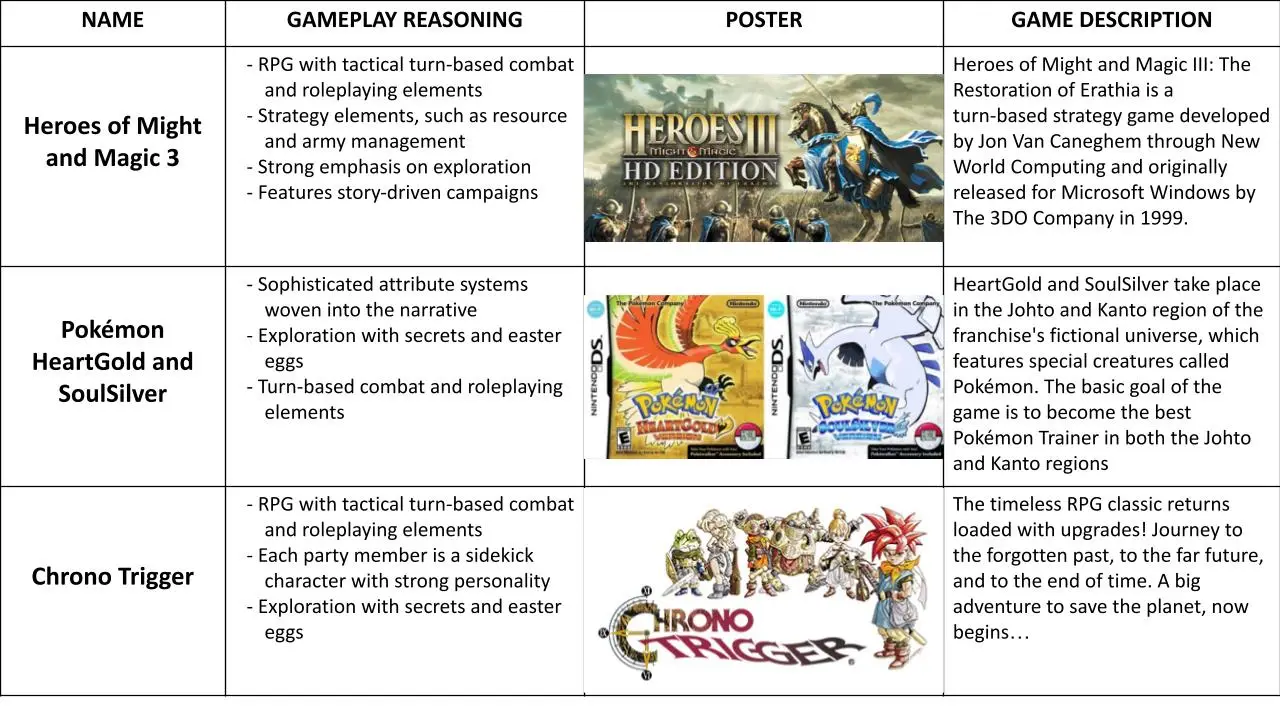
Genre and Content Research
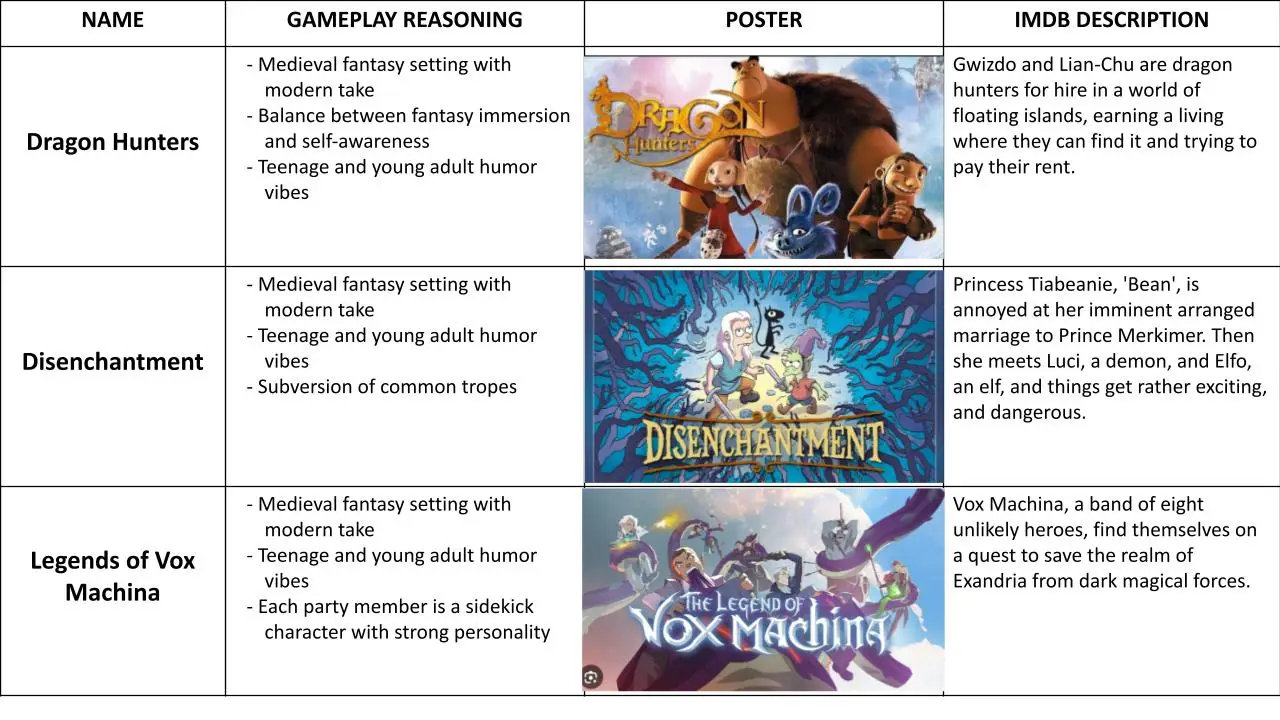
Researched some popular video games and TV shows:
Find creations to draw inspiration from and broaden my creativity horizons.
Figure out what people like about these creations and what makes them so popular.
Get a better idea of what works in the genre, what doesn’t, and what my audience’s expectations are.
Get a practical understanding of the genre strengths, limitations, and conventions.
See what already exists and what I can do to stand out.